




Peru 2017: Lima and Arequipa
Le Regard Libre N° 31 - Marina De Toro
Peru 2017 (1/2)
«Are you really sure you want to go that far away? Peru, but there's nothing there! You know, I've heard it's a very dangerous country, and I wouldn't go there if I were you. But why are you so keen to go to the other side of the world?» These were the few comments I received when I announced that I was going to Peru for three weeks with my partner. As a result, when I got there, I was really scared, because these remarks kept going round and round in my head, robbing me of all confidence. My partner and I chose this destination for the discovery, the adventure, but above all for the history of the country, which we had never studied in Switzerland. In my opinion, travel is an effective way of practicing history, the subject I study in Neuchâtel. It allows us to get up close and personal with past events, thanks to surviving documents and monuments, but also to understand the present, which is the very product of a succession of past, unchanging moments.
Ultimately, I'm not going to write about everything we did in Peru, but I will try to depict some of the things we learned about the country and its people in order to convey not only our experience, but also their history. Most of the information I give comes from the guides we worked with, the museums and sites we visited. Any fears we may have had before the trip quickly faded away, as Peru is a welcoming and, in the end, quite accessible country. Every moment of our experience taught us a little more about the country, but also about ourselves, because, in the end, it's sometimes ignorance of things that leads to fear of them.
The long-awaited trip has finally arrived: I'm off to Peru for three weeks with my partner. We're ordinary Swiss students, aged 20 and 21, and it's our first big trip. We don't speak Spanish, but we hope our English and a few words of Italian will be enough to communicate on the other side of the world. It's hard to imagine that we'll be crossing half the planet in twelve hours by plane, and it's only when we arrive in Lima that we realize how far away Switzerland is. We chose to visit the south of the country, where we were particularly attracted by the history of the Incas and, later, other earlier civilizations that were unknown to us until now. It's around 5 a.m. in Lima, and a cab transfers us to our first accommodation. During the journey, I look out of the car window and see a bustling megalopolis; the inhabitants walk or drive to work very early, as the city is forty kilometers long and it takes a long time to get from one end of the city to the other.
The roads are crowded with cars, the horns are blaring every second, and it's hard to make your way through the traffic. By the side of the road, I can make out a few unfinished houses, overhung by ochre-colored metal rods. Lima is a city that scares tourists away, with very few in the streets of the historic center, making it a transition point to other cities in the country. We were lucky enough to have a local acquaintance, Diego, who is Peruvian and Swiss, and who was keen to show us around his beloved city, Lima.
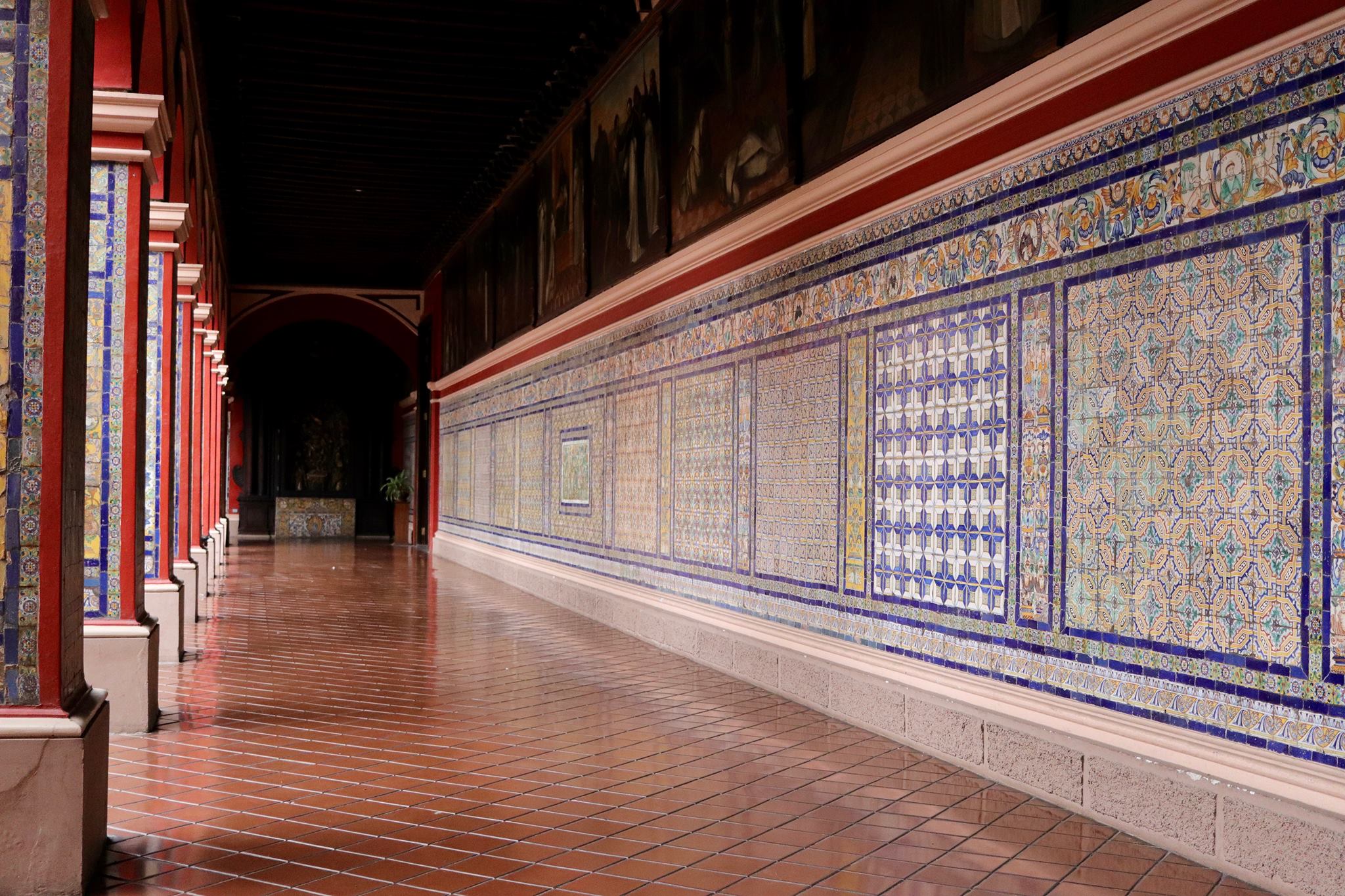
We followed him into the historic center, where he told us about the country's history and the values around which it has developed. Lima is the capital of Peru, but it wasn't always so. In fact, it was founded in 1535 by the Spanish conquistador Francisco Pizarro. Before that, Cuzco was the capital of the Inca empire, but it was not easily accessible for trade, so Lima was created for strategic and economic purposes. Diego showed us typical colonial architecture, including charming cedar wood balconies, courtyards with vaulted ceilings and colorful columns, and bright blue or orange mansions. Unfortunately, these historic monuments are poorly maintained, poorly promoted and even neglected by the municipality, jeopardizing the city's historical heritage. This is only a small problem for the city of Lima, which has (almost) no public transport, only cabs and a few shuttle buses. The country's school system does not have a good reputation, which is why we crossed paths with numerous teachers' strikes. It's at the political level that all these worries stem from, as the country experienced authoritarian and corrupt power in the 1990s with Alberto Fujimori, which threatened to return in 2016 with the candidacy of his daughter Keiko Fujimori. In fact, the former mayor of Lima had some innovative projects and sought to develop the city in terms of transport and ecology, which were completely abandoned with the arrival of the current mayor. During our stay, a former Peruvian president, Ollanta Humala, was sent to prison with his wife for corruption, the country's major political problem.
In the 16th centuryth The two most widely spoken languages were Quechua and Aymara, which are still spoken today, but Spanish took over and became the official language. Then, before the evangelization of the inhabitants, the pre-Columbian Andean civilizations had several different cults and religions, including the divination of nature such as the Sun (Inti, the main god of the Incas), the Earth (Pachamama) and the mountains, as well as the presence of a creator god named Viracocha. These Andean cultures, although still present in some towns and in the hearts of Peruvians, are now being submerged by the Catholic religion and the churches and convents built on the ancient Andean temples. As a result, there are two trends in the country: those who see the arrival of the colonists as a blessing, as in Arequipa, and those who reclaim pre-Columbian cultures, as in Cuzco. However, this does not mean that the country is divided into two distinct ideologies, but certain historical aspects are sometimes perceived in different ways in different parts of the country.
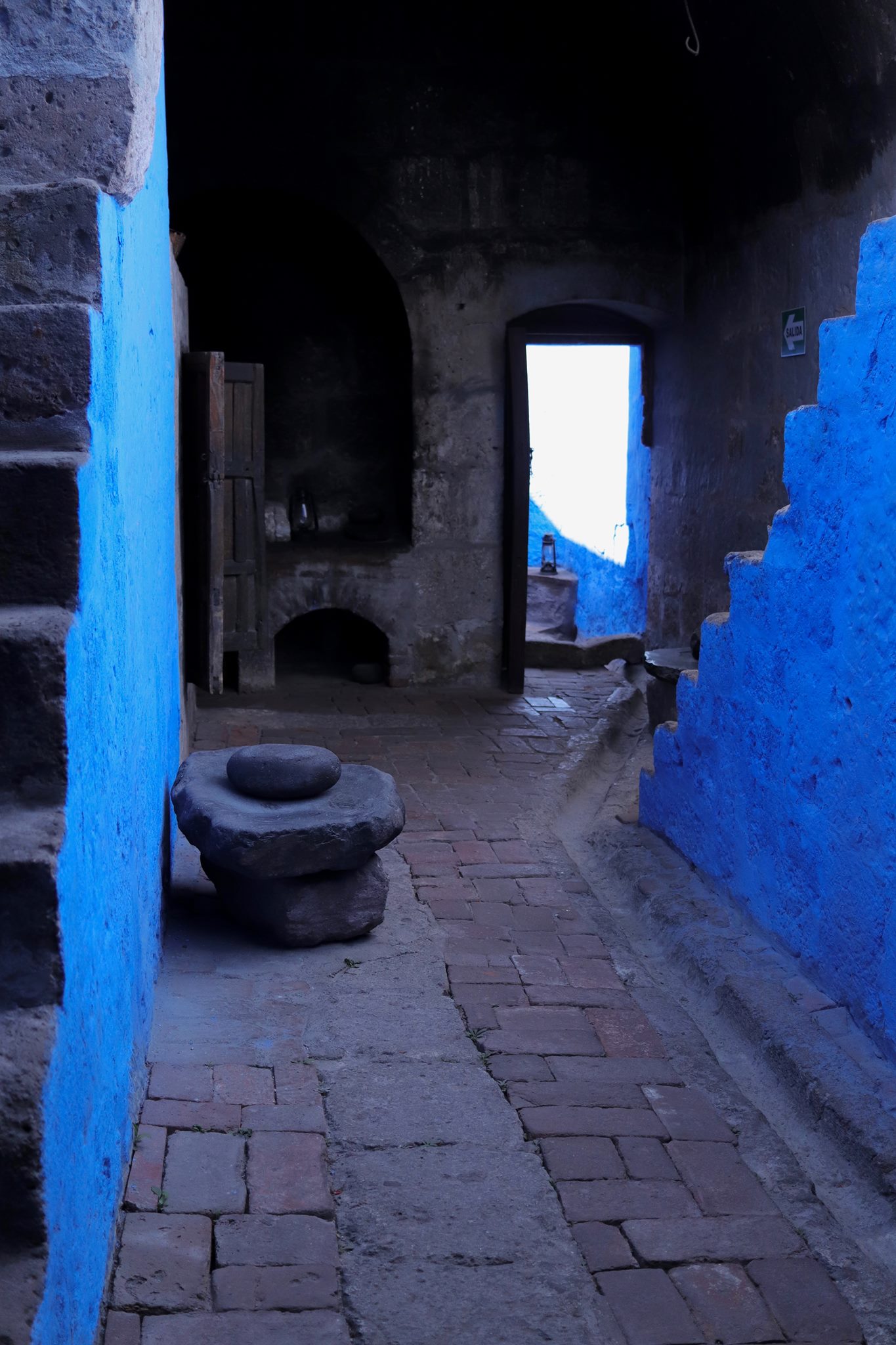
We spent four days in Arequipa, the country's second-largest city with a population of around one million. The atmosphere is very different from that of Lima, as the influx of tourists is considerable and concentrated in one place, the historic center. Arequipa is a city with a rather recent history, having been exploited by the Incas, but above all experiencing a boom thanks to the Spanish conquistadors. The city's inhabitants are very proud of Spanish colonization, which enabled them to achieve a significant degree of emancipation, which was not the case in Cuzco. In Arequipa, we visited the world's largest convent, Santa Catalina, built in the 16th century.th century and founded by a wealthy widow of the time. The convent was inhabited by nuns who took a vow of seclusion until the second half of the twentieth century.th Today, only around twenty nuns remain, and a large part of the convent is open to the public. What makes it special? It's as big as a village, and its walls are all brightly colored, giving a very warm aspect to this mystical, quiet place. Despite a violent earthquake in the 1960s, the convent has not suffered much damage and has retained its authentic form.
Arequipa is also the name of the region in which we spent three days trekking, more specifically in the Colca Canyon. This canyon is the third deepest in the world, the first two being in China. The landscape is breathtaking, dotted with small villages and mountains sculpted by time. This environment is not only visually impressive, but also sonically so. Indeed, there is a great deal of seismic activity in this region; the rock is constantly in motion, resulting in a dull, powerful sound like lightning. One night, we witnessed an earthquake whose epicenter was at 6.2 (Richter) near the coast, and we were in the middle of the land in a small building. It was the first time for me, I was petrified and didn't know how to react to the situation. In the end, the earthquake wasn't strong enough to worry about.
I was also a little worried about the last day of the trek: we got up at 5 a.m. to begin a three-and-a-half-hour intense climb, starting at 2160 meters and arriving at 3280 meters. The first few minutes of the climb were hard for me, as I struggled to find my rhythm and couldn't quite see the path ahead, as it was still dark. But then, as the day gently dawns, the landscape unfolds before my eyes, and the sight of my surroundings motivates me to want to discover more, especially the view from the summit. Occasionally, I lift my eyes from the rocky, perilous ground to observe the possible arrival of a condor, a bird renowned in the region. The condor is a strong symbol of Andean culture, found on many archaeological artefacts, and is the being capable of reaching the world of the gods, i.e. the mountains. The puma represents the terrestrial world, while the serpent travels in the subterranean world. These three animals are often depicted together, and are considered divine and powerful. The snake, for example, has the particularity of showing life after death and the cyclical aspect of existence that pre-Columbian civilizations supported. After several hours of climbing, we finally reach the summit, and I'm not disappointed: the view is breathtaking, and this time the night is behind us, letting the sun caress the top of the mountains and then graft itself onto our exhausted faces. It's invigorating.
The end of the Colca trek marks the end of our stay in Arequipa, and it's time to set off for Lake Titikaka and finish in Cuzco.
Write to the author: [email protected]
Photo credit: © Marina De Toro for Le Regard Libre
You'll also like
 French
  German
  English
Leave a comment