




Micro-narrative of an intimate trip to Korea
Le Regard Libre N° 43 - Hélène Lavoyer
«It's an unusual choice!», «What an amazing destination...», «What's over there?», «Why go to South Korea alone for a month?», «South Korea or North Korea? A small anthology of questions asked when leaving for South Korea, revealing how little we know about this country where everything always seems to stretch to two extremes, drawing a huge paradox shaped by peaceful temples, pollution, conservation and consumption.
«Anyoung Haseyo»
South Korea is a country of around a hundred thousand square kilometers. A little less than three times the size of Switzerland, which I was leaving for a month. When I arrived at Incheon airport - the fifth largest in the world, built on an island in the Yellow Sea - the man I came to call «Abba», «Dad» in Korean, was already waiting for me, sign brandished.
The heavy, humid air I breathed as I left the plane, and which I was already hoping would lighten, already marked the difference between «home» and «here». After three-quarters of an hour's seat on a luxurious coach, gigantic buildings and a small world bustling through the streets of Seoul presented themselves to my curious gaze, capturing all that was possible of these first impressions.
The first steps I took defined the solitary stroll that would so often guide my late-night ramblings and daydreams in Seoul. At the foot of the twenty-three-storey building, it was smallness and solitude, but such was my sense of security and confidence that I blindly began my stroll between the towers, which resembled immense batteries planted in the ground.
Guinsa
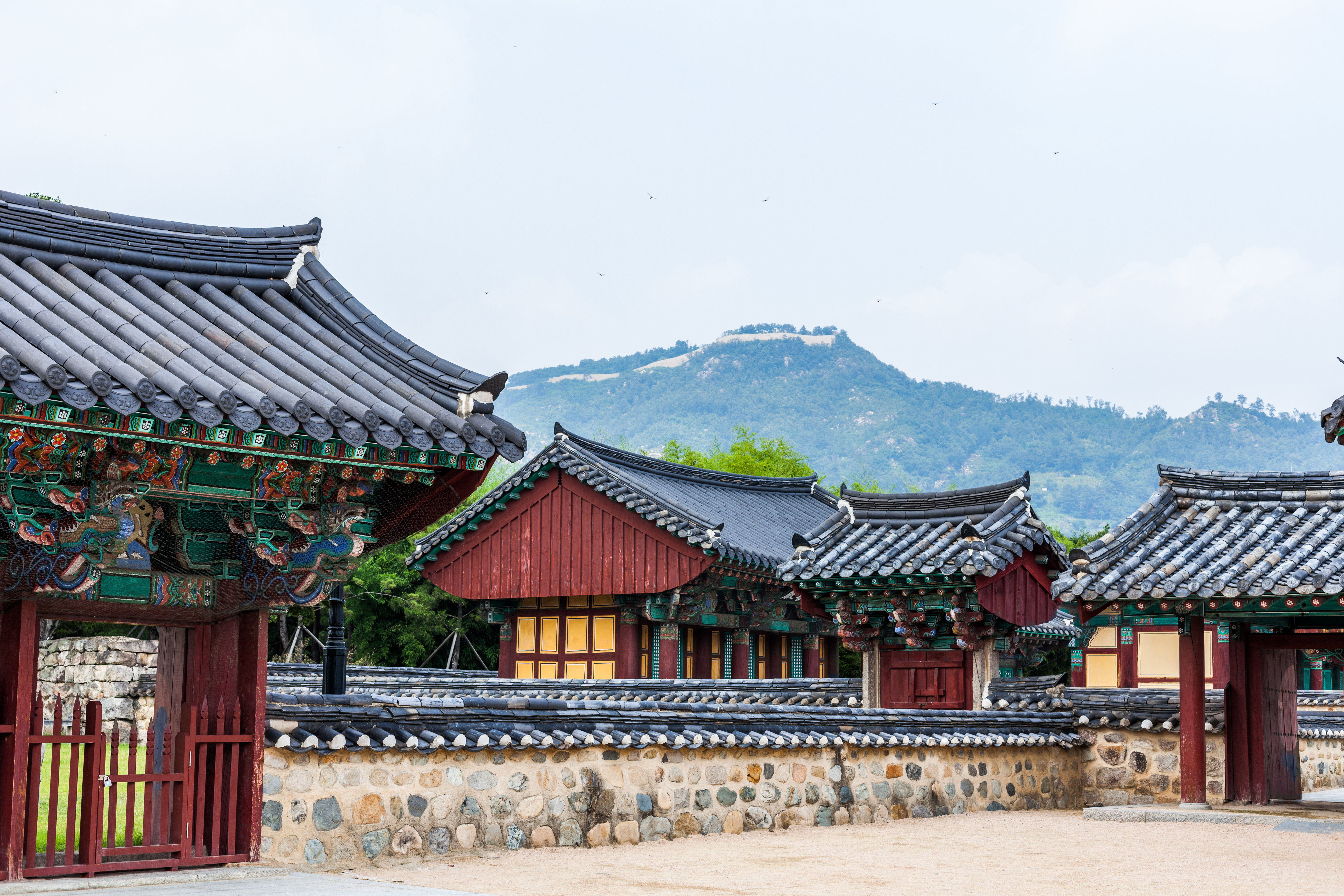
My trip had been planned, and I'd barely had time to spend two days in Seoul before I set off, on the morning of the third day, on the road that would take me to one of the most beautiful, serene and happy places I'd ever visited. Lost and isolated, the temple of Guinsa seemed to have been waiting for me all my life, as patient as the earth before dawn.
On the edge of a national park and a quarter of an hour from the small town of Danyang, Guinsa silently contemplates life, perched on the heights of Mount Sobaeksan, around a thousand meters above sea level and just below Yeonhwaji peak. No sooner had I stepped off the bus with a few others than I was standing at the foot of the steep slope leading up to the temple's first buildings, painted in bright, unfamiliar colors and adorned with frescoes or lotus flowers.
An entire mystical account could be written about this passage to Guinsa, a place of devotion, calm, peace and courtesy, where even the random footsteps thrown in front of you point in a direction you hadn't thought of, couldn't have imagined. Strangely enough, it's in this secluded place, where monotony seems to be at its height - right down to the meals, all of which consist of rice, vegetables and soup - that the feeling of freedom most pervades.
Gyeongju
At the end of the few days I spent in Guinsa, discovering an inner joy without fault or bottom, my heart broke at the thought of leaving. But curiosity and the need to move on to another dimension of my journey were strong enough to keep me going once I arrived in Gyeongju. Korea's ancient capital also had some surprises in store for me.
A tourist town if ever there was one, Gyeongju and its population - almost more Caucasian than Korean - initially welcomed me as one of those «basic» tourists whose sole aim is to bring back beautiful snapshots of famous or popular places. But while I felt more misunderstood than ever, my hosts at GODO Guesthouse took the time to get to know me, to share bits and pieces of their lives, and to laugh innocently at my European idiosyncrasies.
From the Bulguksa temple to tombs dating back to the Silla kingdom (ed. note: one of Korea's three kingdoms), Gyeongju is a magnificent city, easier to live in and with smaller buildings than the immense Seoul, although the air in both cities is almost unbreathable due to unimaginable traffic, with cabs circling endlessly in search of customers. However, its inhabitants seemed to take a more commercial approach to tourists than in Seoul.
Seoul and a departure
The transition from Guinsa, the temple of devotion, to Gyeongju, the temple of consumerism, had taken its toll on me, but it happened so quickly that the lights of the concerts and the streets filled me with spontaneity. After seven days in the city, two of which were spent nursing a badly digested «gimbap», I was back on the quiet road aboard a bus that would take me and the other passengers to Seoul.
Ten days passed, during which I visited magnificent museums such as the Leeum (editor's note: Samsung's art museum, where unimaginable pottery and paintings are on display) or the National Museum of Korea, always surrounded by other tourists and Koreans in traditional dress, rented out for the time of a few snapshots. There, I got used to the Korean way of being as I perceived it: generous with laughter, stingy with shouting, very coquettish and well-groomed, as reserved as possible.
Besides, I didn't learn how to say «Goodbye». It seemed to me that you could use the same expression as for «Hello», but I didn't want to know. After three weeks, including twelve days in Seoul, I finally dared to kiss the cheeks of my Korean parents, whose kindness and thoughtfulness had touched my heart. From this solitary trip to intimate Korea, I'll remember that even the most joyful imagination often fails to capture the beauty and value of a reality that we welcome without expectation.
Write to the author : [email protected]
You'll also like
 French
  German
  English
Leave a comment