




The boy with the heart of a girl
Les lettres romandes du mardi - Nicolas Jutzet
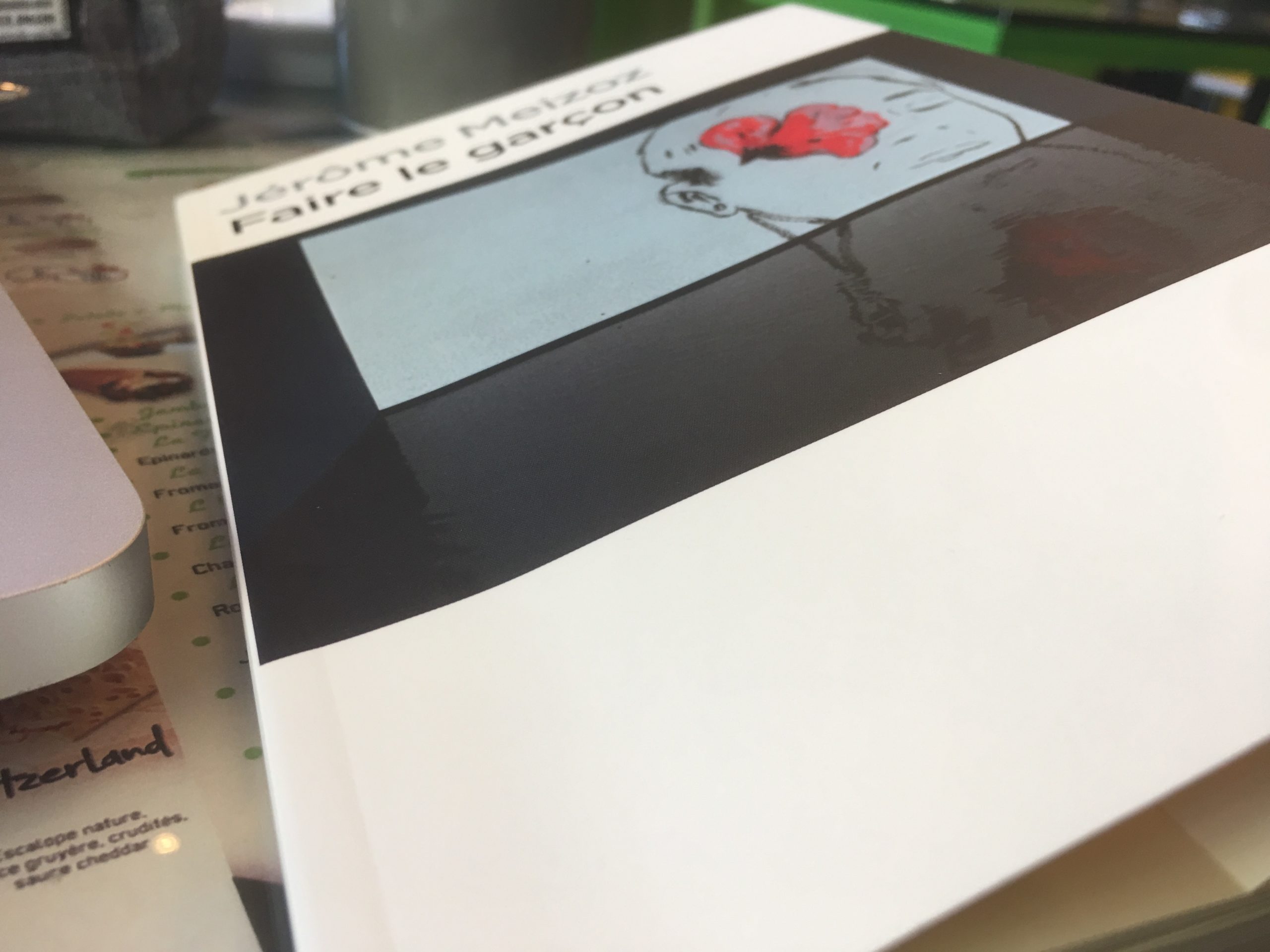
In his novel Being a boy,Jérôme Meizoz alternates narrative and investigation, exploring masculinity and the violence of social norms. By blending fiction and autobiography, he has produced a work that, while not a masterpiece, does raise questions.
As a young man with golden curls, the «boy» - the impersonal name given to the hero of the story - is told to become a man, to shed his femininity. In short, to do what society expects of him. To be virile and strong. To fall in line with the predefined path.
Boys don't cry over nothing, they assert themselves and defend themselves, they don't worry about clothes and fabrics, they don't make a big deal of their appearance. And above all, boys don't stay in skirts.
In an attempt to denounce the leaden blanket of social pressure, the author loses his way. It's hard to follow his reasoning, his caricatured, Manichean desire for a world that doesn't exist, or at least no longer does. Certainly, some of the scenes described are true. Ordinary homophobia and sexism are realities that it would be out of place to deny, but we need to keep our heads and avoid going overboard. And here we are.
Male prostitution, a way out
To show that he's capable of extricating himself from this constructed fatality, the «boy» rebels. Refusing to embrace a committed professional career, he decides to sell his caresses, while arrogating to himself a bourgeois, not to say bigoted, contrary. He caresses, but doesn't penetrate. His audience, tired housewives in search of forgotten sensations, merely perpetuate the clichés the author seems intent on combating. He then launches into a plea against marriage, against children. In a poem of rare eloquence, he explains his choice:
Well, I've made up my mind. What about my kids? I'd rather keep them with me all the time (he puts his hand on his purse). There, at least, they're safe. Dad protects them! They're warm all year round. And I'm a close-knit family.
These are commonplace demands for anyone who reads the progressive press from time to time. Feminists are already fighting for the right to be childfree, without having to endure the questions and judgments of others. Others are fighting to bring down the institution of marriage, with some success. While those who follow us harp on the benefits of part-time work. And the last, like me, remind us that prostitution is a profession like any other and deserves, not necessarily our respect, but at least our indifference. Believing itself to be courageous, the text is yet another contribution to the majority opinion, the one that reigns in journalistic and artistic spheres. We ride the wave, falsely believing ourselves to be innovative and insolent. In reality, we're swimming in commonplaces and banalities, drowning in them.
Everyone should be free to express themselves, to represent themselves, as they see fit. It is not desirable to continue hearing sexist and homophobic remarks, but it would be just as regrettable to have to endure the falsely transgressive manifestos of a crowd of pedants who ignore the old age of their supposed youth. And the extent of the boredom that can engender the latter, falsely progressive, never explained. Even in the face of a readership convinced by a cause that, I hope, will win.
Even in his chosen, paid gestures, he puts a kind of love into them. Impersonal, as it were. For the living and their ills, their tragi-comic needs, their disappointed expectations, the morose backdrops of existence.
Touching in its autobiographical way, the book nevertheless struggles to escape the haunting, tiresome moralizing that perfumes its pages.
Write to the author: nicolas.jutzet@lereregardlibre.com
Photo credit: © Nicolas Jutzet for Le Regard Libre

You'll also like





 French
  German
  English
Leave a comment