




«To the bone»: perhaps not deep enough
Saturday Netflix & chill - Lauriane Pipoz
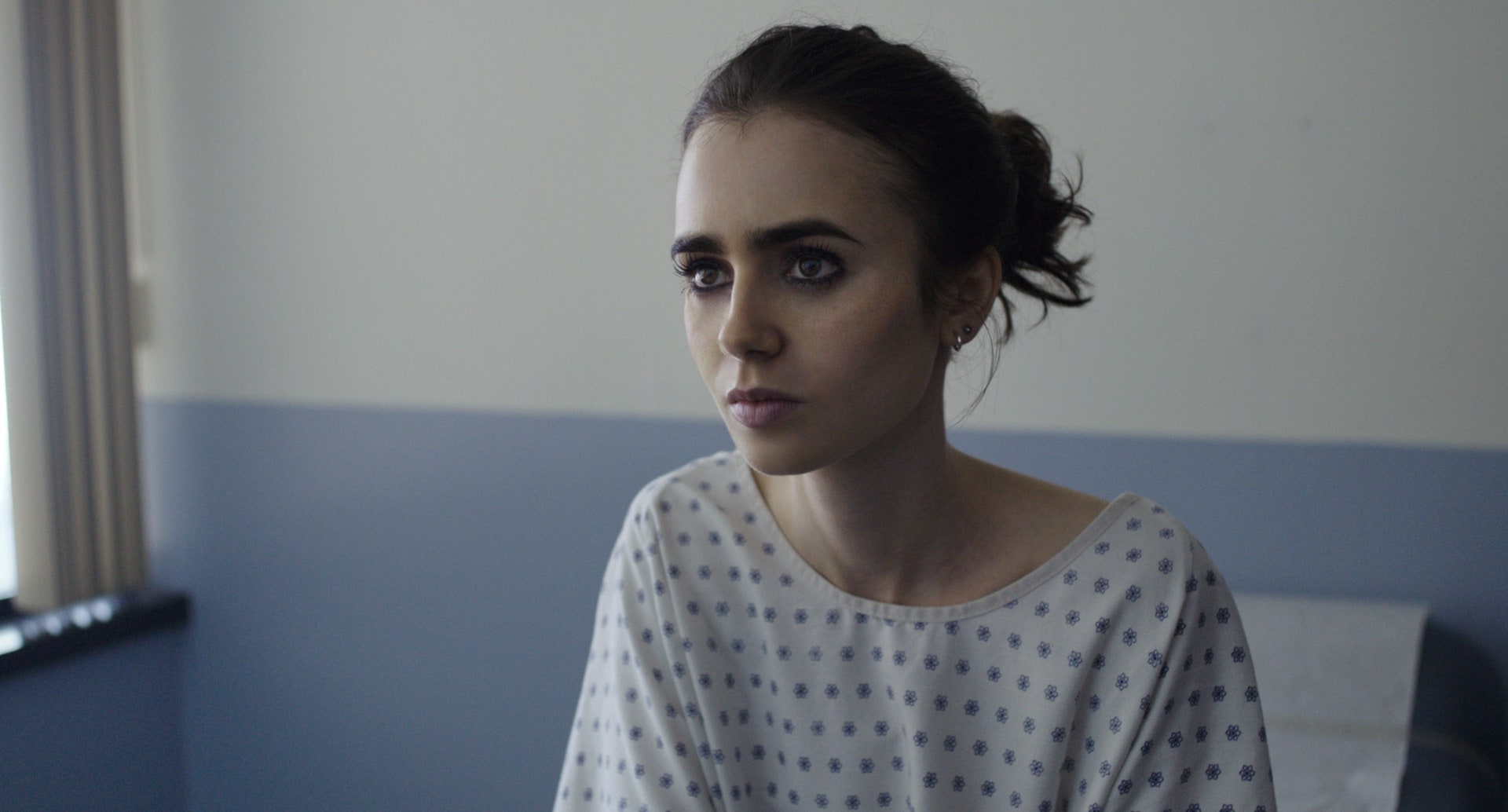
To the bone, a Netflix production released in 2017, aims to bring anorexia out into the open. Lily Collins plays a twenty-year-old woman struggling with the disease. Like the film's director, she has experienced the condition herself. Reading the summary, the project seems poignant. But it's only in the last twenty minutes that the result is fully convincing.
The drama opens with very disturbing images of two ultra-thin figures and the story of an anorexic woman who implies that society is to blame. The first few minutes are quite successful. They show the main character, Ellen, in a state of total disillusionment, but they retain an amusing edge. The young woman changes her name during treatment, showing that her anorexia is the result of a past that she must come to terms with.
A family history
Ellen undergoes treatment after treatment to cure her anorexia. Her family can't take it anymore. Or rather her families, as she tries to evolve within two blended clans. On the one hand, her depressive mother, who has taken over a ranch and is trying to cope by using alternative therapies, in which her partner is immersed. On the other, her loving half-sister, tired of her countless relapses. And her mother-in-law, who takes up a lot of space and is very - too - invested in her recovery. Certainly compensating for Ellen's father's complete absence.
As you can see, family plays a major role in the film. The causes of anorexia are one of the main themes. There's no attempt to blame society, or even any one person in particular: these are seen as a bundle of elements that impair mental health and lead to the vortex of self-destruction. I liked the fact that the characters, with the exception of the father, are not presented as good or bad, but simply as human beings. Doing their best despite their deeply selfish nature.
In the end, Ellen even seems the least self-centered of the protagonists. She's genuinely trying to fight her inner demons. This idea makes it clear that this is an illness and not simply a desire not to eat. This is certainly the message of the film, which has nevertheless been a little «glamorized», as many critics have noted. On this point, I felt the approach was well-founded: if you want to get an idea across, why sugarcoat it at all costs?
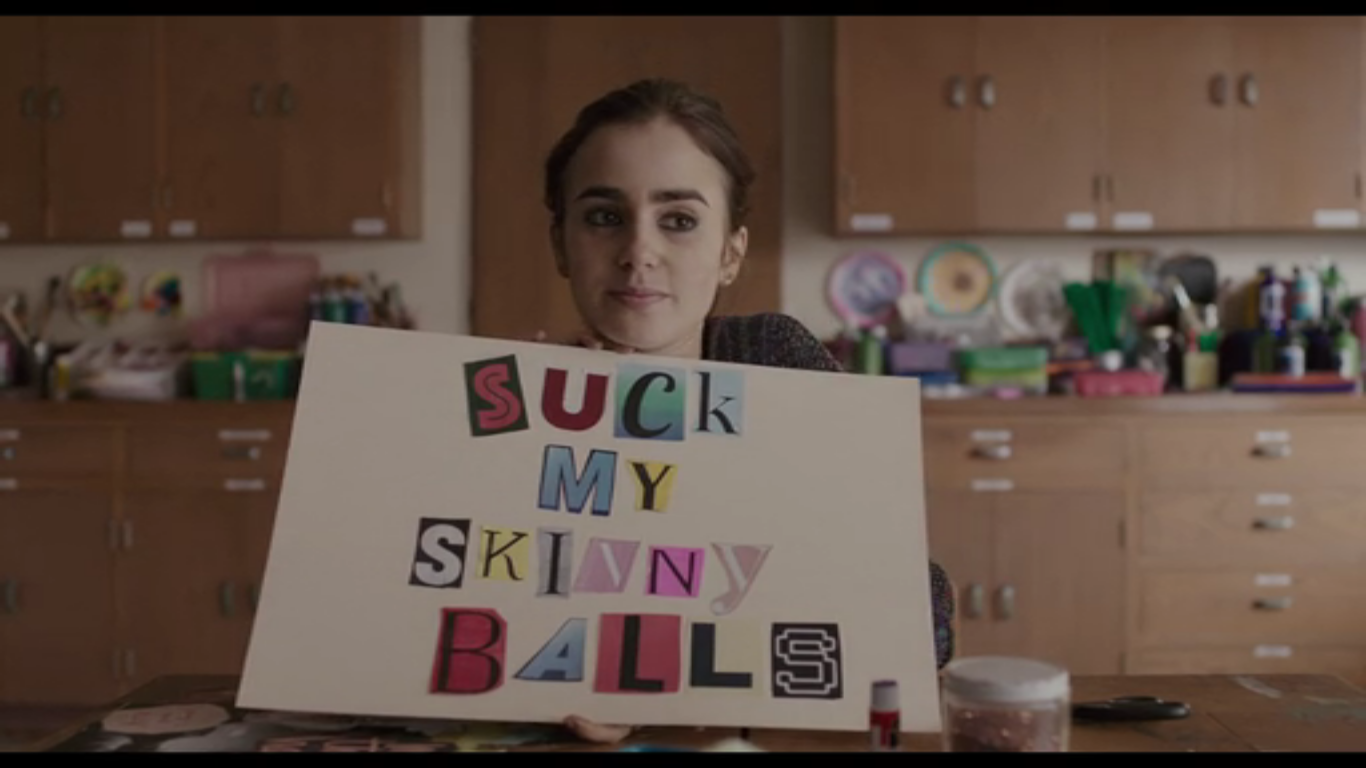
On the other hand, I found the addition of yet another love story far more dispensable. It was so predictable that it almost became annoying - just like the character Luke, whom I didn't find convincing. The romance certainly had a function other than grabbing the attention of the young audience: to give Ellen hope. But shouldn't she first seek strength within herself?
A grand finale
In this spirit, it's almost a ruin of the last twenty minutes of the film, the only really bluffing ones in my opinion from an aesthetic and scenaristic point of view. After yet another failed therapy session, Ellen goes to her mother's house to seek support. Which she surprisingly finds in part, leading me to revise my judgment of the characters' psychology, which I found sloppy. This is followed by a very disturbing but extremely moving scene, and then a magnificent explosion of color in the form of a dream.
I'm left with a mixed impression at the end of this viewing. The cinematography and script lack depth for two-thirds of the film: some shots are pleasing to the eye, without being incredible, without having any real function in the story, and the characters are rather disjointed. But the last twenty minutes prove to be much more refined, and shed new light on Ellen's story. Perhaps in the end, we should judge this film for what it is: a work on an interesting theme that isn't talked about enough, performed by good actors, but probably not up to my expectations - or perhaps yours. But who knows?
Write to the author: [email protected]
Photo credit: © Netflix

You'll also like



 French
  German
  English
Leave a comment