



«King Kong theory», thank you Virginie

Les bouquins du mardi - Literature in retrospect - Amélie Wauthier
Virginie Despentes publishes King Kong Theory in 2006. At the time, I was studying at the Beaux-Arts in Brussels and categorically refused to consider myself a «feminist». Those aggressive, rabid harpies whose extreme, violent actions do more harm to the cause of women than anything else? No, thanks! It's funny how, over the years, things can change or remain the same. It's fascinating how, in spite of everything, we can be steeped in so many clichés and preconceptions that sometimes a lifetime is not enough to eradicate them. It's frightening, even today, to realize that the battle isn't over and far from won.
«I write from the ugly, for the ugly, the old, the truck drivers, the frigid, the badly fucked, the unbearable, the hysterical, the crazy, all the outcasts of the great chick market. And I'll start there to make things clear: I'm not apologizing for anything, I'm not here to complain.»
In this essay, Virginie Despentes shares her life, her thoughts and her journey as a fighter. As an emancipated young punkette, she tells us how she was institutionalized at fifteen, raped at seventeen, before becoming an occasional prostitute. In the greatest of calm. Over the pages, she tackles themes such as motherhood, the fascist state, capitalism, virility, domination, the female orgasm, education and more. Her words are fluid, sometimes crude, sometimes touching, often hard-hitting. We discover that the woman we tend to think of as a feminist loudmouth wasn't always. She became one. That Virginie Despentes, the unsubmissive, also found herself doubting herself, desiring «womanly» things.
«It wasn't a conscious decision. More a calculation of social survival. Limiting movement, physically, preferring gentle gestures. Slowing down diction. Focus on what's not scary. Go blonde. Redo my teeth. Couple up with an older, richer, better-known man. Want a child. Do what they do.»
For the cultural and social constructs that perpetuate the alienation of women have deep, ancestral roots. Whether it's the gods of antiquity who raped virtually every woman who crossed their path, or soldiers who humiliated the wives of their fallen enemies, rape culture can't just be explained by the emergence of poor-quality pornographic films.
Why is sex considered degrading for women, and men's sexuality something to be feared? What is so frightening about prostitution that its detractors are so zealous to ban it? Aren't we doing more harm to porn actresses by denying them decent working conditions than by legalizing pornography? Doesn't the real danger of monetizing female sexuality come from the fact that it contributes to women's sexual and economic independence? There are other alternatives to marriage, an archaic institution in which women have long been - and all too often still are - dependent, submissive and controlled.
His words resonate with me. Never before had I taken so long to read a book of so few pages. Never had I underlined so many sentences, taken so many notes. I wondered why I'd never read anything by Virginie Despentes before. I did buy her film, Fuck me, which she wrote and co-directed with Coralie Trinh Thi. I didn't like it very much, if at all. At the time, I didn't understand it at all. I expected to see girlie pornography, when in fact it's a film about rape made by women. Who better than women to talk about what women go through? Why is it that, until now, those who talk about it the most are also those who know the least? What can men possibly know about what women feel and experience?
«[...] by presenting them in a childlike, more fragile, vulnerable light, the experience made me like the men, less impressive, more endearing. And accessible, in the end. [...] It reduced my aggressiveness towards them, which, contrary to popular belief, is not very high. What they want to stop me from being or doing makes me furious, not what they are or do.»
I wonder why Virginie Despentes has fallen prey to so much criticism and controversy. Admittedly, she has decided to «open up», and her words are sometimes very crude. But can we blame her? Would her texts have provoked so much controversy if they had been written by someone like Beigbeder or Houellebecq? What's more, the novelist denounces the entire political system in place, one in which the state dominates man. Who, in turn, dominates women. And all with the aim of producing «good, insecure consumers». Because there have to be winners in this great game of submission, be it gender, social or racial. I've heard many speeches criticizing Virginie Despente for the violence of her words.
This seems to me to pale in comparison with the violence of the facts she denounces. On the other hand, if you found yourself locked up for years in a gloomy, oppressive room, with the only door in and out refusing to open, wouldn't you also try with all your might to break it down in order to gain access to freedom?
The themes are multiple and vast, as well as fascinating. I could write all night and still not have exhausted all the topics to be developed. So I'll simply urge you to read or reread this essay, whether it's to reinforce a position or to shatter your preconceptions about Virginie Despentes, feminism or King Kong, because, after all, «Feminism is a collective adventure, for women, for men and for each other.
Write to the author: amelie.wauthier@leregardlibre.com
Photo credit: © Amélie Wauthier
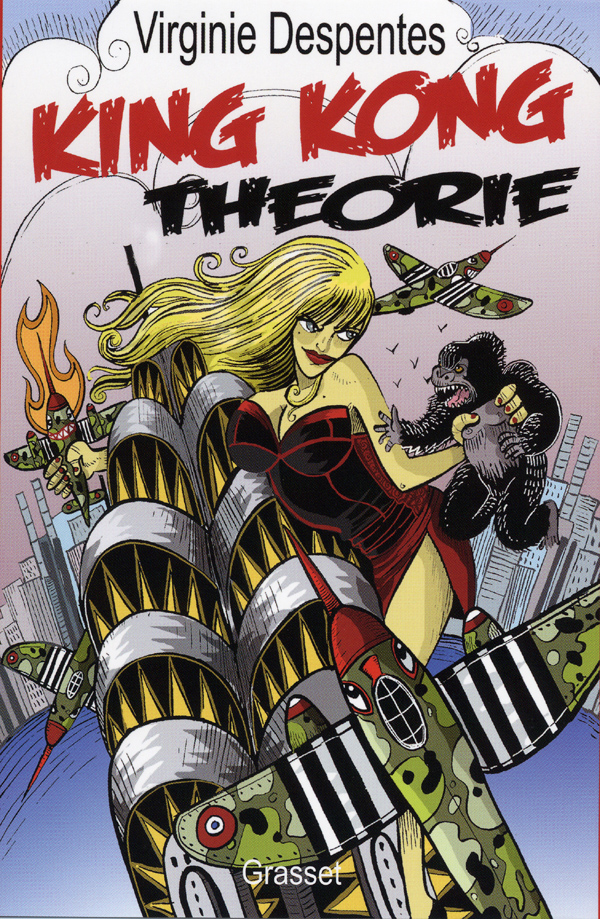
Virginie Despentes
King Kong Theory
Editions Grasset
2006
162 pages

You'll also like






 French
  German
  English
Leave a comment