



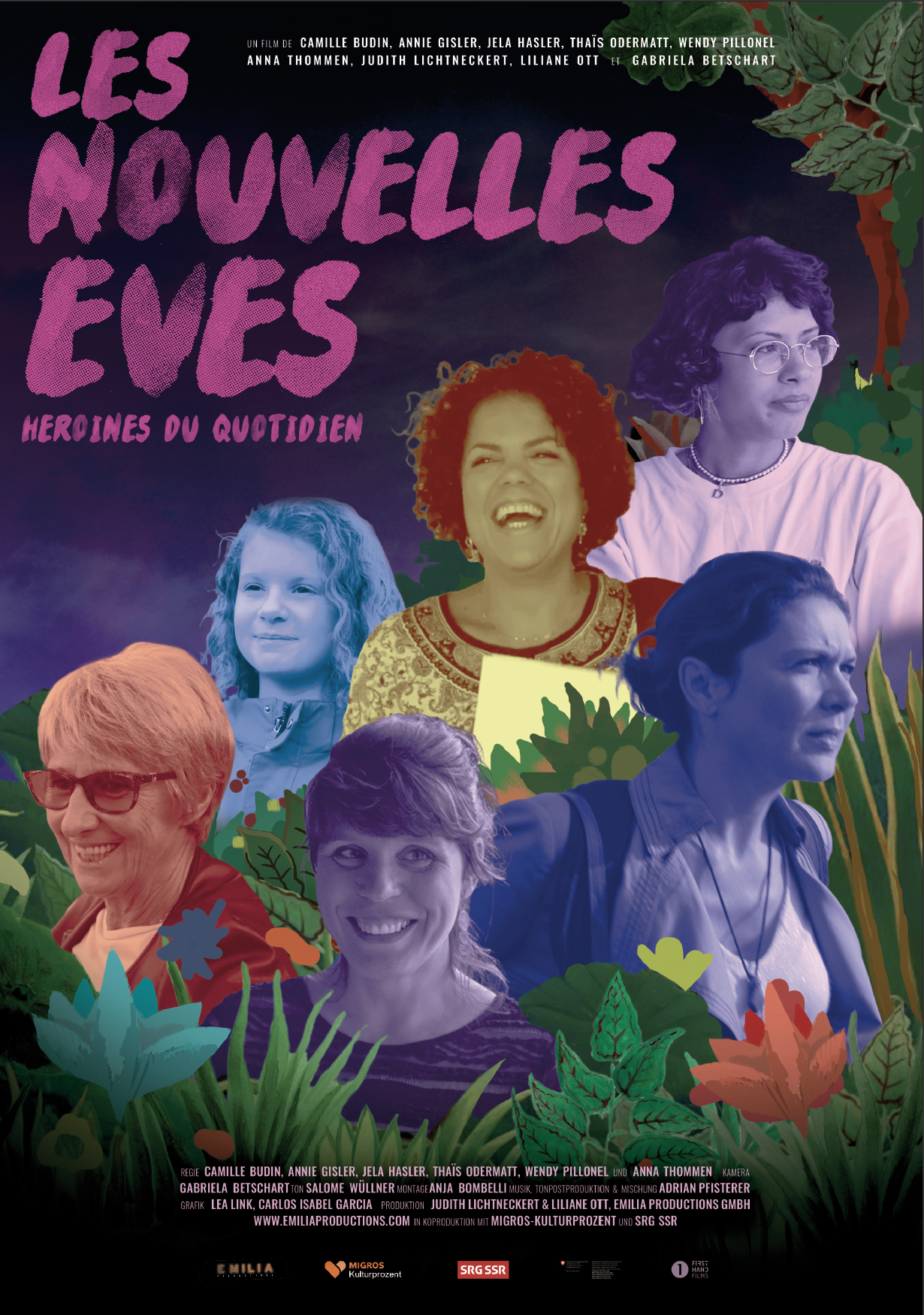
«Les Nouvelles Eves»: a docu without breaking (m)eggs
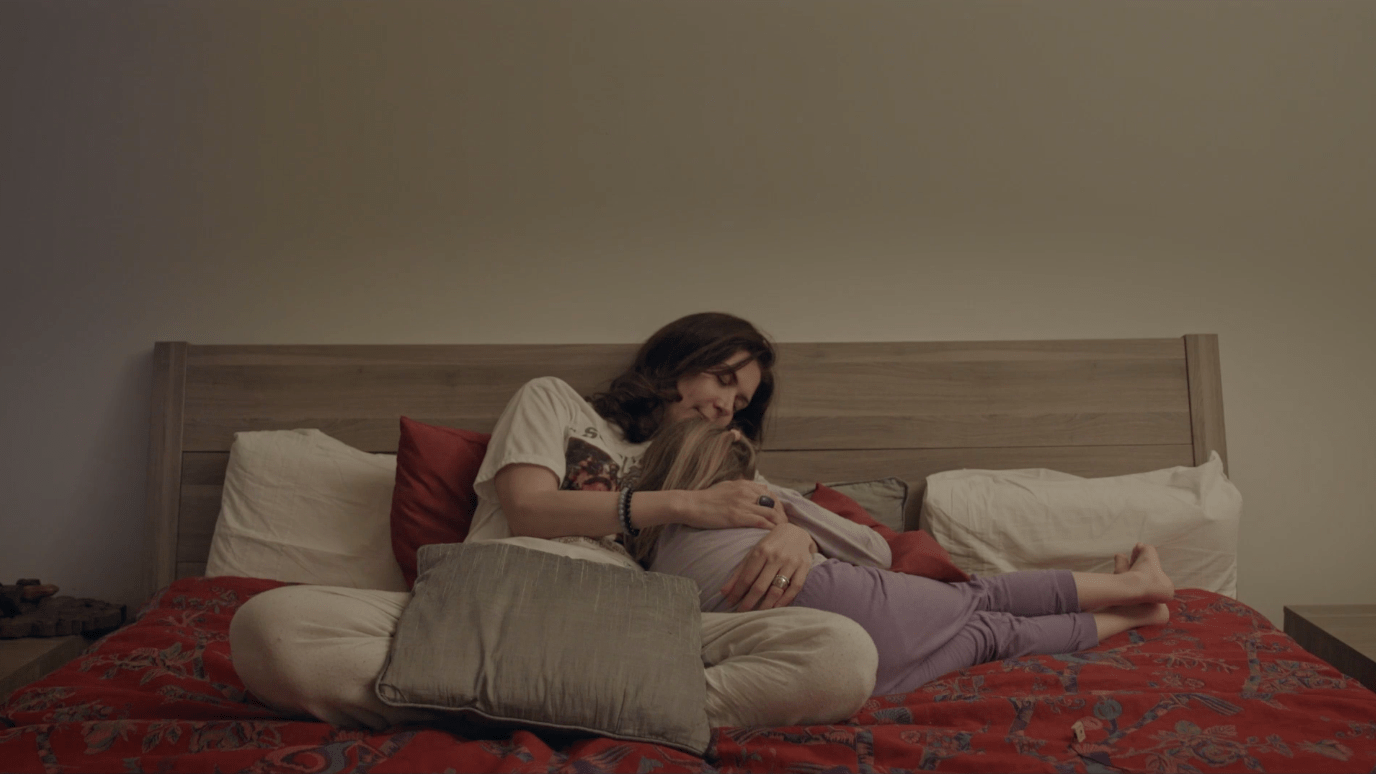
The New Eves_0 © Emilia Productions
Cinema Wednesdays - Fanny Agostino
What is everyday life like for women in Switzerland one year after the June 2019 feminist strike? What challenges must they overcome fifty years after the advent of the right to vote? Judith Lichtnecker and Liliane Ott put this question to a group of six Swiss women directors. The result is crude for a presumptuous ambition. Les Nouvelles EvesA documentary that drowns its purpose in a mishmash of generalities.
There are six of them living in Switzerland: Cosima, Sophie, Sela, Delphine, Naima and Valeria. They don't know each other and live in different language regions. One is a child, the other a young retiree. One is a professor at the University of Lausanne, the other is desperate to integrate permanently in Helvetia by improving her living conditions. What do they have in common? They're all women... Is that really enough?
One wonders what possessed the filmmakers to take on this surprising project. Was it ambition? A tendency towards megalomania? Unfortunately, our bad feeling will only be confirmed.
Six lives, six directors
The first step would be to dispel a belief, a myth that seems to persist in the collective imagination. A documentary does not lie in the convoluted proposition of «filming a slice of life». It's not enough to set up a camera in front of an individual, give him a few instructions to position himself correctly before launching into a monologue to «make a documentary». And yet it was in the face of this observation that Les Nouvelles Eves leave us. The film is devoid of any point of view, any artistic touch. This absence renders the subject matter banal to the point of being as exciting as an evening of depression. When, in the twilight of boredom, we make a pact with the devil without admitting it to ourselves. When we passively let ourselves be lulled by a season of «Bye bye la Suisse» on RTS in a moment of laziness.
Read also | The Snow Panther in film offers a face to contemplation
This lack of a real angle seems to us to be attributable to another dubious choice, that of letting six people co-direct the documentary. Indeed, each woman's journey is entrusted to a different director, and this is noticeable. The proposal lacks coherence, with no common thread allowing the documentary to stand out and form a homogeneous whole.
A thesis documentary that falls flat on its face
During my studies in film history, one of the first cinematic experiences I was given to study came from Russian cinema. It was an observation made by a Soviet director. The Koulechov effect - or the K effect for those in the know - refers to the viewer's ability to create meaning between two shots through editing. In a nutshell, the first shot shows an actor staring at the lens with a neutral expression. The second shot is followed by one of the three following shots: one of a woman lying on a couch, one of a plate of soup and one of a child in a coffin. Viewers who saw one of these three sequences interpreted the actor's emotions differently: desire, hunger or sadness. Lev Koulechov could then marvel at the power of the cinematographic medium, which he felt lay in the persuasive force of editing.
Strangely enough, I was reminded of the K effect during one of the last sequences of the documentary. As each frame gradually comes to an end, the film presents rushes filmed on June 14, 2019, during the feminist strike. This shot legitimizes the documentary's promotional discourse, around «everyday heroines» in a feminist perspective where they are seen as «carried by the feminist strike». Yet the protagonists are never questioned on this subject. Only the camera's strong suggestions - for example, when Cosima and her comrades play Indians and cowboys - refer to the conditions of each of these women.
At the end of a long, monotonous and tasteless journey, Les Nouvelles Eves bring nothing new to the table. Yet the lives of these different women are far from uninteresting. They reveal real societal issues such as retirement, integration and loneliness. Was it absolutely necessary to create what appear to be superficial links with the condition of women? One thing seems clear: documentary is not a form that serves the zeitgeist, it's a barometer of it.
Write to the author: [email protected]
Photo credits: © Emilia Productions

You'll also like


 French
  German
  English
Leave a comment