




«Power fascinates ordinary people».»
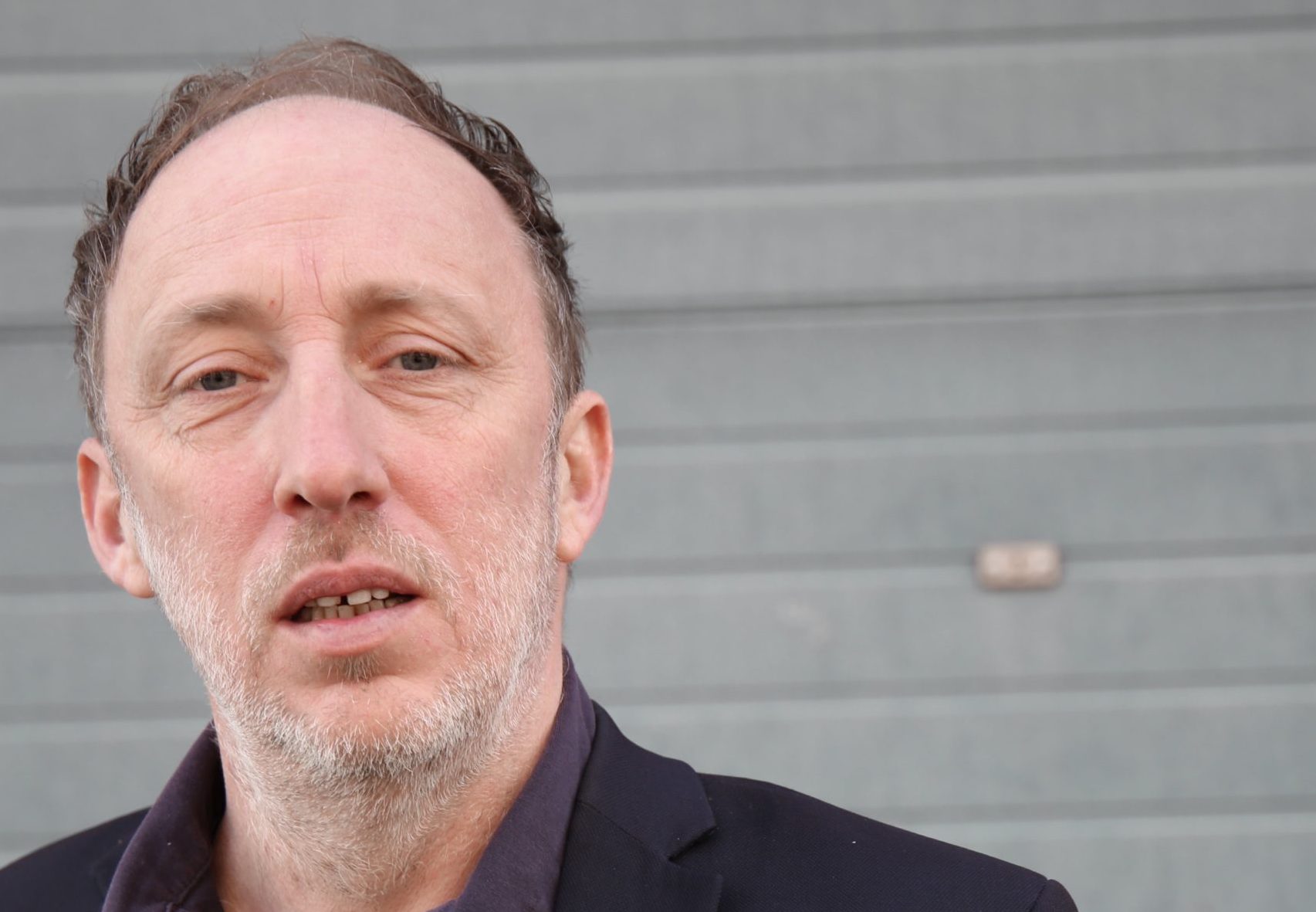
Vincent Bonillo, director of «Haute société» © Fanny Pelichet
They're ultra-rich, they're beautiful, and they own the world. This could be the beginning of a reality show or a sociological essay, but it's the subject of a show. But what happens when the wealthy take to the stage? A play premiered at the Théâtre Benno Besson deals with the power of the wealthy, and invites the audience to question the worldview of these privileged people. Interview with Vincent Bonillo, director of the show High Society.
Le Regard Libre: What are the sources of inspiration for your show?
Vincent Bonillo: I've been working on the theme of power for several years now. High Society, which is an original creation, draws its inspiration from several sources. These include TV series such as Storm, The White Lotus, the film Triangle of Sadness, various documentaries on the ultra-rich, and books such as Serving the rich (La Découverte, 2022) by Alizée Delpierre and The violence of the rich (La Découverte, 2013) by sociologists Monique Pinçon-Charlot and Michel Pinçon, which I read very carefully. For me, it's an appalling theme, and one that raised a number of questions that prompted me to create this show.
Why does this theme strike you?
I'd say that people in positions of power exert a kind of fascination on ordinary people. What's more, it's a subject that's dealt with extensively in the theater. I'm thinking in particular of Shakespeare's plays. People in positions of power embody what may seem to be the most characteristic features of our societies, as seen in TV series such as Dallas or Estate. We're fascinated by these people and want to understand them.
In this show, you focus on the power of a certain class, the affluent...
What's fascinating about the affluent is that there's a gap between their vision of reality and ours, that of ordinary people. I'd say that, through this show, I wanted to question this gap in vision between ultra-privileged people and normal people, who all live in an anxiety-inducing world, even if the former don't see it that way.
Why did you create this show precisely in 2023?
My interest in the theme of power has a long history. A few years ago, I worked on a text by French philosopher and economist Frédéric Lordon, entitled Turnaround after turnaround, in which he dramatizes Nicolas Sarkozy and the 2008 crisis. I did a show about it in 2013. The themes addressed in High Society and in Turnaround after turnaround are topical issues that affect a number of objects. I also think that the issues facing us today are getting tougher and tougher, and that it's important to allow the audience to reflect on them through our show.
What do you mean?
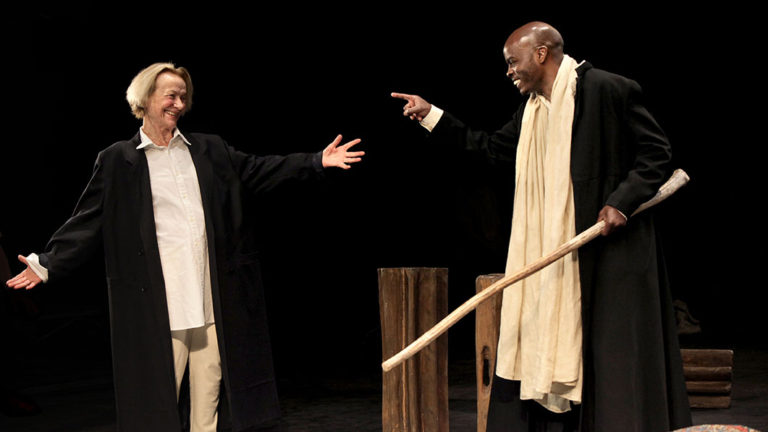
Even though High Society tackles extremely serious subjects, the show also uses a form of tragicomedy in which there are derisory, comic, even absurd moments that allow the audience to laugh and, in so doing, reflect on these issues.
How did you work with the actors on the set?
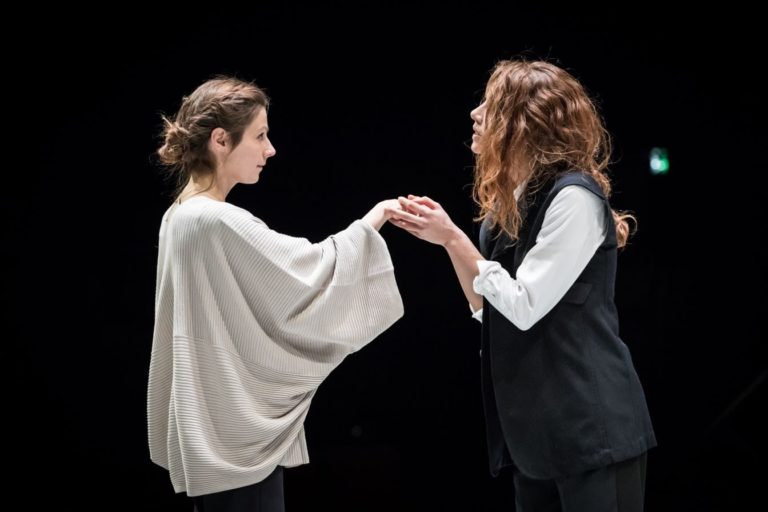
First of all, I'd like to point out that High Society is the first play in which I am both director and author. Originally, I wasn't going to write a script. However, at the start of our work, the actors Barbara Baker, Shin Iglesias, Julia Batinova, Marie Ripoll, the dramaturge Laure Hirsig and I began by experimenting on stage, improvising and discussing. Over the course of these exchanges and experiments, I began to write a text that took on more and more consistency, and I came up with a dozen or fifteen written sketches. This back-and-forth movement between the stage and the writing during the creative process was really enjoyable. It has to be said that we all wanted to work together and produce this show.
Finally, I'd like to ask you about the scenography you deploy in High Society. How do you use the site in your show?
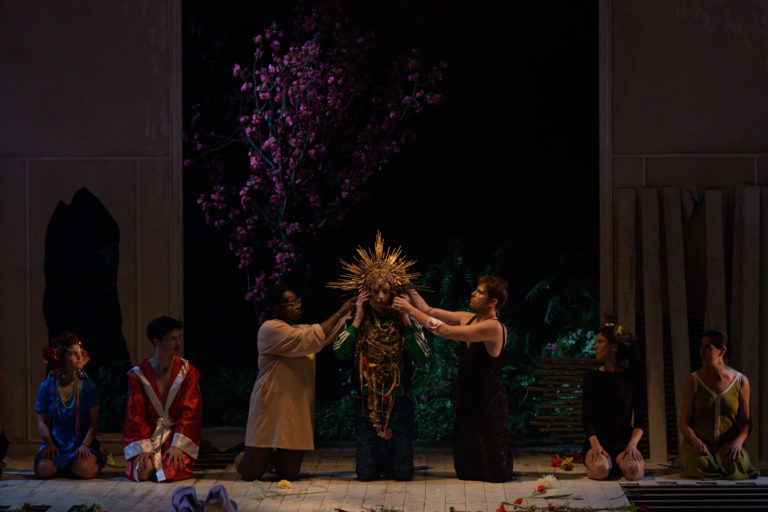
The scenography of our show is not independent of its setting. It takes into account the «majesty» of the Théâtre Benno Besson, so to speak. We've chosen to turn the theater into a «château des nantis», meaning that on arrival, spectators are welcomed by the actors for a "theatrical evening". The show takes place in the theater's Foyer room, and we use the entire width of it: the hallway is considered a kind of room, and we also use the balconies. So there's no frontal relationship with the audience, as is often the case in theater.
Write to the author: [email protected]
High Society. Until November 5, 2023 at Théâtre Benno Besson, Yverdon-les-Bains.


You'll also like
 French
  German
  English
Leave a comment