



«The Left has concreted over Seine-Saint-Denis for fifty years».»

Ferréol Delmas. Photo: Ecologie responsable
Ferréol Delmas, who criss-crosses France with his Ecologie Responsable think-tank, is convinced that ecology can and must be rooted in the regions and based on entrepreneurship. In short, right-wing. Interview.
Managing Director of the Ecologie Responsable think tank, which he founded in 2018, Ferréol Delmas wants to reconcile the right with ecology. By promoting local initiatives, the young Vauclusian with close ties to the Les Républicains (LR) party defends a rooted ecology based on innovation, common sense and responsibility. His think tank, financed by the privately-funded Nuances d'Avenir association (four-fifths) and the European Climate Foundation (one-fifth), aims to create a «great right-wing climate movement».
Le Regard LibreWhat is the «Tour de France» you launched in partnership with Nuances d'Avenir, which is currently in full swing?
Ferréol Delmas: Ecologie Responsable wants to propose a right-wing ecology, based on two pillars: rootedness and innovation. As most non-governmental organizations are very Parisian, we wanted to do the opposite: travel around France to observe what works locally and promote it.
In the space of a year, we've covered some twenty départements, from major cities like Grenoble or Rennes to tiny communes of 200 inhabitants, like Avoise in the Sarthe. We meet with elected representatives, fishermen, foresters and farmers. The idea is to identify concrete, effective solutions for the environment.
For example?
The municipality of Amboise, in the Indre-et-Loire department, plants a tree in the name of each child born in the commune: a simple, symbolic gesture of rootedness. In Goeulzin, in the Nord region of France, an old mill has been transformed into a small hydroelectric power station. This approach combines energy innovation and heritage preservation. In Etrepagny, Normandy, methanizers convert vegetable waste into green energy, which is sold to Enedis.
How do you pass on these initiatives?
We are preparing a report with 100 proposals from the field. It will be presented in January to around 200 mayors. The idea is to offer them a «toolbox» to inspire their local policies.
Are you also aiming for a political outlet at national level?
Yes, we're planning to set up a think tank parliamentary caucus to take certain proposals to the national level. But in the short term, the aim is to help local right-wing elected representatives to promote their ecological action. Many of them are already involved in ecology without saying so: they're a bit like the Monsieur Jourdain of ecology.
Your organization awards an annual Simone Weil prize. What is the link between this French philosopher and ecology?
Simone Weil, who lived from 1909 to 1943, argued in her book Taking root the idea that «rootedness is the first need of the human soul». To love one's terroir is to take care of it. Beauty, she said, is intrinsically ecological. Protecting our heritage also means fighting against the effects of global warming.
In a recent video, you claimed that Bruno Retailleau, president of the French Republicans, was more environmentally friendly than Sandrine Rousseau, a Green Party figure. Why do you think that is?
Bruno Retailleau introduced the law on ecological damage after the Erika oil spill. He has also developed renewable energies in the Pays de la Loire region: hydropower, solar power, and so on. What's more, his sober, down-to-earth lifestyle contrasts with Sandrine Rousseau's very urban, militant one. This publication on social networks shocked some people, but the aim was to remind us that the right-wing also acts for the environment, often without saying so. And that the left sometimes acts against ecology. Let's not forget that it was the left that concreted over Seine-Saint-Denis for fifty years, as a young man on the spot summed up for me.
Sometimes, on this issue as on others, the best way to act in politics is to do nothing, isn't it? In other words, allow spontaneous initiatives instead of over-regulating them, let people have capital instead of taxing them...
That's true, yes. It's also about spending better, not more. In France, we spend a lot, but the efficiency is low. I'm all for ecological spending, provided it's useful and controlled. It's a question of good management, not ideology. I'm also in favor of a certain protectionism. For example, taxing imported products that don't meet our environmental standards, rather than taxing our own citizens and companies. It's a form of liberalism that's internal but not external, close to the thinking of Richelieu.
What are your long-term goals?
Create a major right-wing climate movement. Today, according to our survey carried out with Parlons climat and Nuances d'Avenir, 80% of young right-wingers say they're ecologists, but 60% don't recognize themselves in the dominant environmentalist discourse, which is often highly moralistic. We want to offer them an alternative: an ecology that is grounded, responsible and guilt-free.
Which political figure do you think best embodies your vision?
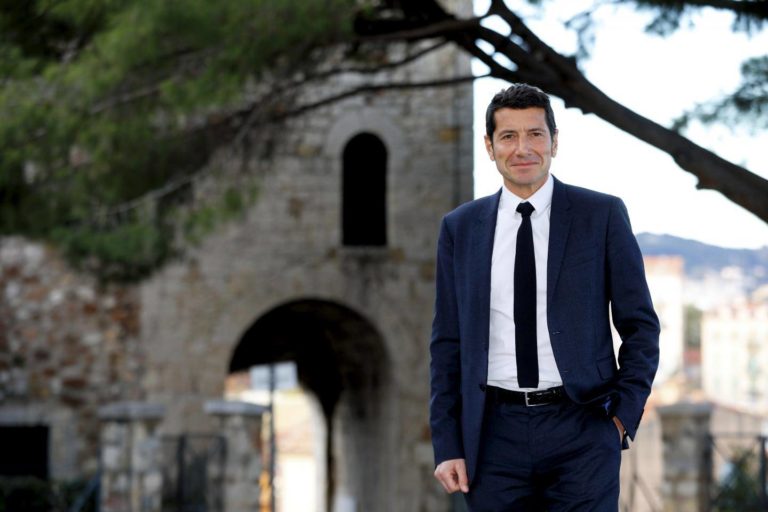
David Lisnard. Mayor of Cannes, he combines authority, roots and local ecology. In fact, he was awarded our Prix de l'Enracinement last year. For me, this local politician perfectly embodies the right-wing ecology we defend.
Read also | David Lisnard, the mayor at war against incivism
You spent a year at the Ministry of Housing. What do you remember about it?
A very formative experience. I was an advisor to Valérie Létard, in charge of rural areas. I tried to relaunch a scheme to help renovate old communal housing, but to no avail. It's frustrating, because the administration is very powerful, especially when the political situation is unstable.
Graduate in philosophy and journalist by profession, Jonas Follonier is the editor-in-chief of Regard Libre. Write to the author: [email protected].
You've just read an unpublished, free-access interview. Debates, analyses, cultural news: subscribe to support us and get access to all our content!

You'll also like
 French
  German
  English
Leave a comment