



«David Lean's »Doctor Zhivago", a monumental film
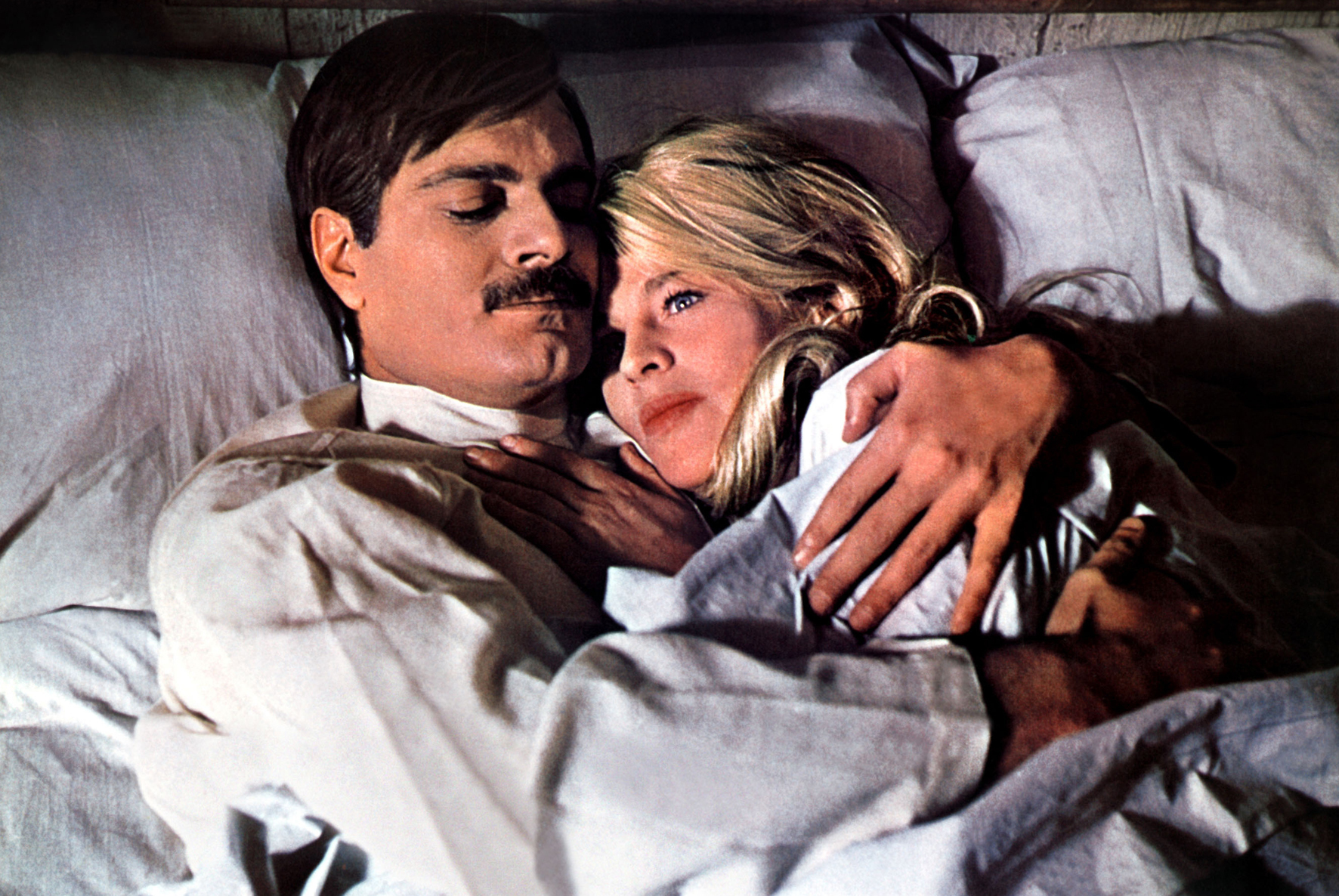
Awarded the Oscar for Best Film, Doctor Zhivago, directed by David Lean and produced by Carlo Ponti, is an adaptation of the novel by Boris Pasternark (1890-1960), released five years after the author's death, at the height of the Cold War. Censored by the Soviet government, the novel, whose action spans almost thirty years, portrays Russia from the October Revolution to the Stalinist period.
The film opens with General Yevgraf Zhivago, in the middle of a Soviet construction site, meeting a young worker who is none other than his niece, the daughter of the poet Yuri Zhivago and his lover Larissa. Confronted by the young woman's perplexity, the general tells her the story of Doctor Zhivago, who was born in Siberia before being taken in by friends from the Moscow bourgeoisie after his mother's death. There, he studied medicine before marrying his long-time girlfriend, Tonia.
At the same time, the viewer discovers the existence of Larissa, a young girl from the merchant class who is married to a Bolshevik. Yuri and Larissa eventually meet, but there's no sign of their future romance. It's not until many years later, when the Zhivagos move to Siberia after the expropriations of the Soviet regime, that Youri and Lara meet again and become lovers, while Tonia is pregnant. Unfortunately, Yuri is forcibly conscripted into the White Army for several months, and discovers on his return that his wife and son have fled to Europe. Lara and Yuri decide to leave Russia, but find themselves separated for the last time. Zhivago died several years later in Moscow, without ever finding Larissa.
Doctor Zhivago is a monumental film, as much for its cinematic quality as for its historical background. In three hours, it manages to retrace thirty years of a Russia troubled by revolutions, civil war and the ravages of Stalinism. The ebullient atmosphere of the country in the twilight of the First World War is wonderfully captured by the tensions between two opposing milieus, the bourgeoisie embodied by Tonia's family, and the exasperated proletariat through the character of Pachka, Larissa's husband. As a doctor, Yuri Zhivago has to fight the ravages of war and poverty, making him an ambivalent figure between the two social classes, under the icy gaze of Siberia.
As for the production itself, all the ingredients of a cinematic masterpiece are present in this film, first the actors, then the setting. Some of cinema's greatest names are present, including Omar Sharif as Dr. Zhivago, Geraldine Chaplin as his wife, Alec Guinness as General Yevgraf Zhivago, and Klaus Kinski, who makes a brief appearance in the train scene. The setting is grandiose, offering breathtaking scenery so similar to a real roller coaster - the film, of course, was not shot in Russia, where it was not authorized until 1994. However, more than any of the world's great actors, it is above all the melody of Maurice Jarre, the famous film music composer, that gives this film its timeless charm, lulled by the sound of the balalaika.
Doctor Zhivago is a feature film that remains one of the greatest in the history of cinema, and a timeless success. If three hours of viewing aren't enough to satisfy the thirst for escapism and poetic passion, Pasternark's novel will undoubtedly provide a wealth of new perspectives not only on Yuri and Lara, but also on the great Russia that today continues to renew its fascination for an unjustly censored work through TV series and musicals.
You'll also like

 French
  German
  English
Leave a comment