



Ah! «La belle époque»!
Les mercredis du cinéma - Kelly Lambiel
With this second film, presented out of competition at the Cannes Film Festival, Nicolas Bedos proves that, despite his lack of experience, he already has the makings of a great filmmaker. And not just because he's a talented writer and director. Or because, as is the case with all the bold, his person or his pen, as the case may be, provoke controversy. Or, finally, because we can already see the artist's torment as he strives to exhaust certain obsessions and recurring themes. If he wins our favor, it's first and foremost because his bittersweet comedies are like life itself: amusingly sad and sadly beautiful.
Nostalgia
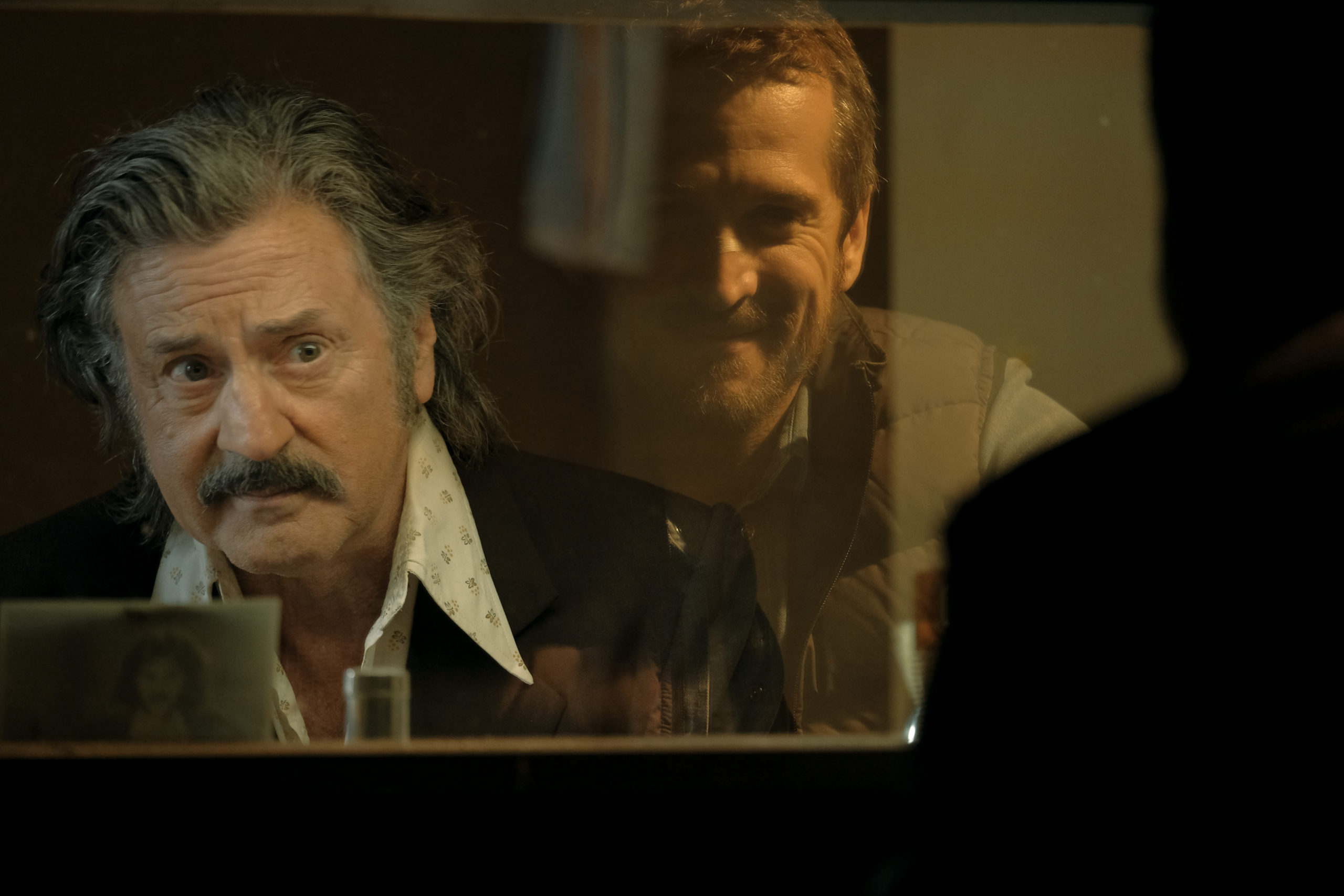
It's well known that «it was better before». So when his son offers him the chance to go back in time, despite some hesitation, Victor, played by a Daniel Auteuil I've never seen so touching, finally accepts. And when you see the director's cynical, barely caricatured portrait of our hyper-connected, superficial society, it's easy to see why.
Unemployed, freshly left by his wife Marianne (sublime Fanny Ardant!), he chooses to relive the day of May 16, 1974. Thanks to Antoine's (Guillaume Canet) customized staging and extreme perfectionism, the illusion is almost perfect.
Making artifice visibles
Although aware that he's in a re-enactment, Victor is troubled. True, the set threatens to collapse, the actors sometimes stray from the text, the spotlights are too visible and the rain is made to fall on demand; but the encounter is all the more real.
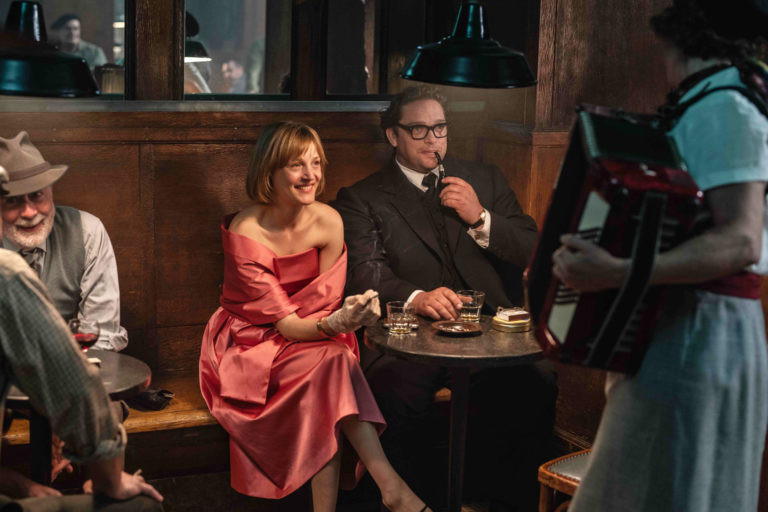
It's not her true love who pushes open the door to the belle époque and things don't unfold exactly as they had forty years earlier in this little café in Lyon. However, the beautiful Margot (Doria Tillier), in her role as Marianne, knows how to find the words that breathe new life into outdated memories.
Ingenious mise en abyme
But you can't live in the past. This Marianne is no more, and neither is this Victor. It's all fake and yet it's all true. Just like in the theater, just like in the movies. From laughter to tears, from tears to laughter, between grotesque reactions, biting retorts and moments of grace, Bedos forces us into a frantic rhythm. He plays with our feelings.
Thanks to a script that's by turns subtle and heavy-handed, lyrical flights of fancy and other moments of emotion are constantly shattered by incisive phrases and murderous retorts. «Stop, it's too good to be true», he seems to be saying, «this is a film, it has to look like life.»

Effective distancing
So, yes, the characters are impulsive, exuberant (magnificent!) and this propensity to turn situations upside down in an Ubuesque way could make the film seem implausible and take us out of the plot, but that's precisely what allowed me to get into it.
Aristotle was right. From the fictional and disillusioned story of Marianne and Victor, mixed with the more passionate story of Antoine and Margot, what I retain is the idea that we must love beings and not what they have been, that we must love love and not the idea we have of it.
Write to the author: [email protected]
Photo credit: © Pathé Films
You'll also like

 French
  German
  English
Leave a comment