



Ardente-x-s: the film within the film, except for one X

Ardente-x-s_0 © Climage
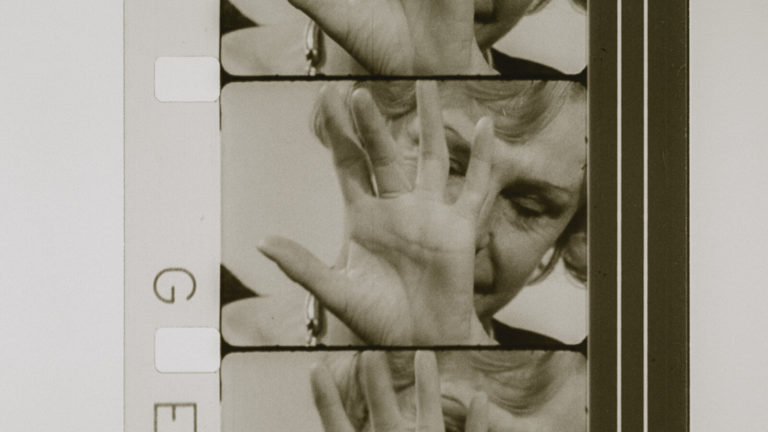
It's been four years since Patrick Muroni attended his first porn movie shoot for OIL Productions. On the strength of this experience, and above all of the encounter that changed his life, he presents his first documentary Ardente-x-s, The film is an engaging and thoughtful account of the collective's evolution.
November 2018. Patrick Muroni learns that one of his photographer friends from ECAL, Nora, would like to get into pornography. He soon begins attending meetings for the project that is taking shape around Taje, Olivia, Julie, and Méli. The group gradually comes to trust him to document their daily lives with a camera in hand—from behind-the-scenes glimpses of their work and their media exposure to other, more intimate moments.
Multiple Perspectives: From Porn Production to Post-Production
At the time, Méli had just submitted her anthropology thesis on queer porn films shot in Berlin, the capital of independent porn, where she had her «queer awakening.» She then moved from one job to the next and ended up working as a sales clerk in a cheese shop. In fact, she wonders if her boss—to whom she’d explained that she engages in «artistic practices related to sexuality» and is «super activist»—might fire her if he discovered her X-rated films. The subject is also still too intimate for Olivia’s father, who works behind the camera alongside the other photographers and videographers. Their artistic work is guided by a code of ethics aimed at positively representing the diversity of sexualities, genders, and bodies. Because «to have fun, you have to feel safe.».
Read also | Shameful!, when pornography breaks away from stereotypes
This local production of ethical and dissident pornography represents an innovative approach in Switzerland because its members dared to «come out»—that is, to embrace who they are and show themselves. Patrick Muroni sensed this inner turmoil from the moment he met the group that would become OIL Productions, whose journey he would follow for three years. Young women and non-binary artists who pushed him out of his comfort zone—«but in a good way!» he clarifies—in terms of perspective, political aesthetics, and even feminism:
«It was mind-blowing, because I’d never seen people having sex right in front of me. It opened up something very powerful—also as a director—in terms of how to film.»
Deconstructing the Male Gaze
To distinguish between pornographic images and documentary images, it all comes down to context, what’s outside the frame, and the framing. For example, to avoid a male gauze in the style of Kechiche. Patrick Muroni, who had directed three short fiction films up to that point, reevaluated his approach to directing—in Scope, a 2.35 panoramic aspect ratio—notably through discussions with cinematographer Augustin Losserand, and later with editor Ael Dallier Vega, who constructed the narrative arc. The goal? To avoid sexualizing bodies that are becoming sexualized.
A scene from the documentary that illustrates this issue takes us behind the scenes of one of the experimental short films shot by Nora. The Chilean performer is framed in a close-up, static shot with no cuts; his genitals are off-screen, allowing the viewer to focus on his face as he masturbates and then ejaculates. The filmmaker from Moudon used closer shots when he had a specific vision and managed to avoid fragmenting the bodies by using wide shots in other cases to contextualize the performers rather than objectify them.
A few weeks before the film was completed, it was screened for OIL Productions, which received it with great surprise, as «it reflected what the collective had experienced in a very authentic way.» What they seemed to be missing was thus added, rather than cut. Since OIL operates on a sort of internal budget and with limited resources, the short films featured in the documentary helped, among other things, to cover the protagonists’ fees.
The Public's Perspective
Ardente-x-s is currently screening in several theaters in French-speaking Switzerland, following its acclaimed run in the national competition at Visions du Réel last April. Not everyone has had the chance to watch explicit content on the big screen in a packed theater. The Lausanne preview at the CityClub was sold out. Furthermore, the quotes and other behind-the-scenes anecdotes mentioned here are taken from a discussion with the film’s crew, moderated by Anne Delseth, who is in charge of programming.
A packed house, too. The audience shivers as it is transported back with the protagonists to the heart of the feminist strike, during a sequence that remains one of the few audiovisual depictions to do justice to that event. The audience sighs upon hearing the arguments often used in debates against feminists—in this case, Méli on the set of *Infrarouge*.
Finally, the energy and emotion are conveyed to the audience through the reuse of Yougo Girl songs that have truly set the pace for the collective’s life, such as the one that plays the closing credits. The BPMs signal a gradual return to calm. A return to normalcy—and thus to a certain standard—which everyone has the right to question after the screening.
Write to the author: indra.crittin@leregardlibre.com
You've just read an open-access article. Debates, analysis, cultural news: subscribe to support us and get access to all our content!
Ardente-x-s © Climage

You'll also like

 French
  German
  English
Leave a comment