



«Asteroid City», a cloying formalism!
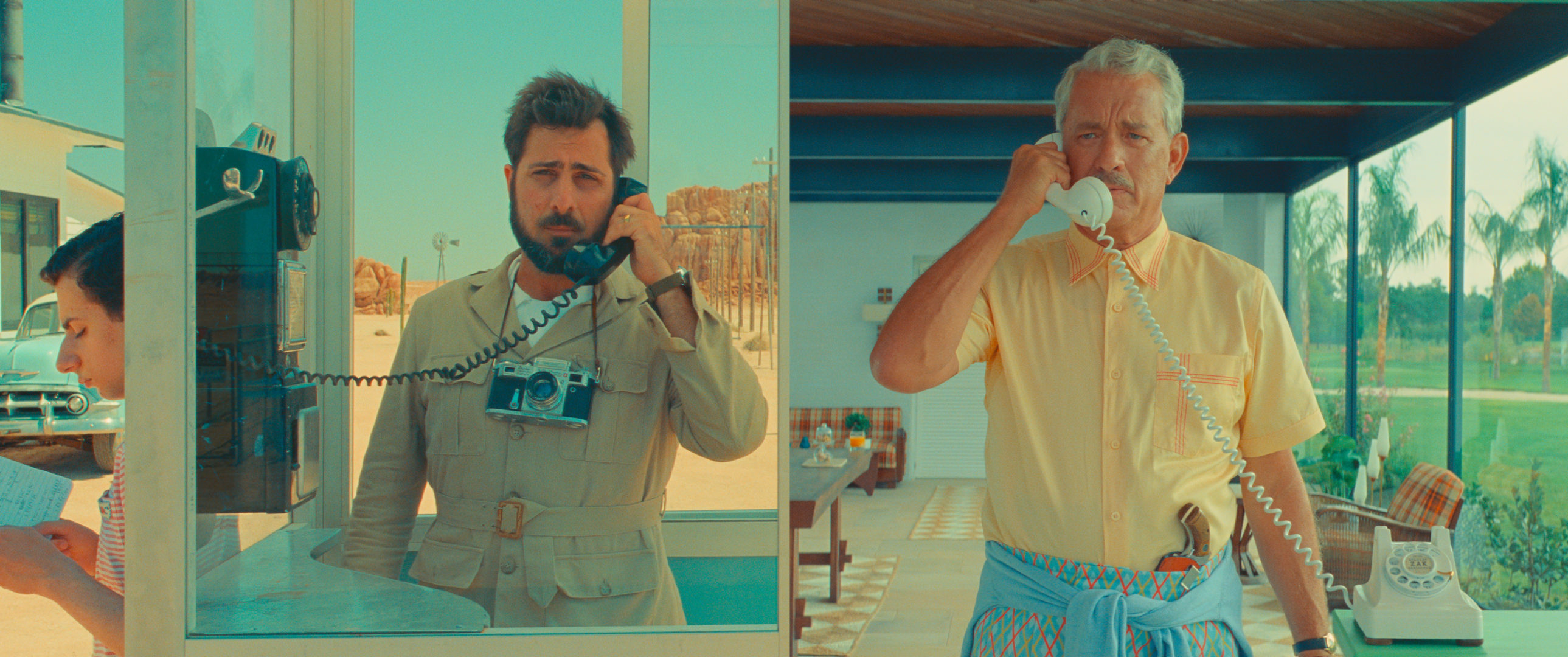
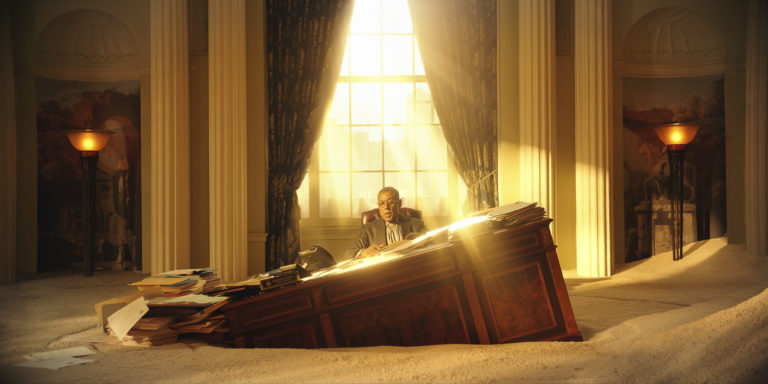
«Asteroid City» (Wes Anderson, 2023) © 2023 Focus Features, LLC
Wes Anderson is probably the most recognizable of contemporary filmmakers. With his symmetrical shots, absurdist humor and pastel colors, the American filmmaker has established his own style. But has he locked himself into his own pattern with Asteroid City?
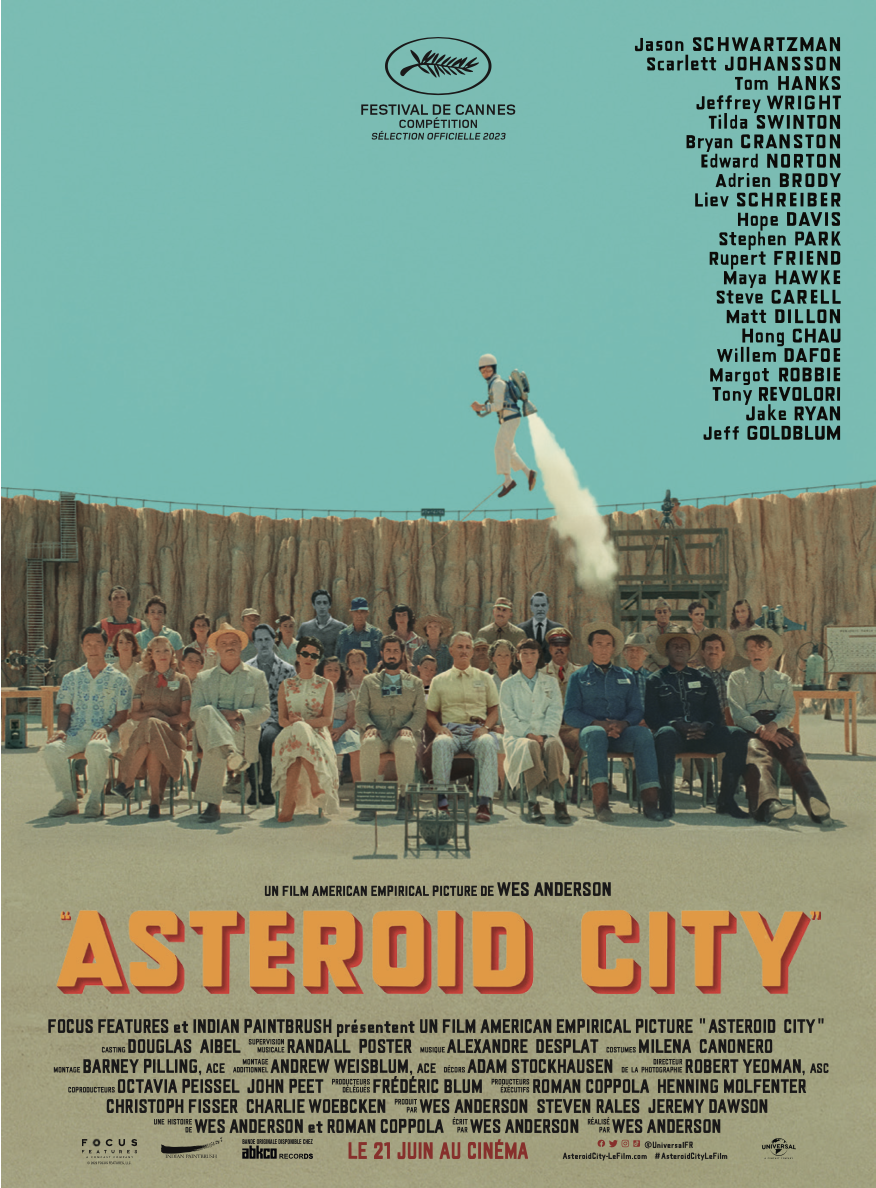
A fictional Midwestern town sandwiched between nuclear tests and a meteorite crater, Asteroid City hosts an annual science contest for children with a passion for the cosmos. In 1955, however, a surprising visitor from outer space upsets the balance and forces the authorities to confine all participants to the festivities.
From the very first shot, Asteroid City is identifiable as an Anderson film. The frames are meticulous and the use of black and white recalls his previous works. Here, a host (Bryan Cranston,known for his role in Breaking Bad) announces that the story we're about to hear is a play. It's a strange plot device, but one that punctuates the entire story. What follows is a traveling from a train to Asteroid City, the main scene of events. With the various protagonists introduced (many, many protagonists), the author takes viewers on a zany mishmash of millimeter shots and finely-tuned panoramas. But something's not quite right.
Disorder in orderly surroundings
Si tous les personnages sont intéressants, voire drôles (les trois filles du protagoniste principal, hilarantes de décalage et d’humour noir, n’ont malheureusement pas assez de temps à l’écran pour leur potentiel), ils sont trop nombreux pour pouvoir être réellement exploités. Le narrateur de départ doit d’ailleurs introduire les personnages, joués par des comédiens de théâtre fictifs, qui interpréteront la pièce (en noir et blanc) jouée dans le film (en couleurs). Attention à ne pas cligner des yeux, au risque de manquer l’une ou l’autre apparition dont l’importance reste à déterminer. Cette vitesse qui confine à la précipitation crée une première barrière avec le spectateur, qui se retrouve submergé d’informations et ne sait plus quoi retenir. Finalement, seuls quelques-uns d’entre eux sont vraiment importants, tandis que le reste ne sert qu’à remplir le cadre.
At the same time, the plot is very simplistic. The pivotal role in the story is played by Steenbeck (Jason Schwartzman); his relationship with Midge Campbell (Scarlett Johansson) est probablement la meilleure surprise. Toute en finesse et retenue, elle tisse un fil rouge dans un récit décousu qui, une fois les points reliés, ne s’éloigne guère de son résumé initial. Même le désordre annoncé par l’arrivée d’un alien (joué par un Jeff Goldblum inutile) n’est au final pas assez impactant pour réellement faire évoluer le film. C’est à se demander si le réalisateur n’aurait pas gagné à éliminer cette intrigue d’extraterrestre afin de faire respirer un peu le propos, déjà alourdi par une narration enchâssée dont les fils se croisent à plusieurs instants.
Too much meta kills the meta
S’il est un élément scénaristique particulièrement délicat à gérer, c’est bien l’enchâssement narratif. Le défi d’entremêler des lignes narratives qui ne sont pas censées se rencontrer est un véritable casse-tête à l’écriture. Dans Asteroid City, At first glance, the theater-cinema-narrator interlock seems clear. In reality, it quickly becomes confusing as the characters leave the «cinema» field through a door (literally) to arrive backstage in the «theater», in black and white, and complain about their actions. While the comic potential is interesting, it quickly turns into a kind of unraveling, even a clearing up: a narrative that justifies the lack of coherence and the stumbling of the script.
Read also | Isle of Dogs, a complete work of art
Pourtant, il serait injuste de trop taper sur ce film dont l’ambiance «maison de poupée» est stupéfiante. L’utilisation d’effets numériques et d’incrustations de miniatures enrichit le travail sur les proportions; Anderson, grand narrateur, manipule les petits personnages. Bien qu’il lui manque une réelle dramaturgie pour tenir en haleine, Asteroid City is still a good film, in which the plethora of celebrities commands respect, as it seemed unthinkable that they would all be directed in exemplary fashion.
Write to the author: [email protected]
You've just read an open-access review. Debates, analysis, cultural news: subscribe to support us and get access to all our content!
You'll also like




 French
  German
  English
Leave a comment