



«CODA», music as therapy

Le Regard Libre N° 49 - Ivan Garcia
A documentary about the Japanese musician and composer Ryuichi Sakamoto, Coda reveals his relationship with music, which he views as both a form of personal therapy and a means of raising society’s awareness of certain issues, such as ecology and human nature.
In music theory, the “coda” of a score indicates the reprise of a musical section that has already been played, allowing the melody to come to a close—often with a few subtle variations. This is why the title of this film takes on its full meaning. Although certainly less well-known to the general public than Joe Hisaishi, the composer of Hayao Miyazaki’s soundtracks, Ryuichi Sakamoto is nonetheless a key figure—much like Hans Zimmer—for anyone interested in film music.
Between Destruction and Disease
The opening scene of the documentary—which lasts about ten minutes—transports the viewer to Miyagi Prefecture, within the contaminated zone of Fukushima. There, the camera captures Ryuichi Sakamoto examining a piano. Rumor has it that this instrument survived the tsunami. After conducting various tests, the composer plays a short melody and comments on the instrument’s sound; nature—as we will later learn—tunes the sounds as it pleases when it makes itself known.
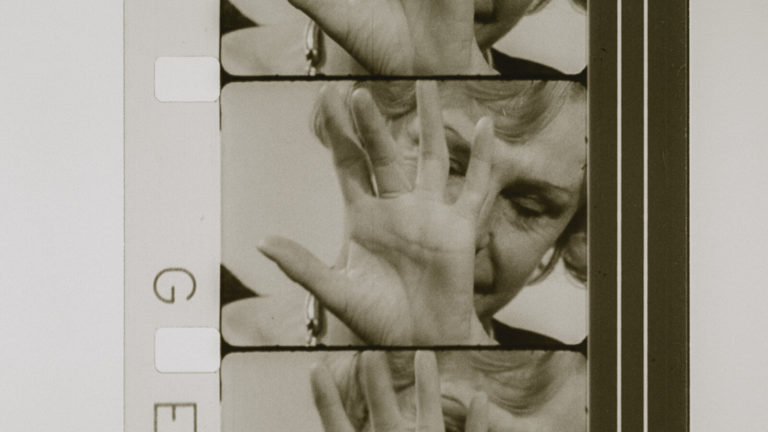
However, despite this sort of initial optimism, he very quickly travels to the Fukushima area to see the damage for himself. He eventually takes part in anti-nuclear protests against the Japanese government. We should note that—throughout the documentary—the camera focuses on Sakamoto—his hands and face, in particular—without ever directly showing us his point of view through an internal focus; this is a kind of narrative choice intended to ensure the objectivity of the perspective applied to him.
At the end of the scene, he—accompanied by two musicians—gives a concert for the tsunami victims, performing one of the pieces he composed for the film Furyo: Merry Christmas, Mr. Lawrence. Beautiful, gentle, and masterfully performed, it captivates the audience. The music, in Coda, lies hidden. It lies in wait for the viewer; only the composer’s music gets its moment in the spotlight, because this is his story. Thus, the musical references drawn upon refer exclusively to Sakamoto and his work; a somewhat surprising choice, but one that doesn’t really bother the viewer, since it allows them to discover a little-known world.
After the opening, Ryuichi Sakamoto—speaking directly to the camera—announces that he has throat cancer and is undergoing treatment. Building on this statement, the musician explains that this experience—in addition to drastically reducing his working hours and abilities—has given him the opportunity to start from scratch, allowing him to approach his work in a different way. Caught between nuclear destruction and illness, Sakamoto is rewriting the score of his life to compose its next chapter.
A Look Back and Sources of Inspiration
Rather than covering his entire life, the feature film focuses on certain key moments in the filmmaker’s creative career. Thus, the retrospective begins in Japan in the early 1980s, at the cutting edge of progress and technology and, musically, a pioneer of electronic music. Few people know this, but Sakamoto, long before he began his career as a film composer, was part of a fairly well-known electronic music group: The Yellow Magic Orchestra.
A pioneering group known for its use of synthesizers and computers, it is a key, foundational element of the scene synthpop Japanese. The documentary also features Sakamoto’s first composition—for the band—the song Tong Poo, a beautiful electronic melody, created by computers, interwoven with archival footage from one of the band's concerts.
A great admirer of the Russian filmmaker Andrei Tarkovsky, Sakamoto has developed an aesthetic approach rooted in his desire to interweave natural sounds—the sound of water, birdsong, the sound of the air—with the sounds produced by his instruments, creating a hybrid and evocative work. It is worth noting that Tarkovsky drew heavily on the compositions of Johann Sebastian Bach for his music—a point the Japanese composer emphasizes by mentioning the melancholic tone of Bach’s works—and sought to create his own composition as a tribute to these two figures. We then see the composer composing—with a bird’s-eye view of his hands and the staves—his melody, which will one day rival that of the Russian filmmaker.
Throughout the documentary, the footage alternates between live-action shots, archival footage, and scenes from other films that inspired Sakamoto or that he helped direct. A key aspect of the work lies, essentially, in this reference to and tribute to Andrei Tarkovsky through the inclusion of a sequence from his film Solaris in the feature film. Also, one of Sakamoto's latest works is titled Solari, thereby establishing an intertextual connection to Tarkovsky.
The film composer
After his brief career in electronic music, Sakamoto turned to composing film scores. With Merry Christmas, Mr. Lawrence, he was awarded a prize, and the number of collaborations increased. From Tokyo to New York via Beijing, the musician worked at a frenetic pace with film giants such as Bernardo Bertolucci and Alejandro González Iñárritu.
The protagonist is also an intellectual because, while his library contains numerous books, the camera—presumably—shows only a few of them, except for the one on the artist Noguchi, a sculptor whose modernist aesthetic likely inspired him. Sakamoto also elaborates on his creative process by showing the number of copies—in different languages—that he owns of Paul Bowles’s novel, The Sheltering Sky, adapted for the screen by Bertolucci under the title «Tea in the Sahara». In this regard, a scene from Bertolucci's film appears on screen, and the Japanese composer comments on it by sharing an anecdote.
Bertolucci, dissatisfied with a composition at the last minute, had asked Sakamoto to compose a new one right away, arguing that Ennio Morricone could do it. The Japanese musician therefore composed—in thirty minutes—a new introduction for the film, which was a huge success. A lover of challenges, he had also composed for the film The Revenant González Iñárritu uses a two-part theme that eventually becomes out of sync. Viewers will then notice that Sakamoto’s original scores evoke memories, much like the archival footage used in the film. The feature film, moreover, makes use of minimal background music in order to better pay tribute to the artist’s compositions.
In the early 1990s, the musician’s compositions began to incorporate political and social messages, particularly regarding fossil fuels and the atomic bomb. Somewhat skeptical of technological and military progress, he encourages people to reconnect with nature through listening and music. In the 2000s, the artist also traveled to Antarctica and took the opportunity to record natural sounds, such as water flowing from a glacier, thereby emphasizing the importance of returning to one’s roots in the creative process. Coda ends with a scene in which Sakamoto mentions the piano he found in Miyagi; although it was crafted and shaped by human hands, nature allowed it to rediscover pure music.
Although it is somewhat incomplete and intended primarily for music lovers, Coda does not leave the viewer indifferent. By skillfully blending Sakamoto’s creative process with the experience of listening to his compositions in a documentary, the film celebrates the work of a musician who uses music as therapy—not only for himself, but also for a society that is increasingly losing its appreciation for it.
Write to the author: [email protected]
-
 Le Regard Libre - N° 49CHF10.00
 -
 Standard subscription (Switzerland)CHF100.00 / year
 -
Support subscriptionCHF200.00 / year

You'll also like


 French
  German
  English
Leave a comment