



Understanding misery with «Les Misérables»

Cinema Wednesdays - Loris S. Musumeci
The atmosphere is warm in the heart of Paris. It's summertime, and the final whistle announces France's victory at the 2018 Football World Cup. Suburbanites and urbanites celebrate together under the blue, white and red flag. The joy of the moment nonetheless hints at anguish. It's the anguish of the rest of the film, set in Montfermeil in the 93. We already know the pressures, we already know the climate that will prevail: that of confrontation. The shouting, singing and dancing appear in all their futility. futility, because world champion or not, France is at war. France is at war.
Clean break. We find ourselves with Stéphane, who joins the Montfermeil anti-crime squad that day. Montfermeil. It's his first day on the job, and the worst day of his life. We soon find out why. In the meantime, his two colleagues, well rooted in the the neighborhood, take him on a tour of the place and its marvels: community clans, trash, mistrust, drugs, prostitution, Salafism and more. The many of them are not directly concerned by these problems, and life in the neighbourhood many are not directly concerned by these problems, and life is bustling from the market to the playgrounds. But a little is enough to set people on fire, partly because they don't like the police in the neighbourhood, and partly because they don't like the police in the neighbourhood. police in the neighborhood, and also because they do nothing to make themselves likeable.

Violence and hatred
I was expecting a lesson in victim Manichaeism. On the one hand, there'd be those bastard cops, servants of a racist, oppressive state; on the other, there'd be idle youngsters whose dirty deeds and even crimes were always and endlessly justified by their condition as "victims". wretched. Ladj Ly's film is not Manichean, because in reality, the three policemen and the local residents share the same malaise, the same language of «wesh, gros» and «putain, ferme ta gueule». It's not the brigade that dominates, nor one clan or another. But the violence and hatred, of which all are victims.
Adding nuance to the subject matter, the script avoids portraying the characters as caricatures. The three are neither legalists nor tough guys, but they're not saints, either. saints. Their behavior is nonetheless criticizable in many ways. in many respects. Yet we understand that certain methods and uncivilized uncivilized arrangements are perhaps the only ones possible in a neighborhood no one is afraid of anyone, but where everyone sees the other as a potential sometimes very real.
Young people, too, are shown for what they are: dreamers who get excited when they have a ball at their feet, victims of their underprivileged environment, thugs who steal and break things, and who have no real respect except for the bearded big brothers who talk to them about religious life.
And let's talk about the group of believers. Beard and djellaba, it's obvious; a little manipulative and authoritarian, of course, but not evil. If they don't inspire the most outspoken sympathy, Ladj Ly chooses to show their wisdom and fraternal commitment. They may be responsible for the phenomenon of radicalization, but they want to help those in need and inspire love in others, even the police. And that's what Islam is all about: both bloody jihadism in the name of the prophet and benevolent solidarity in the name of the prophet.
Hope and despair
In fact, the characters are so finely presented that the two protagonists who struck me as the most reasonable and honest are Stéphane, one of the policemen, and Salah, the group leader of the neighborhood's most assiduous clerics. The truth is, you become as attached to them as you do to the teenager Issaka, who is almost responsible for a civil war - and I do mean civil war! almost because, whether I'm accused of nonsense or not, I believe that a child or teenager is never fully responsible for an act committed at the age of ten or sixteen.
Les Misérables finally accumulates a fair share of clumsiness. Starting with the form, which verges on beauty at every turn without ever achieving it. You get the feeling that the director is trying to render aesthetically pleasing through cinema what has nothing to be aesthetically pleasing in reality, in the manner of a Baudelaire writing Les Fleurs du Mal, or simply Hugo, who wrote Les Misérables, the original. But the excessive and clumsy use of the drone spoils everything. It's even supposed to carry a symbolism that I didn't understand at all. But this doesn't stop the film from making us understand misery through images and words, and offering us a masterful, thrilling ending, open to the darkest despair as well as the most surprising hope.
Write to the author: loris.musumeci@leregardlibre.com
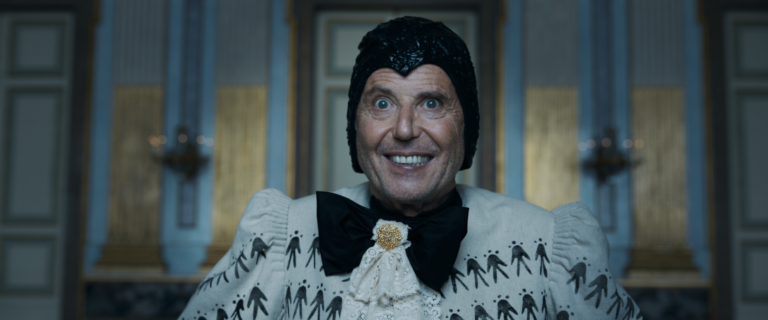
Photo credit: © Filmcoopi
You'll also like


 French
  German
  English
Leave a comment