



Anja Kofmel's multidimensional point of view in «Chris the Swiss».»
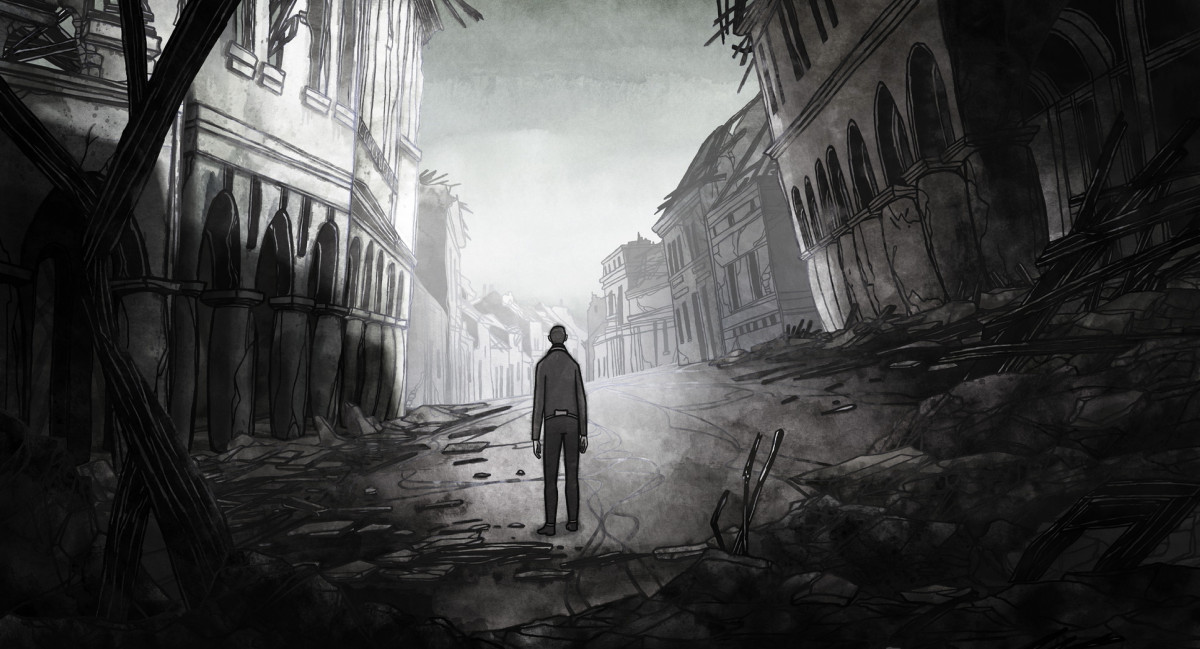
Saturday movie platforms - Malika Brigadoi
Chris the Swiss, a biographical and historical animated documentary directed by Anja Kofmel, chronicles the life of Swiss journalist Christian Würtenberg. In 1992, amid the war in the former Yugoslavia, he was found strangled in a field in Croatia. Chris’s family never understood his desire to venture so close to danger as a journalist. Ever since the news of his death, the director—who is also Chris’s cousin—has never stopped being haunted by the mysteries surrounding his death. She therefore decided to conduct her own investigation and piece together his story. In doing so, she hopes to understand not only why he went into the heart of the conflict, but also why he lost his life there. Chris the Swiss has received more than a dozen awards, notably at festivals, including, in 2019, the Prix du cinéma suisse for best documentary film.
The film's strength lies in the vision it offers viewers. It skilfully blends four formal devices - animation, reportage, archive footage and eyewitness accounts. In this way, Chris the Swiss offers a multidimensional perspective on the situation, which, in a way, helps counterbalance the idealization of the main character. Indeed, one of the criticisms that could be leveled at the film concerns its impartiality. Beyond the debate surrounding the objectivity of a documentary—which can never truly be unbiased, since, on the one hand, the director’s perspective will inevitably shine through in the work and, on the other hand, film will take a stance and encourage its audience to follow suit—the emotional closeness between Anja Kofmel and her subject may have prevented her from revealing the full extent of her cousin’s personality. Chris’s reprehensible acts are systematically excused, unlike those of others, which are explicitly highlighted. The film gives the impression that Chris played only a very minor role in the conflict. This approach paradoxically renders him passive in relation to his own decisions and actions. Although the director attempted to remain neutral by incorporating a multitude of voices into the narrative, the viewer can still sense the hero that the young woman imagined her cousin to be.
A multi-faceted look
The animation represents the subjective vision of the young Anja Kofmel. These scenes show how she envisions her cousin’s past, but also evoke the fears she overcame and the nightmares that haunted her after his death. These animated sequences resemble a child’s simplistic perception; for example, the dark drawings feature numerous shades of gray, recalling the absolute dichotomy that children imagine between good and evil. The caricatured nature of the characters—and the surrounding landscape—also reinforces the vivid, fantastical representation of the world as seen through a child’s eyes. Young Anja, then ten years old, idealizes Chris and sees him as a heroic adventurer. At the same time, Anja Kofmel creates a documentary in which she details the investigative process she is conducting. In it, she follows in her cousin’s footsteps and revisits the key locations of his journey. These documentary sequences serve, in a way, as a unifying thread that ties the various formal elements together.

The portrait of Chris portrayed by the testimonies proves to be different. These sequences, which give voice to parents, other journalists and soldiers, present a multitude of viewpoints on one person - Chris - and one situation - the war. These scenes paint a complete and contradictory picture of the young man, who is sometimes accused of being a spy, a traitor and sometimes just a journalist. The director also uses archive footage, which plays a key role in the film, opening the door to the larger story. The film is not just about Chris' adventure, but also about the complex world around him. These sequences put Chris's story in context, without transforming it into a story of the past. Chris the Swiss into a war documentary.
The transitions between the multiple formal devices are smooth for the viewer, who doesn't feel transhipped from one reality to another. On the contrary, the film offers a complex vision of the situation, woven from a multitude of testimonies. The film's narrative is clear and easy to understand. It's not just on a narrative level that these transitions seem fine, but also from an aesthetic point of view, mainly when switching from a filmed image to an animated one and vice versa. The features of the former merge into the latter, transforming, for example, railroad tracks into telephone lines. Through archive images, the viewer follows the big story and plunges into the little one with testimonies, animated images and reportage. These two dimensions - the big story and the little story - remind us that war is fought on two sides, but that in each of them there are, above all, human beings.
While animation allows for the use of symbolic imagery to address topics such as war in a visual way, the documentary has the ability to present a version of history—particularly through archival footage—that compels viewers to remember that this is the reality of the past. Chris the Swiss stands out for the way it looks at the small story - Chris's personality - but also at the big story, the war that took place in the Balkans at the end of the 20th century.th century. Indeed, the feature-length film explores, on the one hand, the conflict that led to the breakup of Yugoslavia and, on the other hand, moves its audience with the story of this young journalist’s journey. The director strikes an excellent balance between these two elements, as well as in her blend of genres and formal techniques, which makes her animated documentary deeply moving. Chris the Swiss can be viewed free of charge on the Swiss platform: Play Suisse.
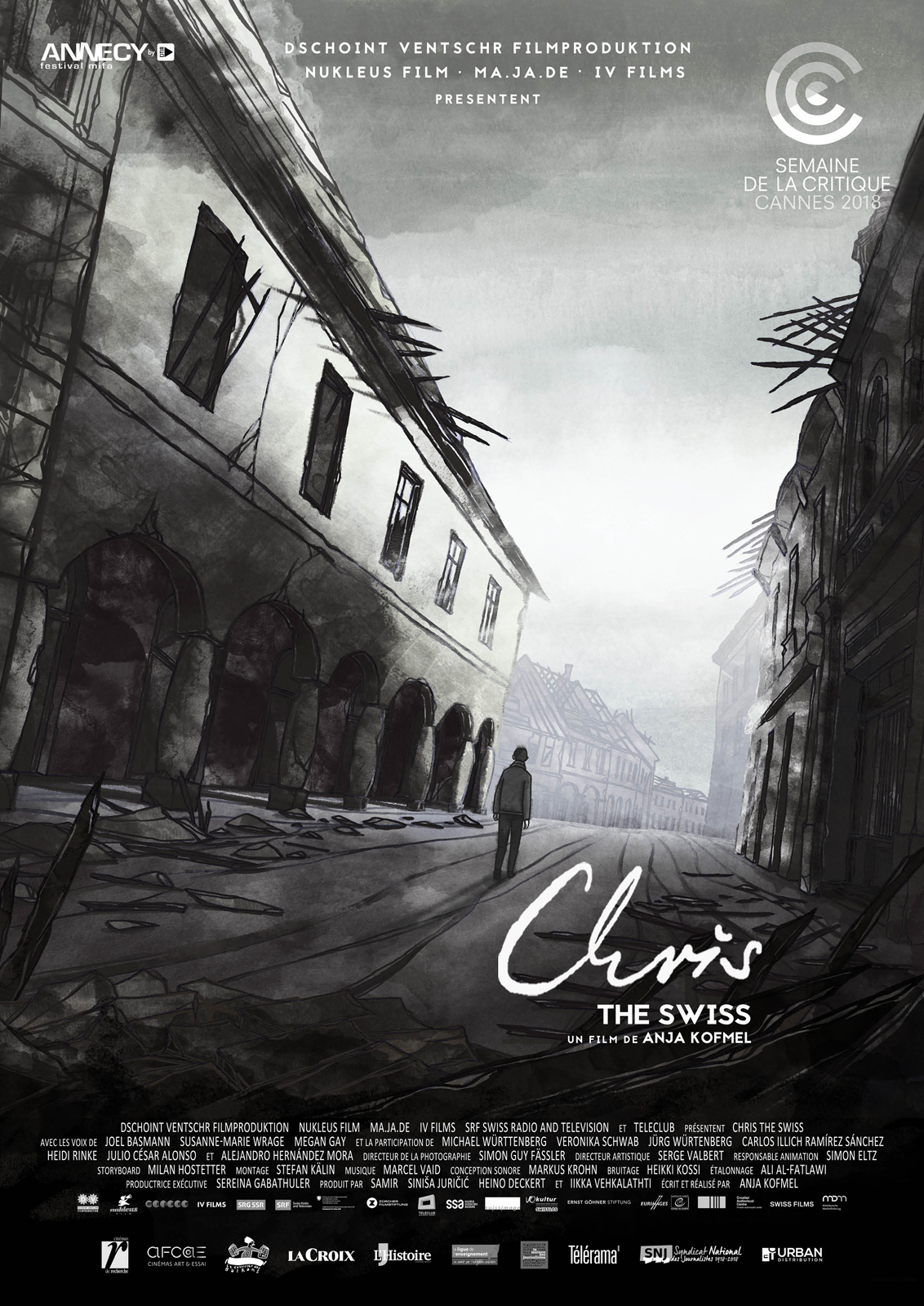
Photo credits: © Real Fiction and Urban Distribution
You'll also like

 French
 German
 English
Leave a comment