




«Scarface», much more than a gangster film
Cinema Wednesdays - Special edition: Gangsters in film - Kelly Lambiel
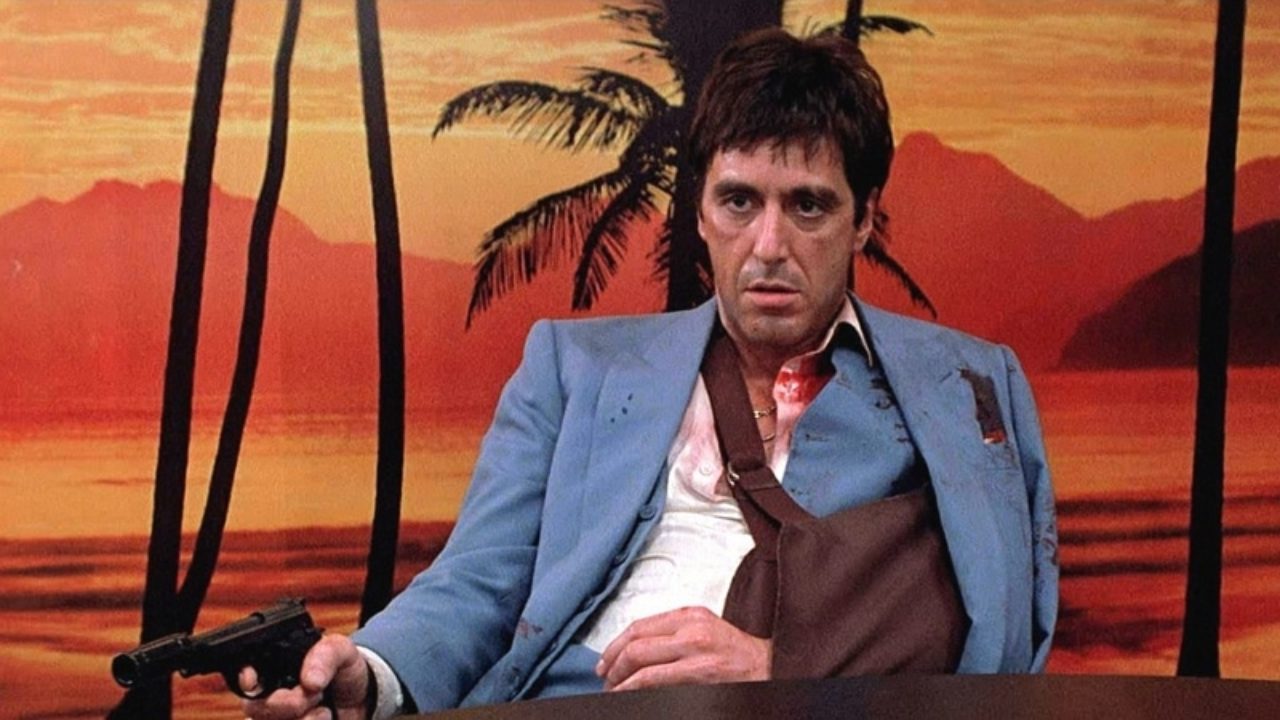
Tony Montana, his aplomb, his paranoia, his insolence. A character who needs no introduction, and a film whose destiny, imitating the trajectory of its main protagonist, could have been very different. Barely out, Scarface is disturbing, shocking in its violence, and not all praise. Over the years, however, it has become a must-have, taking its place alongside such genre greats as Visit Sponsor or Visit Postage paid.
A free adaptation
The story of Scarface, is a bit of a Tony Montana story. That of a outsider which, against all odds, climbs the ladder to flirt with the number-one spot. A running time of 2 hours 49 minutes, an (almost) incalculable number of obscenities uttered per minute, shocking scenes, a hint of incest and a main protagonist we find hard to like. On its release, the reviews were bad and unanimous for this remake from Howard Hawks' 1932 film of the same name, with a screenplay by Oliver Stone.
Here, the plot has been relocated and updated. Forget the windy Chicago of Prohibition, with its Italian- and Irish-accented mobsters dressed to the nines. Here we are in sunny Miami, where nose-powdering smugglers wear colorful shirts, open to gold chains and tanned bodies. Brian de Palma twists the codes of the gangster film, and Little Italy, cradle of the Sicilian mafia, gives way to a more Havana-like Little Havana. bling bling, the birthplace of the Spanish-American mafia.
A range of possible readings
Although it was initially feared that the film would stigmatize the Cubans who, in the wake of the «Mariel Exodus», arrived en masse in the United States in the 1980s to escape Fidel Castro's communism, many thought they perceived in Scarface the possibility of successful immigration. Antonio Montana is nobody, but he arrives on the continent like a conqueror, determined to live his American dream, even if it means soiling his promised land. His story is a bit like that of the victory of the oppressed; a fable that tells how you can start from nothing and succeed in becoming someone.
Others, on the contrary, see it as an acerbic, violent critique of the American economic system, embodied by an insatiable, unstable character who orchestrates his own downfall. It's ambition and greed pushed to the extreme, it's consumer society running out of steam, «it's the capitalist dream losing its head», says De Palma. As impulsive as Don Vito Corleone is moderate, as vulgar as the latter is classy, Tony is not one of those characters who immediately attracts the public's sympathy. And yet...

Identifying with anti-heroes
Visit mafiosi have always been popular with the public. Just look at the success today of series such as Narcos and its derivatives, Peaky Blinders or, in another register, Sons of Anarchy. Beyond the fascination of weapons, easy money and women, what can those looking for something other than images worthy of a good old rap video find? A symbol. For the mafioso is not just a thug. He certainly embodies the individual on the bangs of society, and in this capacity alone can already unite a good number of moviegoers, but it's also as a member of an organization that he fascinates.
The term mafia, Its etymology remains controversial, and it could be used to designate an expensive object and misery at the same time - a paradox which, incidentally, suits the subject perfectly. But it's worth noting that this word is often associated with another term that sounds similar: family. The mafioso is part of a group, he has a place, a status. When the state shows its flaws and sidelines him, the family is there, and that's why he's bound to his clan for life and death. This perfectly hierarchical and codified anti-system is seductive, because it offers outcasts a role and possibilities that society often denies them.

The advent of an icon
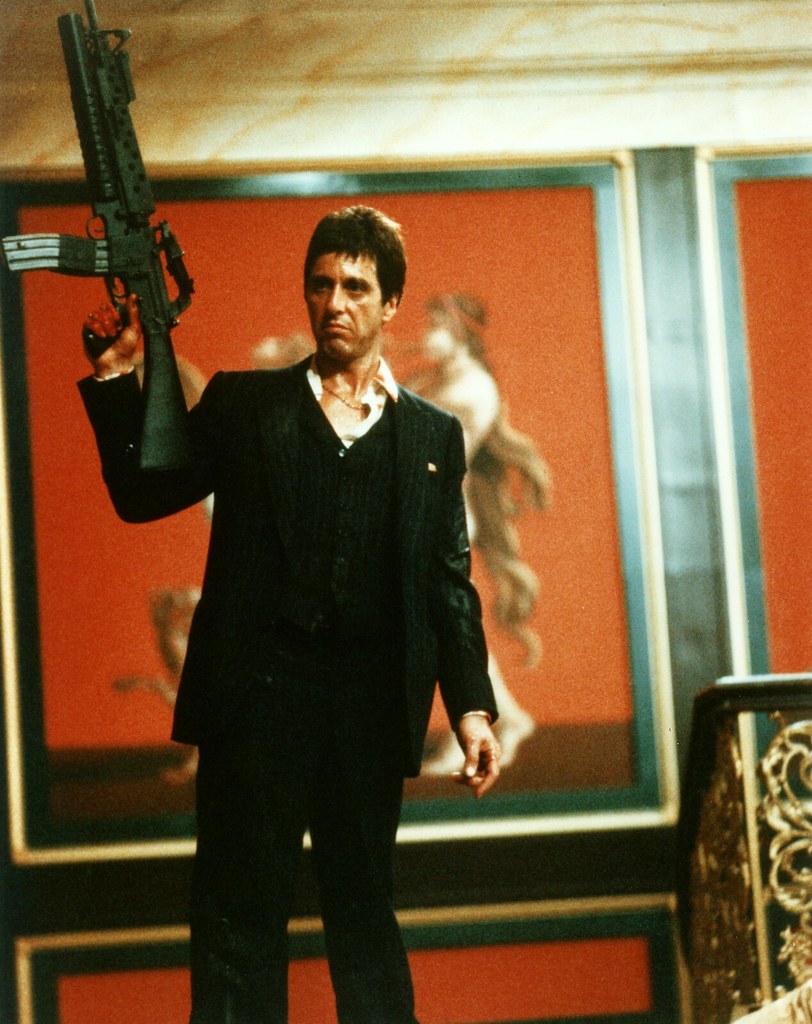
And what about Tony Montana, a lawless punk with an oversized ego who refuses to play by the rules and goes it alone? He impresses with his charisma, yes (thanks Al Pacino). But it's his outspokenness and generally extreme stances that make him stand out. If, at first, this megalomania lends itself to a smile and makes the character downright detestable at times, I think it's precisely this thirst for the absolute that has helped make his name a legend.
Montana is a genuine, uncompromising man who refuses to lie or make concessions. While Al Pacino admits to having been inspired by Shakespeare's Richard III in constructing his role, we can also find in him the traits of another hero of the theatrical repertoire. Eternally dissatisfied, he demands nothing less than to possess the world, just as Camus' Caligula wished to possess the moon.
Unfortunate victims of dreams too big for this existence, unable to live with what society has to offer, abhorring hypocrisy and mediocrity, they both obviously made mistakes, pushing the experience of the absurd to the extreme, sacrificing their lives - and those of many others - to their ideals. But they didn't cheat, and it's this courage that for me continues to make Tony Montana a source of inspiration, generation after generation.
Write to the author: kelly.lambiel@leregardlibre.com
Photo credit: © Universal Pictures
You'll also like





 French
  German
  English
Leave a comment