



«Silverton Siege»: South African cinema asserts itself, but abolishes nothing

Silverton Siege © Neo Baepi _ Netflix
Cinema Wednesdays - Jordi Gabioud
With the advent of digital technology, South Africa's film industry is increasingly emerging as a key player in the global production arena. Silverton Siege proves this in its turn. It has nothing to be ashamed of in the face of the great American productions, and displays great visual and narrative qualities. And yet, it's sad to see that a film questioning the identity of its country should end up being so... American. A look back at the paradoxes of this country's film industry.
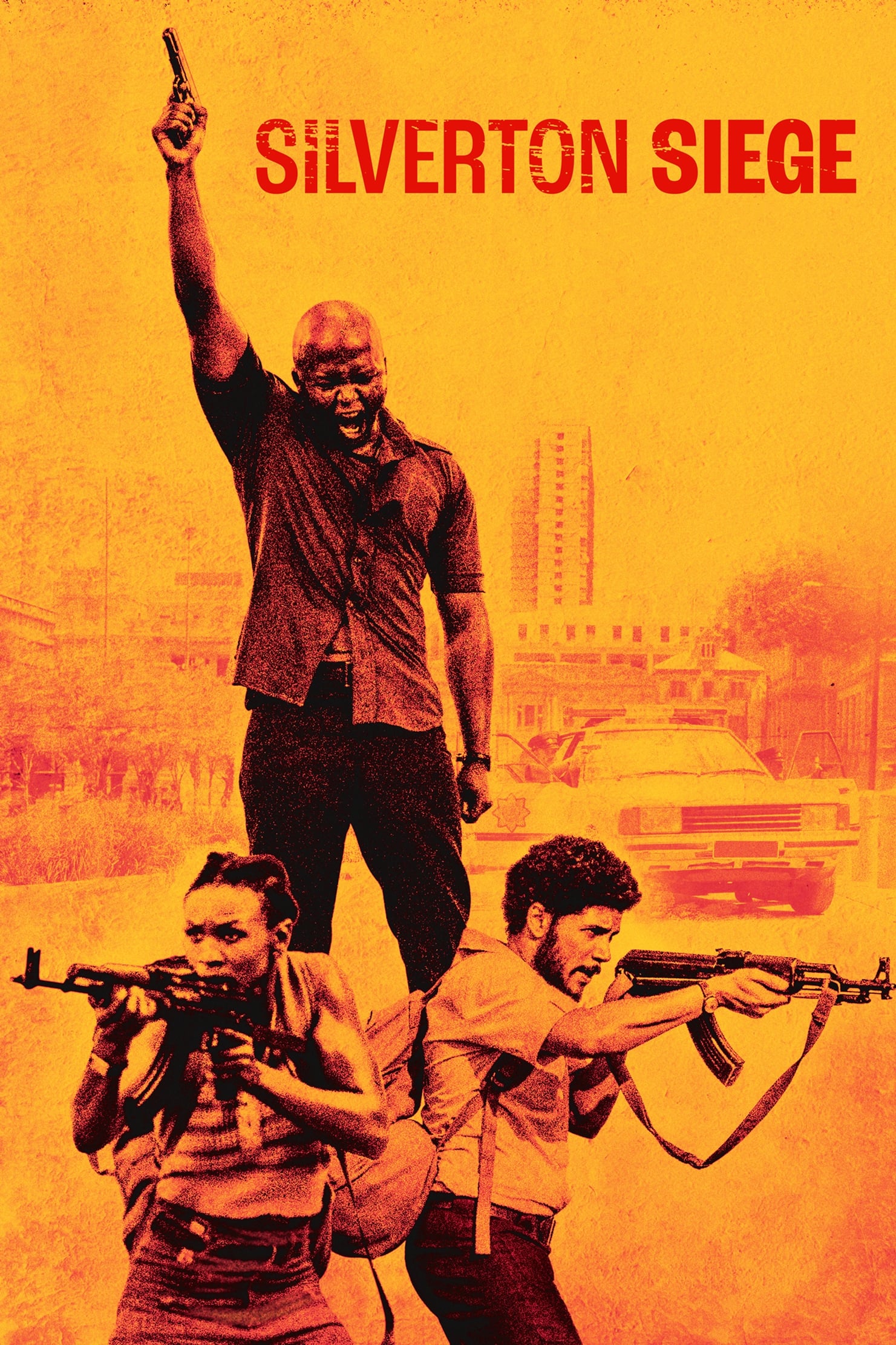
It's January 25, 1980, in Pretoria, bastion of Afrikaner nationalism. In this symbolically-charged city, three anti-apartheid fighters take refuge in a bank in the Silverton district following an operation gone wrong. Inspired by a true story, the plot recounts the desperate siege by the three fighters, who multiply their demands and seek to give meaning to what they know to be their last hours of freedom.
Silverton Siege follows in the footsteps of popular films featuring heists that don't go according to plan, and deals with the theme of apartheid in South Africa. An intelligent choice, since both the genre and the theme have in common the importance of the physical boundary not to be crossed. Here, our black protagonists take over a forbidden place and engage in a psychological duel with the white forces of law and order. An opportunity to draw a social panorama through the hostages to develop the question.
Apartheid through hostage-taking
We meet an American who, because of his skin color, will never be seen as the symbol of success he thinks he is. Another important figure is a black woman who disguises herself as a white bourgeois in an attempt to escape her condition. Finally, there's a pushy black soldier who takes it upon himself to trade in his moral conscience for a better integration into the forces of law and order, guardians of apartheid. On the white side, the characters are more anecdotal, with an openly racist banker and a civil servant who admires the cause embraced by his guards. But we can't condemn the film on the grounds that it doesn't act as a mouthpiece for characters already so widely heard in American cinema.
Of course, we have our three protagonists, the bank's cerberus. They are more or less threatening, more or less fragile, more or less doubtful about their actions. It's interesting to note that the big cause only shines through once the small one has been stifled: it's only when our individuals realize they can't get away with it that they think of demanding Nelson Mandela's release. And so, despite some of the genre's common foibles, the film does a welcome job of nuancing its trio. It's a pity, however, that the film sometimes gets bogged down in giving them a heroic aura in the eyes of their hostages. We almost end up seeing the hostages stand up to their captors.
American hegemony
For a long time now, South African cinema has been exploring the issue of apartheid from the point of view of those who suffered under it. We should welcome this diversity! Unfortunately, this point of view is heavily skewed by the strong American influence on the seventh art. It's hard not to imitate the top of the class. And yet, there are those who have drawn inspiration from it without resembling it; think of Japanese cinema before and even after the occupation, where the American influence cradled directors from Kurosawa in his large-scale productions to Ozu in his more intimate family dramas.
Silverton Siege symbolizes the difficulty that much cinema still has today - and perhaps has had for almost a century - in finding its identity outside the American model. The film's references are to Heat or to Inside Man, Hollywood productions. Its narrative resembles every heist movie you've ever seen. It uses the same well-worn tricks of mainstream cinema to support the drama. Its distributor is none other than Netflix. The only thing that stands out is the soundtrack, the most permissive aesthetic element in film design. Silverton Siege had a lot going for it; in the end, it looks like any other film familiar to Western audiences.
The public's fault
But in the end, is it really his fault? Why is this American hegemony particularly disturbing when it comes to non-American films? And above all, would a feature film less marked by Hollywood's narrative and aesthetic habits still win over a wide audience? Nothing is less certain. Indeed, the hegemony of American cinema is felt less in the creative process than in audience expectations. Even today, the public demands entertainment within its reach, dictates its tastes and decides what is and isn't within the norm.
The art of filmmaking is doomed to develop along the lines of the American giant, until perhaps one day, in a world where screens are omnipresent, an education in the image will teach us, the public, all the varieties that the seventh art has at its disposal to tell a story. Then, perhaps, audiences will demand something different. In the meantime, Silverton Siege is undoubtedly the film we deserve.
Write to the author: [email protected]

You'll also like




 French
  German
  English
Leave a comment