



«Spider-Man: No Way Home»: the monstrous parade

Cinema Wednesdays - Jordi Gabioud
This Spider-Man adventure was sold as a cocktail of tributes and characters ideal for intoxicating nostalgia. But it fails to deliver: this new confrontation quickly becomes an awkward cross between a freak show and a Pokémon game.
Spider-Man is in trouble! His latest adversary died a martyr’s death, bringing a rather enjoyable film to a close while setting the stage for new themes: responsibility, truth in the digital age, and the construction of the heroic figure. But that’s without considering that in this universe, any problem can be solved with a wave of a magic wand. So our hero turns to his friend, the sorcerer Doctor Strange, to make the world forget his identity. Alas! The good doctor inadvertently opens the multiverse, thereby attracting five new adversaries who must be sent back home as quickly as possible. So much for the setup of the previous installment; here, we’re back in the same lukewarm bath whose water hasn’t been changed since the comics first appeared: the moral obligations of good versus evil.
A Film for Marketing Purposes
Spider-Man: No Way Home is a film that lacks flair. The staging ideas are too few and far between for such a large budget, and each set seems to have been stripped down to the bare minimum: none of the lighting is truly customized, and none of the fight sequences appear to have been designed with any real choreography in mind… As a film, Spider-Man: No Way Home It simply manages to pull off most of its special effects and make use of a few good visuals in its trailer. We can also applaud a—unfortunately—all-too-brief foray into a sort of alternate dimension controlled by Doctor Strange, a rare moment when the film finally plays with its spaces and digital possibilities.
The real problem is undoubtedly that this kind of dissatisfied commentary is par for the course in the franchise. As its series expands further and further, it’s forced to keep moving forward at full speed, focusing on an ever-increasing number of characters and grand spectacle. With this new film, a new turning point has been reached: the spectacle of the marketing campaign has become more important than the quality of the product. With this Spider-Man, this process was carefully orchestrated: teasers, interviews, influencer videos, praise from the actors, posters with cutouts—every new comment had to be shared on social media, every clue revealed was highlighted and shared by fans, and, above all, a «no spoilers» culture that had already been the key to the success of Psycho about fifty years ago, at a time when critics were already expressing much more mixed reactions. Of course, the «no spoilers» rule isn’t meant to preserve any element of surprise, but rather to intrigue the viewer and encourage them to consume the product as quickly as possible so they can join the community of people who are in the know.

With their serial nature, superhero movies have seen marketing permeate even their content. The traditional post-credits scenes are the best example of this. However, this constant escalation to fuel marketing—this “always more” philosophy—is beginning to run out of steam. The good news is that the hero figure will finally have the opportunity to reinvent itself in both form and substance, and efforts will finally focus more on the product than on its marketing counterpart. In the meantime, Spider-Man: No Way Home represents a painful epitome of this commercial logic, in which the film serves to sell a trailer rather than the other way around.
The Return of Monster Shows
By reuniting the characters and actors who have shaped the saga across seven feature films so far, we should have expected ambitions on par with the scale of such a project! The film takes the unusual approach of continuing to develop its hero by having him face his first major trials. These must be heroically overcome through the immaculate power of humanistic values. Ultimately, each character is nothing more than a tool in the service of crafting a coming-of-age journey that we’ve already seen far too many times. Here, the plot boils down to capturing Spider-Man’s various enemies in order to literally—and I’m not exaggerating—«cure» them with a shot, injecting a dose of goodness into the villains.
The heroes have lost their taste for killing, which is to their credit. Batman tirelessly arrests the same adversaries, giving them time between confrontations to claim new victims each time. This approach has already sparked much discussion. Spider-Man, on the other hand, takes it a step further by placing the desire to heal his enemies at the heart of his mission. He could kill them at any moment by pressing a single button (which is also magical), but the hero refrains from doing so. The film could thus convey a message about restorative justice, where each enemy—who is supposed to more or less die once sent back to their own universe—is offered a second chance by Spider-Man, who has purged them of their dark anger and evil spirit. This choice reaffirms our hero’s humanistic values, which stand in contrast to those of the more pragmatic Doctor Strange, who seeks to send these monsters back to their worlds to face the consequences of their actions there.
Unfortunately, in both cases, the antagonists are the big losers: since there are too many of them to develop fully, the story relies on these “miracle” syringes. This criminal oversimplification thus negates any personality or character development for these characters. Restorative justice must focus on the redemption of the guilty party. Here, this form of justice is merely a tool for showcasing the merciful judge who applies it.
So, the enemies of Spider-Man, though so powerful at the heart of the marketing process, seem rather weak within the film. The devils are doomed to be distinguished solely by their physical abnormalities. Spider-Man: No Way Home It thus becomes a particularly disturbing and cynical freak show. People go there to see the sand man, the lizard man, or even the octopus man, along with their deformities. We’re completely taken aback when we find these monsters, after their capture, each locked in a glass cage in a circular room, allowing us to feast our eyes on their oddities. And what about the arrival of the two previous spider-men, where all they’ll be asked to do is «do spider stuff» and watch them carry it out by walking on the ceiling? The characters in Spider-Man: No Way Home are nothing more than the «freaks» of a monstrous circus orchestrated by Warner and Marvel. And it’s disheartening to see such a step backward since 1932, when Tod Browning gave us one of the greatest films in the history of cinema.
Write to the author: [email protected]
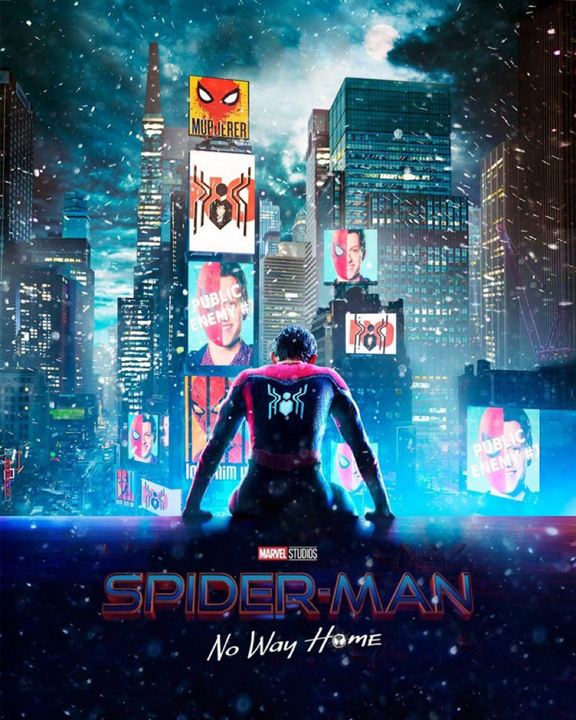
Photo credits: © SONY: MARVEL

You'll also like





 French
  German
  English
Leave a comment