



«The Square», a Palme d'Or mold
Cinema Wednesdays - Loris S. Musumeci
«Why is it so hard to admit that power is attractive?»
Christian is the fifty-something hunk. Rich, chic, adored, well-heeled and wonderfully bobo. His job suits him, as curator of Stockholm's Museum of Contemporary Art. He and his equally trendy and self-righteous team are preparing to welcome a social work by an Argentinian artist: «The Square». The room is in fact nothing more than a square bounded by a string of lights, which reads: «A sanctuary of trust and altruism. All are equal in rights and duties.»
Ironically, Christian's robbery coincides with the preparation of the exhibition. In a scene where a woman comes running to him, screaming for help as a man tries to kill her, the curator, believing himself to be a hero, proudly protects her after a moment's fearful hesitation. Moments later, he realizes what a grotesque trap he's walked into. His cell phone, wallet and cufflinks are gone. What coherence of life must he now apply between his square of altruism and the violent threatening letter he sends to the tenants of a suburban building, where his phone is located by Apple Assistance?
A film reac’
The Palme d'Or was awarded to Sweden's Ruben Östlund amid much protest. Jury president Pedro Almodóvar even declared that «it's an extremely funny film against the dictatorship of political correctness.» The indignation on the part of the winner's detractors is all the more virulent given that 120 beats per minute by Robin Campillo, the great favorite, had to be ruled out, despite the fact that its themes of AIDS and homosexuality are more widely accepted in the artistic and media spheres.
Yet satire of the dominant ideology prevailed. The Square is therefore judged to be reac’. Contemporary art and its meaninglessness, the hypocrisy of social democrats, the false interest in culture: it's all there. Their debauchery too, with scenes that recall the festive scenes of La Dolce Vita and La grande bellezza respectively - the former having also won the Palme d'Or in its time, the latter the Oscar for Best Foreign Film. What's more, Östlund focuses with particular acuity on the sore points of mistrust of others, suburban terror and, above all, cowardice.
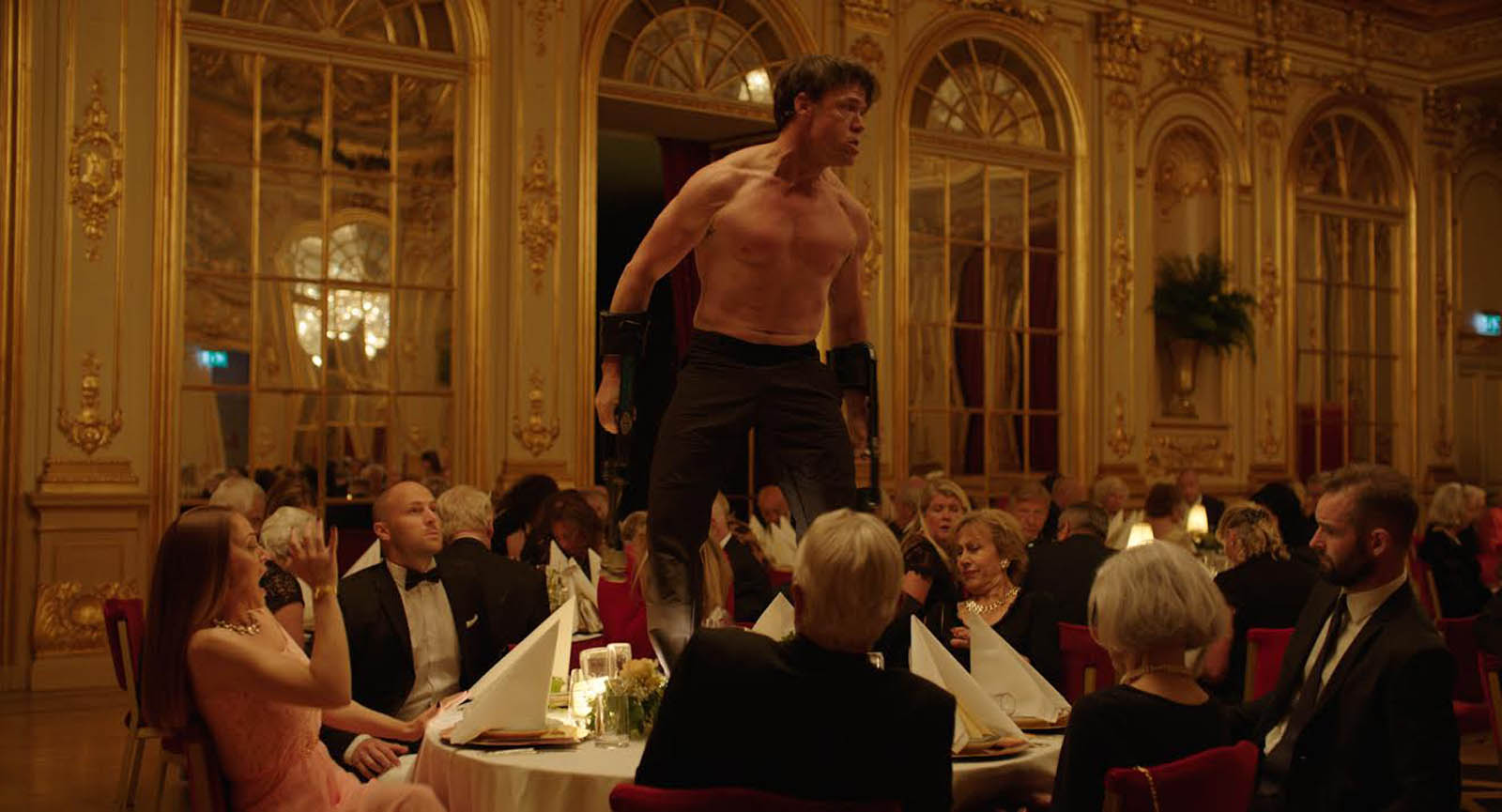
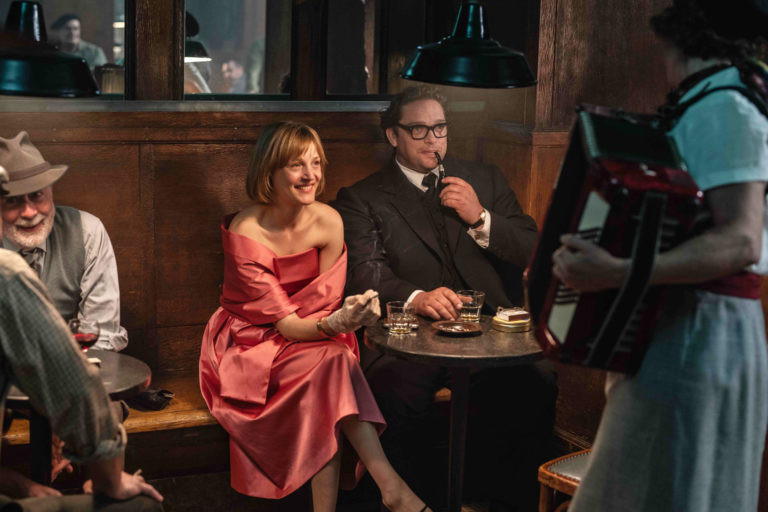
The director hits the nail on the head. The beast in man comes out in pungent form. And the discrepancy is particularly noticeable for the bobos. The emblematic scene of the phenomenon in the film is a performance in which an actor plays the monkey at the museum's gala dinner. The guests are initially amused, but anguish mounts as the show goes on and the performer becomes aggressive, to the point of pulling a woman by the hair. But which is more bestial: the actor's violent action or the indifference of most of the audience, who look down at their plates, motionless, for fear of being taken to task in turn? Faced with such a compilation of reprimands for the leftist bourgeoisie, of course, Le Figaro a masterpiece.
A critique of society that rings hollow
The film's aestheticism is praised above all else. But while the camerawork is undeniably talented, and even the exhausting yellow tones give meaning to the story, the overly aesthetic and the overly significant ring hollow. From the revival of the Italian shot, long out of date, to the full-angle shot of the lead actor in a tuxedo in the rain, surrounded by garbage, everything is geared to give the impression of stylish cinema. In other words, everything seems to be filmed so that The Square is one of those films that should be shouted from the rooftops as beautiful. The process is pushed to such a level that the cinephile finds himself faced with a Palme d'or mold. The content, however, is lacking. This is easy cinema, and it's regrettable that the Cannes Film Festival jury has fallen for Östlund's game of unusual camera positions, lighting effects and zooming in.
The staging has everything it takes to be sublime; it's just a shame that the approach is scholastic and pitiful. The lessons of «how to win the Palme d'Or» and «how to create a cult scene» are applied here. The same is true of the content. While the film revels in vomiting out self-righteousness and self-righteousness, it has its own self-righteous and self-righteous sides. In always square locations, the director films beggars whom no one cares for, reducing the crowd that passes them by to a mass of insensitive fools. It's so reassuring to think that it's the bobos who are actually responsible for all the misfortunes! Despite its interesting elements, The Square commits suicide in the name of social criticism. Decidedly, if the jury wanted to reward a genuine work of questioning, it would have done better to award the supreme prize to Faute d'amour by Zviaguintsev.
«My prejudices say a lot about me.»
Write to the author : loris.musumeci@leregardlibre.com
Photo credit: © avoir-alire.com
You'll also like

 French
  German
  English
Leave a comment