



«Jusqu'à la garde», a realistic thriller
Cinema Wednesdays - Marina De Toro
The lights gently illuminate the room, the credits roll on the screen and the seats are heavily silent. Some spectators find it hard to take their eyes off the screen, for the film they have just seen has left them speechless. Here's the reaction the film can provoke Up to custody directed by Xavier Legrand. This film deals with the complexity of family relationships, sometimes unhealthy, and above all with the difficult ordeal of divorce.
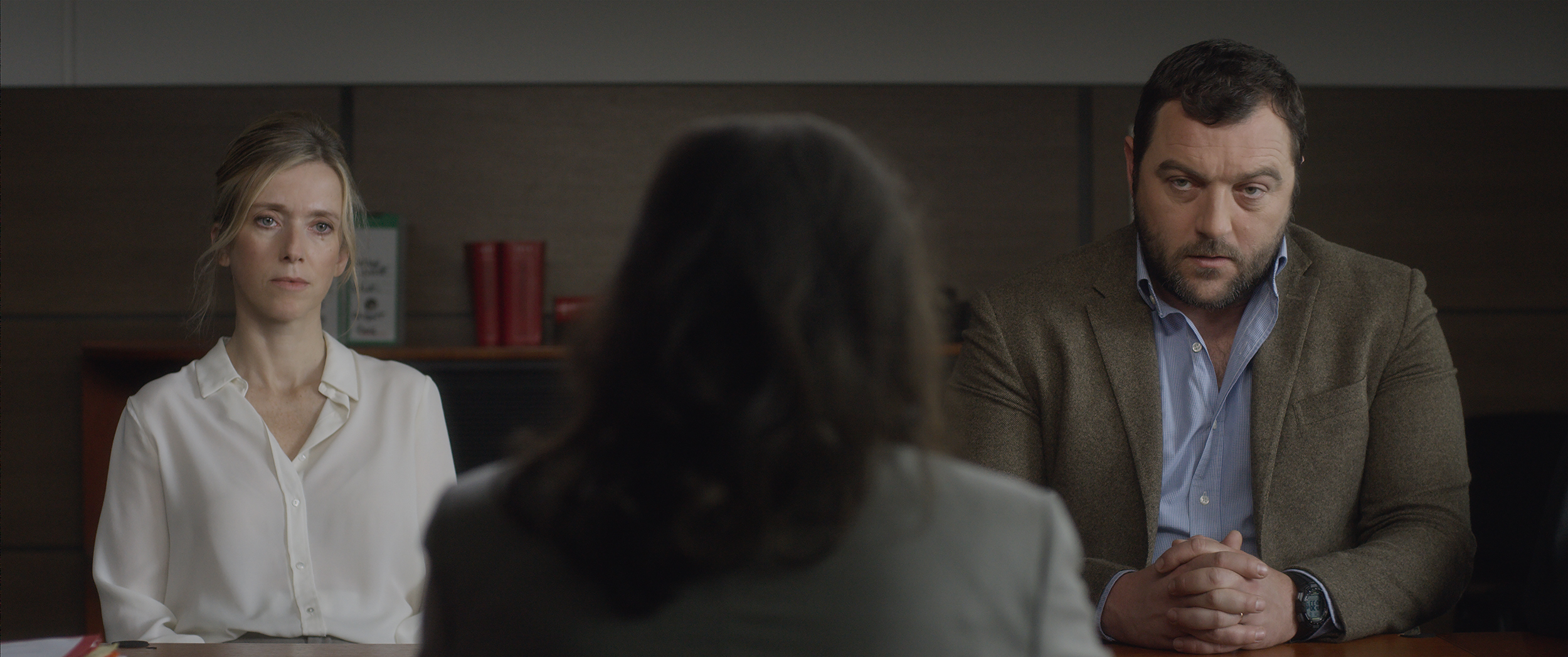
The Bessons are in court to decide custody of their son Julien, a minor who is furious with his father. Miriam wants sole custody and accuses her husband of abusing their son and their daughter Joséphine, who is now an adult and free to make her own choices. Antoine, the father, accuses Miriam of manipulation, lying, and rushing their breakup. The viewer finds themselves in a complicated situation, caught between two spouses at odds with each other. They cannot yet determine which version of events is true, since the protagonists« past is unknown. So who is right? And why does Julien refuse any contact with his father, whom he calls »the other one”? These are the questions that linger throughout the story.
A suffocating sense of realism
The film opens with the hearing for Miriam and Antoine’s divorce settlement. They don’t speak; their lawyers do the talking for them against a static shot, the outcome of which will determine Julien’s «new life.» In the span of a single scene, the characters are introduced to us through the voices of their lawyers, and the judge faces the daunting task of deciding the fate of a family—and, above all, that of the young boy. From that moment on, we find ourselves wondering: How can one judge a person and their life in a hearing that lasts only a few minutes? Indeed, the director pulls off a masterstroke by leaving the viewer to grapple with the ambiguity of characters whose pasts are unknown and whose futures are uncertain. In this way, it’s easy to imagine multiple scenarios and personalities for these characters.
The overall atmosphere is heavy and the action often takes place behind closed doors. The scenes are sometimes long, but they are crucial for understanding the protagonists’ state of mind. The film is shot in a way that makes the events seem realistic, thanks to the numerous static shots focused on the characters’ faces and emotions. There is no soundtrack accompanying the scenes, which lends the film an almost documentary-like quality. Then there is the dialogue—sparse, but striking like a thunderclap every time it appears. Afterward, Miriam and Antoine wait separately for the judge’s decision on Julien’s custody, with neither of them truly sure of what will happen.
A Tension That Is Becoming Increasingly Palpable
As the film progresses, the protagonists’ personalities are revealed, and the focus shifts to Julien. He carries an extremely heavy burden on his shoulders, as he is the last link forcing Antoine and Miriam to confront each other. This is all the more true since Miriam wants nothing more to do with Antoine; the more she tries to avoid him, the more imposing and insistent he becomes. Julien is a child living amid the rubble of the adult world, constantly under pressure from his situation, whether at home or out in the world. Gradually, the Besson family’s world becomes suffocating, and the viewer dreads the moment when the masks will come off. Their past remains a mystery, but it quickly becomes clear that the present perfectly defines their characters and reveals their true faces.
Up to custody It is, therefore, a hard-hitting film that delves into the private sphere that everyone encounters but that no one can truly know. Xavier Legrand shows us that family and home do not always provide the sense of well-being we would like them to. They are sometimes a hotbed of brutality that prevents any sense of security and creates a desire to be anywhere but home.
Write to the author: [email protected]
Photo credit: © Agora Films
You'll also like


 French
  German
  English
Leave a comment