




«What Will People Say»
Fribourg International Film Festival - Loris S. Musumeci
«Have you ever wondered about the consequences of your actions?»
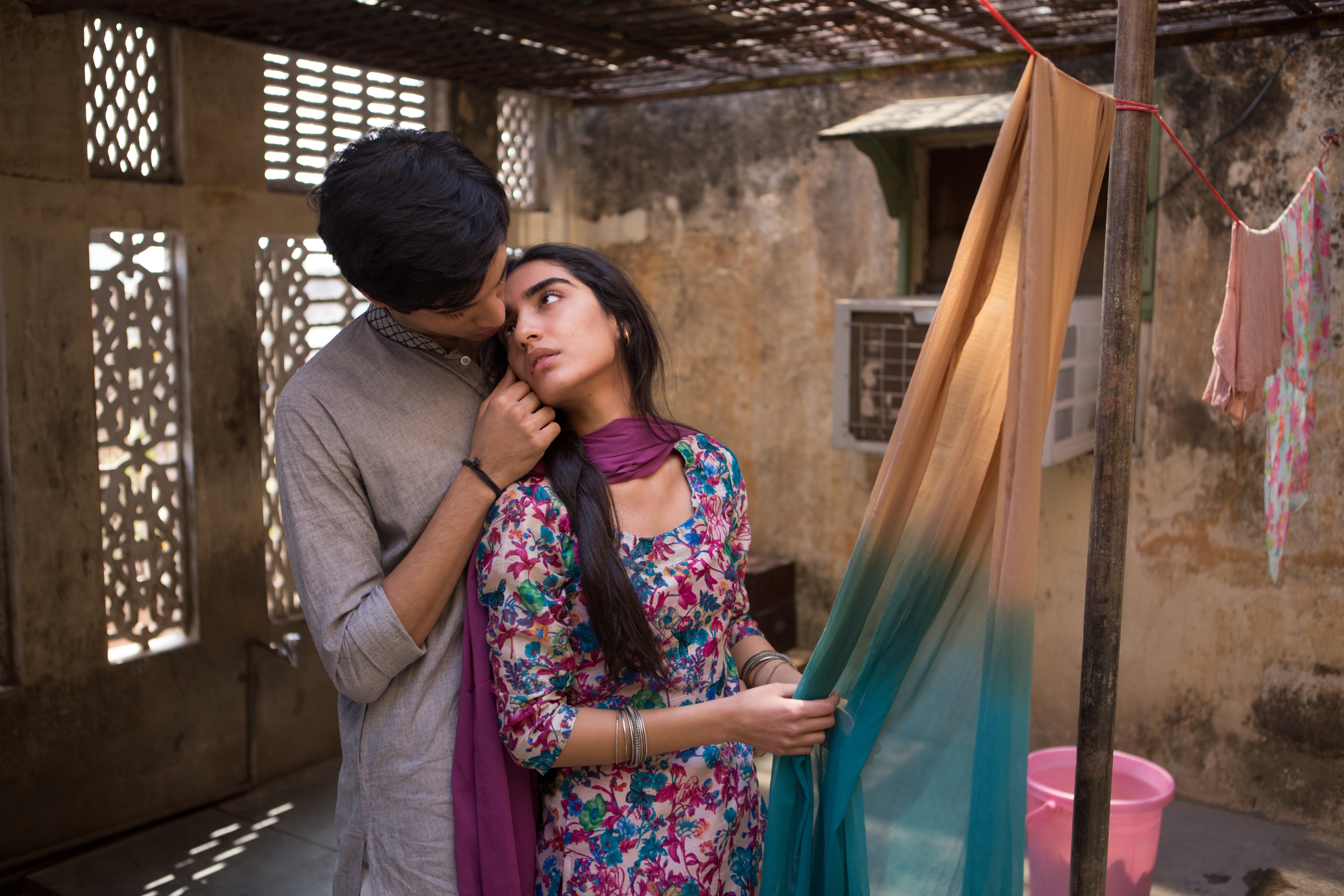
Nisha (the excellent Maria Mozhdah) is beautiful. Her complexion gives her a deep, oriental charm. She owes this to her parents, who emigrated from Pakistan. Despite her origins, the young girl leads a totally Western lifestyle. She disco dances, drinks a little, smokes a little, flirts a little and never takes her eyes off her cell phone. Messages with her girlfriends abound, planning outings that are as exciting as they are clandestine.
In the family, relations with her mother (Ekavali Khanna) are rather tense. With Dad (Adil Hussain), things are more tender; she's his princess. But he is unaware of some of her practices. She has a habit of fleeing her home after dark via two flights of balconies and a low wall. By the same route, Nisha's boyfriend joins her one night. Moderately sensual caresses, kisses. To everyone's dismay, the father bursts into the room and, mad as hell, beats the shit out of the boy.
Following the late-night brawl, Nisha is staying with social services. But «people have already started talking.» Feeling confident, the young woman calls her father to ask him to come pick her up. He comes, but she still hasn’t come to terms with what happened. In the form of a kidnapping, he takes her to the airport. They head to Islamabad for a radical re-education. Once they arrive at her father’s family home, Nisha finds herself as if in a prison. Confined, she must remain silent and submissive.
A Clear Choice for the People's Choice Award
If What Will People Say a été couronné au Festival International de Films de Fribourg par le Prix du public, c’est parce qu’une telle thématique ne peut qu’intéresser et passionner. On pourrait même dire que le sujet plaît trop facilement. Après tout, qui ne s’émeut pas naturellement d’une jeune fille à qui l’on retire sa liberté ? Pourtant la situation est bel et bien réelle. D’ailleurs la réalisatrice, Iram Haq, l’a vécue. Avec douleur.
The cinematography isn’t particularly original; it remains classic. The visuals are captured by a camera that’s fairly straightforward overall, yet extremely powerful in its attention to detail. This is most evident in the close-ups of Nisha’s fingers. At every intense moment, she moves her fingers, physically expressing her anxiety or joyful relaxation. Similarly, her facial expressions—always shown in close-up—convey and encapsulate her emotions when they reach their most intense moments.
Les détails qui disent l’essentiel
Another key detail is the scenes where the main character finds herself both isolated and lost in the crowd. Ultimately, the two situations amount to the same thing: she loses her freedom and her individuality. A sense of uncertainty surrounds her in Pakistan. This, in turn, reflects her inner confusion. At the Pakistani school, Nisha finds herself veiled, lost in a uniform worn by all the other girls. The shot is striking in that, through a pull-back zoom, it reveals the tragic uniformity of these young women.
Another sequence reinforces this message: on the journey from Islamabad to her father’s village, the bus is shown in a low-angle shot as it plunges into a dense forest. The road is thus reduced to a mere thread. Here again, Nisha is isolated—or, more precisely, she is heading toward isolation. However, these highly symbolic technical techniques are not limited to the main character. Her eminently complex father is accompanied by sound and the camera when anger overtakes him. They mirror the accelerated beats of his heart: the camera pulsates, and the sound fades.
The actors’ performances are remarkable. Since their facial expressions have already been mentioned, it’s worth noting their body language. In an almost theatrical way, they convey everything they cannot express verbally through the straightness or hunching of their backs. The father and daughter, in particular, play a key role in transforming the film into a true thriller. Their violence escalates—to the point where the father spits on his daughter. A total shock. What will the public say? ?
«From now on, you're our daughter.»
Write to the author : [email protected]
Photo credit: © Praesens-Film
You'll also like




 French
  German
  English
Leave a comment