



Johnny Hallyday as you've never seen him before: «J'suis une pute» (I'm a whore)»
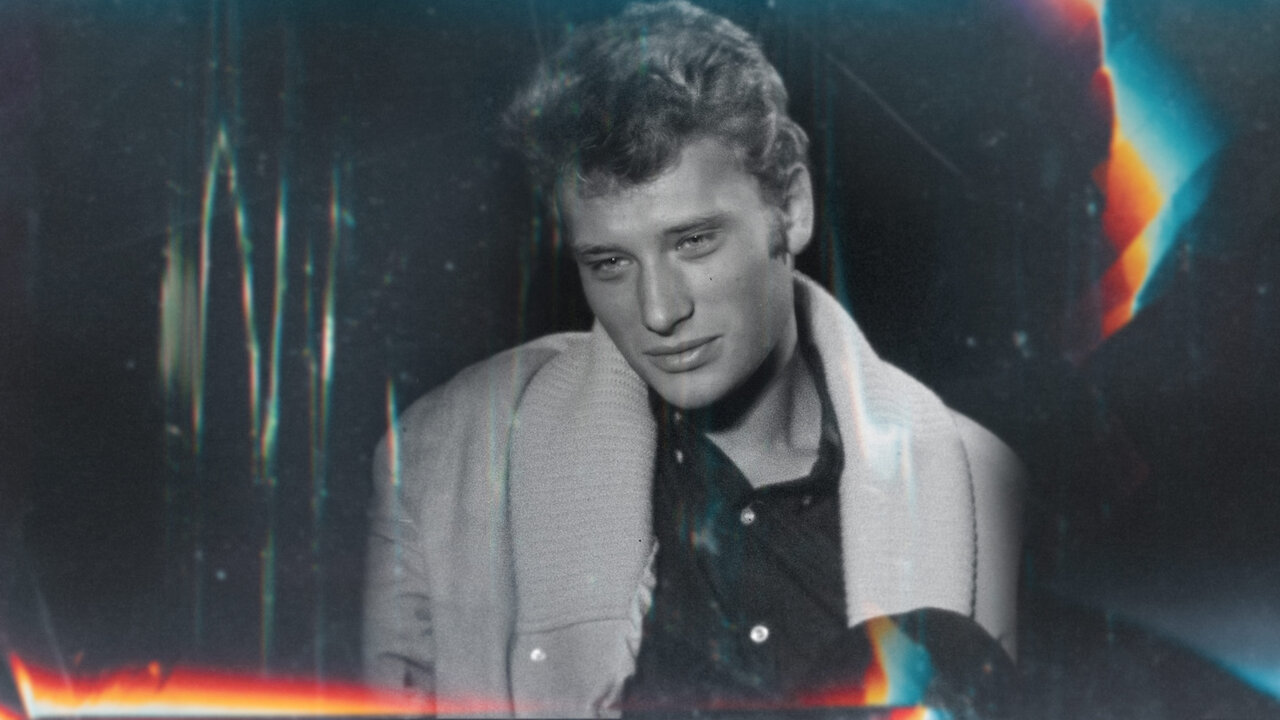
«Johnny by Johnny»
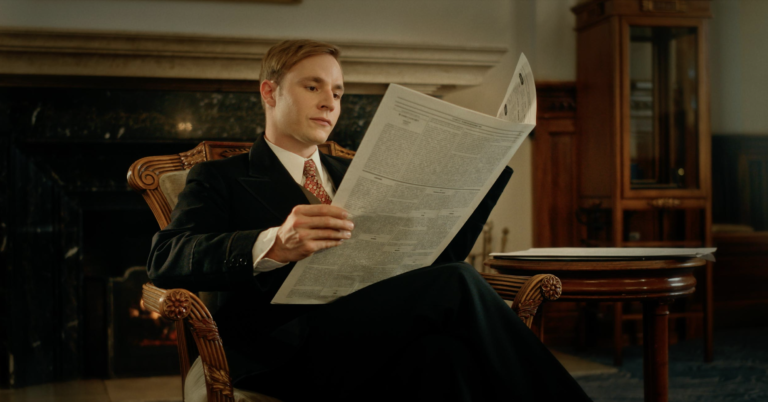
Johnny Hallyday himself is the voice-over for the Netflix documentary series Johnny by Johnny, released earlier this year. Boosted by archive footage and the voice of the main character, this astonishing achievement by Alexandre Danchin and Jonathan Gallaud is packed with nuggets about the career and personality of the star who died in 2017. A star who reveals herself to be darker than she is usually portrayed. If you're the kind of person who likes to be slapped in the face, go for it.
Sex, drugs and rock'n'roll: the life and career of French singer Johnny Hallyday, from his birth in 1943 to his death in 2017, has been told many times - and often summed up in the same anecdotes. The documentary series Johnny by Johnny released in March 2022, had all the makings of the umpteenth juicy mix of an existence that many thought they knew every detail about, and that some didn't want to hear any more about. Well, it wasn't.
Of course, the great moments of his career come back again and again: the abandonment by his father, childhood with his aunt Hélène Mar, the first TV show where the young Line Renaud presents him as the son of an American and a French woman, the two-year flat-share with Charles Aznavour, the first hits, marriage to Sylvie Vartan, the bad times, the renaissance with his new wife Nathalie Baye and albums produced by Michel Berger and Jean-Jacques Goldman, the Bercy years, fatigue, meeting Laetitia, the second renaissance at the turn of the 2000s, the stadiums... But what could have been a simple, effective treatment of the same content now offers a new, more complex approach. reading unpublished.
«Lying? I can't help it.»
Indeed, the first great strength of these five 30-minute episodes is the complex image they convey of the boss of French rockers. Johnny was undoubtedly a kind and benevolent person, as has often been pointed out, and obviously accustomed to excess (in this regard, Pascal Obispo portrays a sad lion who could be frightening once he'd had more than enough to drink). But here we (re)discover other facets of his personality, little known to the general public. On camera, for example, the singer confesses to being a visceral liar: «It's a vice. I can't help it.» In another archive, we hear him declare, probably a little tipsy - which adds credibility to his statement («in vino veritas»):
«Me, I'm a whore anyway. My life is a comedy. Once you've got the hang of it, you can't get rid of it.»
It may seem banal for an artist to sell a certain image of himself. But the full significance of this admission is revealed when we learn that, contrary to what he has always claimed, Johnny Hallyday never met Elvis Presley. Or that, at the time of his debut, he let it be said for a long time that he had been raised in Texas, on a farm, doing nothing to quell rumors about his artist's surname, taken directly from the man who served as his first mentor, his American cousin Lee Hallyday. The idea was to build a story for himself, to give birth to what was to become an ultra-powerful collective imagination, the Hallyday myth.
Viewer empathy
Le fait même que le rockeur ait pu reconnaître ces vérités à des moments de sa vie, avec ce mélange d’humilité et de tristesse définissant sa bonhomie à lui, forme en soi une qualité qui vient se greffer à ses défauts. Et c’est justement ce sur quoi repose cette série. «A chaque fois qu’on a exhumé une interview, on a été frappé par sa franchise, ce qui fait que le récit tient par la voix de Johnny […]», a expliqué à l’AFP Eric Hannezo, patron de Black Dynamite (société du groupe Mediawan) qui a produit la série documentaire en association avec Universal Music France. «Il n’y a pas eu de calcul pour le protéger ou non, lui-même étant tellement cash en interview», poursuit-il, «ce qui n’empêche pas l’empathie.»
Moreover, our empathy is obviously reinforced by the undeniable empathy Johnny showed towards so many of his friends. Let's simply recall Johnny's duets with Renaud or Patrick Bruel at moments in their careers when they needed it most - and the recognition visible in these videos speaks for itself:
Une dimension plutôt absente de ce documentaire sériel, plus porté par une ambiance de thriller, production Netflix oblige – nous regrettons d’ailleurs la musique d’ambiance appuyant inutilement les retournements de situation. Autre déception: l’ellipse allant de 2000… à 2017, année de sa mort. Le fait que Laetitia Hallyday n’a pas participé à cette série, also preparing a documentary, à paraître à la fin de l’année, n’y est sans doute pas pour rien. Johnny Hallyday lui a légué l’entièreté de son droit moral.
What a father, what a son...
The viewer's empathy for a man plagued by alcoholic tantrums and adolescent whims is also heightened by the sense of distress in the Taulier's eyes. In his eyes are the evenings of extreme fatigue, hard drugs to take off who knows where, Russian roulette with a real trigger and other line contests with Nanette Workman during his 1972 «Johnny Circus» tour from hell (but didn't we say he was a liar?):
«J’vais sur scène pour faire un bon spectacle si j’peux, si je suis en bon état ce jour-là, si possible sans narines dilatées.»
Empathy too, or rather pity and incomprehension, in the face of the foolishness of cosmetic surgery, and above all the lip operation he underwent in 1996 - you'd have to feel really bad about yourself to risk changing it. Never mind, he'll find the trick of the little moustache. One also hesitates between indignation and the desire for consolation when one witnesses this conversation with a journalist: «What has been your greatest joy in life? The day you had a child? - No, I think my greatest joy was the day I touched my first car.»
On the occasion of a interview for Belgian television, In 1984, Léon Smet, biological father of Johnny Hallyday, born Jean-Philippe Smet, was asked about his son's success. Here's his response: «He leads his own life, he's brilliantly successful, I wish him every happiness, but other than that, I don't give a damn! Why on earth do sons always have to repeat their fathers» mistakes?
So, what's the mystery?
Johnny is a textbook case of psychology. A sort of hero in spite of himself, with an extraordinary destiny, a mirror of ordinary people, themselves steeped in contradictions, caught between constant movement and the ongoing search for refuge, between innovation and old-fashionedness, freedom and tradition, rock and French chanson, the American dream and France as it is, desires for simplicity and megalomaniac fantasies, the nature of the ideal son-in-law and the profile of a gangster. «The only time I'm myself is when I'm on stage»: and that's the only time Johnny Hallyday has ever been indisputably exceptional. For the rest, deep down, he was terribly human.
Write to the author: [email protected]
Photo credit: © Netflix
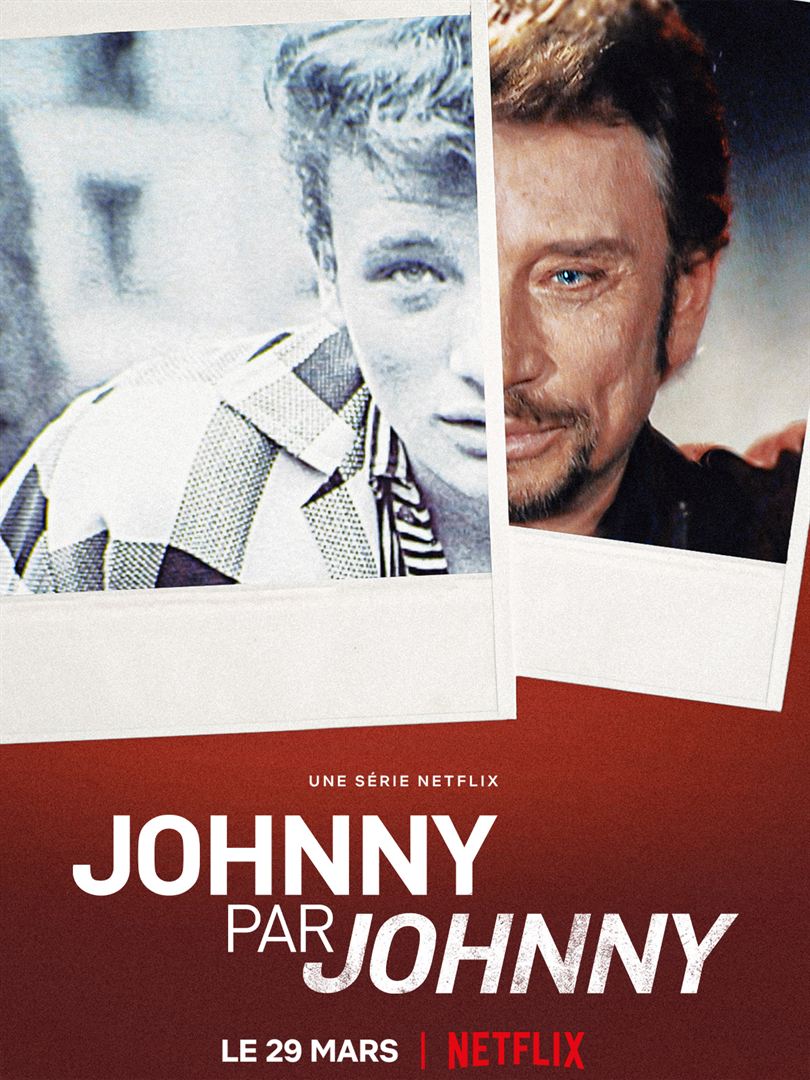
And we'll be sure to relay a few of Hallyday's live nuggets here:
You've just read an open-access article. Debates, analyses, cultural news: subscribe to our think tank to support us and get access to all our content!
Digital subscription

You'll also like


 French
  German
  English
Leave a comment