




Meanwhile, in Lebanon, anxiety is frozen on faces

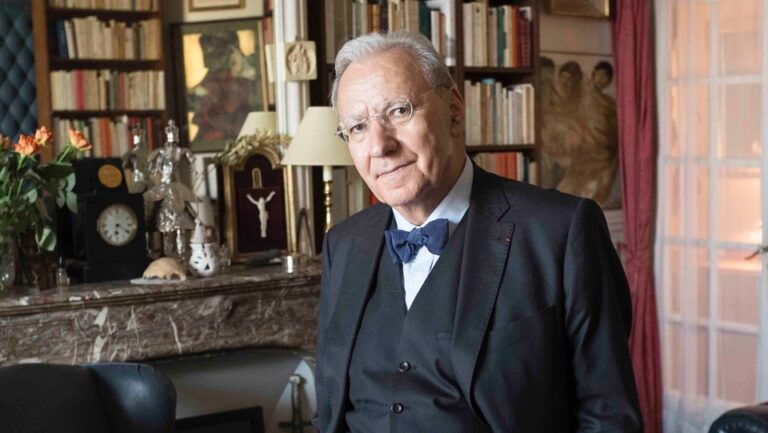
Sophie Woeldgen © Nathanaël Schmid for Le Regard Libre
Each month, we feature a column by one of the personalities we're pleased to welcome to our team. Le Regard Libre taking turns. Freelance journalist Sophie Woeldgen shares her views as a reporter in the Middle East on an itchy subject.
Passing through Switzerland, in the course of a casual conversation, an acquaintance said to me: «Oh [living in Lebanon] must be exciting! Yes, there are inequalities, but at least there's something going on». I tried to refute. I gave up. No, misery isn't exciting. No, there's no beauty in a country where everything is lacking. I went home because I was exhausted.
Eating without risking food poisoning, finishing an article without my computer battery giving out, spending an evening with friends has become impossible. Because without petrol, it's impossible to get around, and for many Lebanese, it's impossible to get to work. Without electricity, fridges are turned off and food perishes. Suddenly, electricity can come back on at two o'clock in the morning. The building wakes up. The washing machines are switched on. Then we go back to bed and try to sleep for a few hours, despite the muggy heat of the Beirut summer.
For the past year and a half, I've been writing that Lebanon is falling apart. That this cannot go on. That the bottom must be in sight. To justify my doomsday tales, I skim the updated socio-economic indicators. According to the latest report from the Economic and Social Commission for Western Asia (ESCWA), a UN body, 74% of the population now lives in poverty, almost three times the level posted for 2019 (25%). As for the World Bank, it has found a formula to illustrate the results of its analysis: «the top 3 worst economic crises in the world since 1850». And while the national currency has lost almost 90% of its value against the dollar, inflation has reached 500% over one year for food products.
So yes, the comment quoted at the beginning of the article revolted me. But it wasn't isolated. And we have to stop romanticizing «sobriety», life without petrol, which often goes hand in hand with vaccine refusal. Because this ideology only works in our wealthy countries, with their efficient healthcare systems.
Statistics don't tell the whole story: living in Lebanon today is a daily test of Maslow's pyramid. It's the constant fear that someone close to you will fall ill, with medicines nowhere to be found and hospitals on the verge of closing. It means limiting oneself to essential journeys, because filling the car's tank has become virtually impossible. And risky - fights that end in gunfire are frequent. It's going through four grocery stores to find a bottle of water. Giving up bread, or failing that, queuing in one of Beirut's last open bakeries. Talk becomes mind-numbing. Anxiety and fear are frozen on faces. The figures don't reveal the pathways broken by the crisis. School dropout. Unemployment. Disgrace. Shame. Depression.
Humor hasn't disappeared. To the question «How are you?», the new answer in vogue is «Today, I'm better than tomorrow». And we laugh. Yellow.
You have just read a column from our print edition (Le Regard Libre N° 78).
You'll also like


 French
  German
  English
Leave a comment