



The weight of the state in Switzerland is not as low as you might think
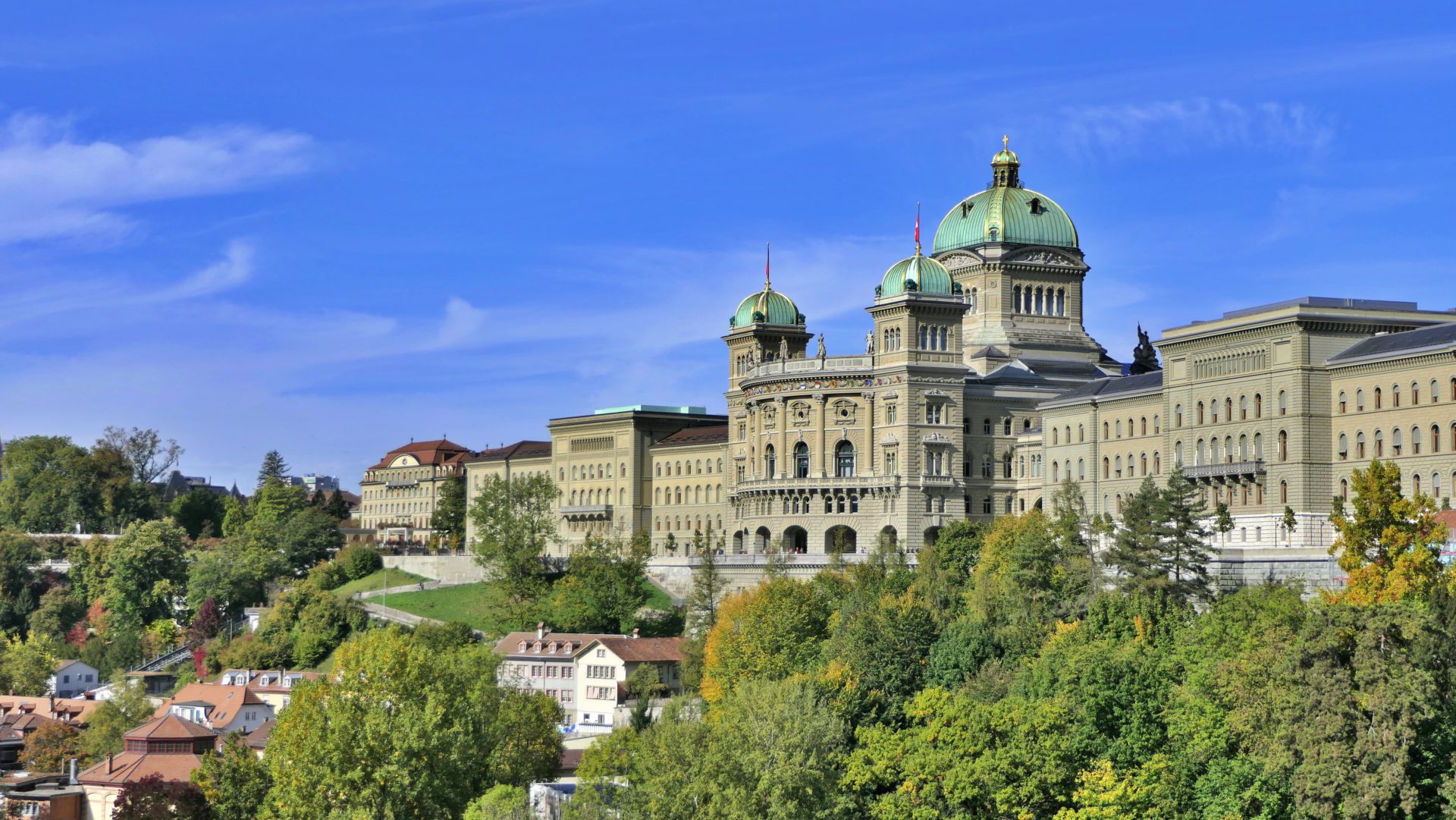
The Federal Palace, Bern © Pixabay
Reasonable taxation, free enterprise... Switzerland is often perceived as a country with a small government footprint. A study published this spring by the think-tank Avenir Suisse shows that things are not quite so straightforward. Read the report.
Since the emergence of the nation-state, the weight of governments in the economy has grown almost uninterruptedly. At least, this is what can be observed if we compare compulsory expenditure or levies in relation to gross domestic product (GDP). Switzerland, liberal as it is, is no exception.
The first observation made by the authors of the Avenir Suisse think tank in their report recent report«The state has not only kept pace with economic growth, but has expanded far beyond the simple proportion of that growth.» And that's just as true in times of crisis as during economic upturns.
A state that intervenes on all fronts
This diagnosis also seems to apply in terms of regulatory mass and state employment. According to the authors, the perception of the role of the state in Switzerland is particularly distorted when it comes to the latter parameter. In fact, many parapublic jobs are hidden in companies such as hospitals, which may be private but are largely supported by public money or compulsory levies.
In European comparison, Switzerland is less liberal. In terms of the weight of public spending at all levels (Confederation, cantons, municipalities), but also in terms of state intervention in the markets, Switzerland is either average or far more interventionist than its neighbors. According to calculations by Avenir Suisse, over 50% of the volume of Swiss prices is influenced by the state. This applies as much to foodstuffs, protected by customs duties, as to rents indexed to the mortgage reference rate, among other examples.
To illustrate the distortions created in the market by state intervention, Avenir Suisse deliberately chooses a few of the public authorities' hobbyhorses, which do not, however, correspond to traditional areas of state action. Culture, for example, receives CHF 2.5 billion annually, almost as much as the total expenditure of the seven smallest cantons combined. The state's contribution to tourism has more than tripled since 1990.
The need for an ever-critical eye
The role of a think-tank such as Avenir Suisse is not only to stimulate debate, but also to put concrete ideas on the table. The authors of the report propose a number of concrete measures: a one-week parliamentary session devoted to scrapping legislation, better scrutiny of public policies before and after they are adopted, transparency on subsidies, etc.
But the main recommendation that emerges from the study is implicit. It consists of a kind of principle of good government: politics should not just create a new law or a new credit for each new situation, it should also take a critical look at all public policies. Knowing how to turn back the clock when a subsidy is ineffective or a regulation unnecessarily complex also means defending the general interest.
Write to the author: [email protected]
You have just read an analysis from our print edition (Le Regard Libre N°98).
You'll also like


 French
  German
  English
Leave a comment