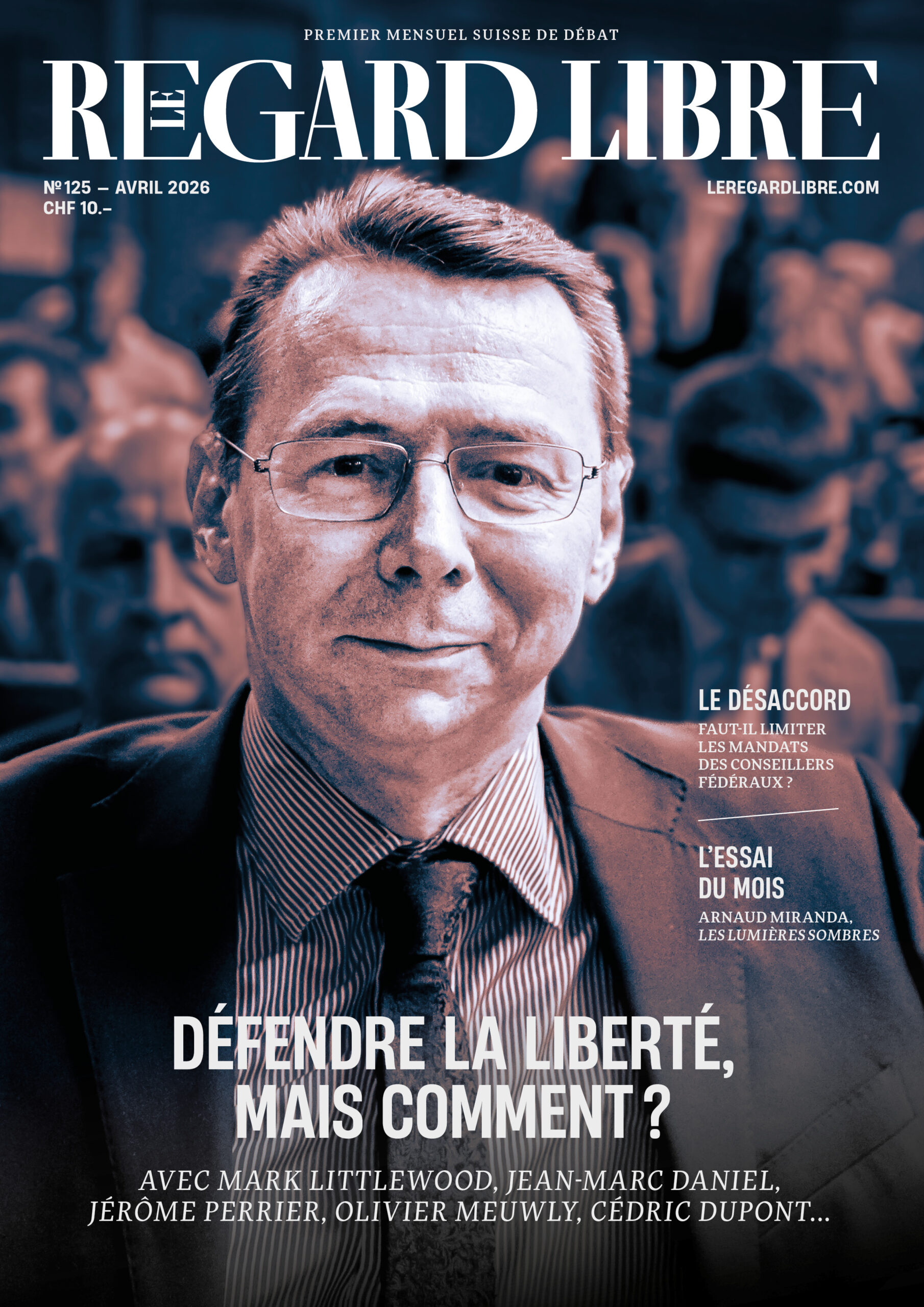




Frédéric Taddeï: «People don't like debate anymore»
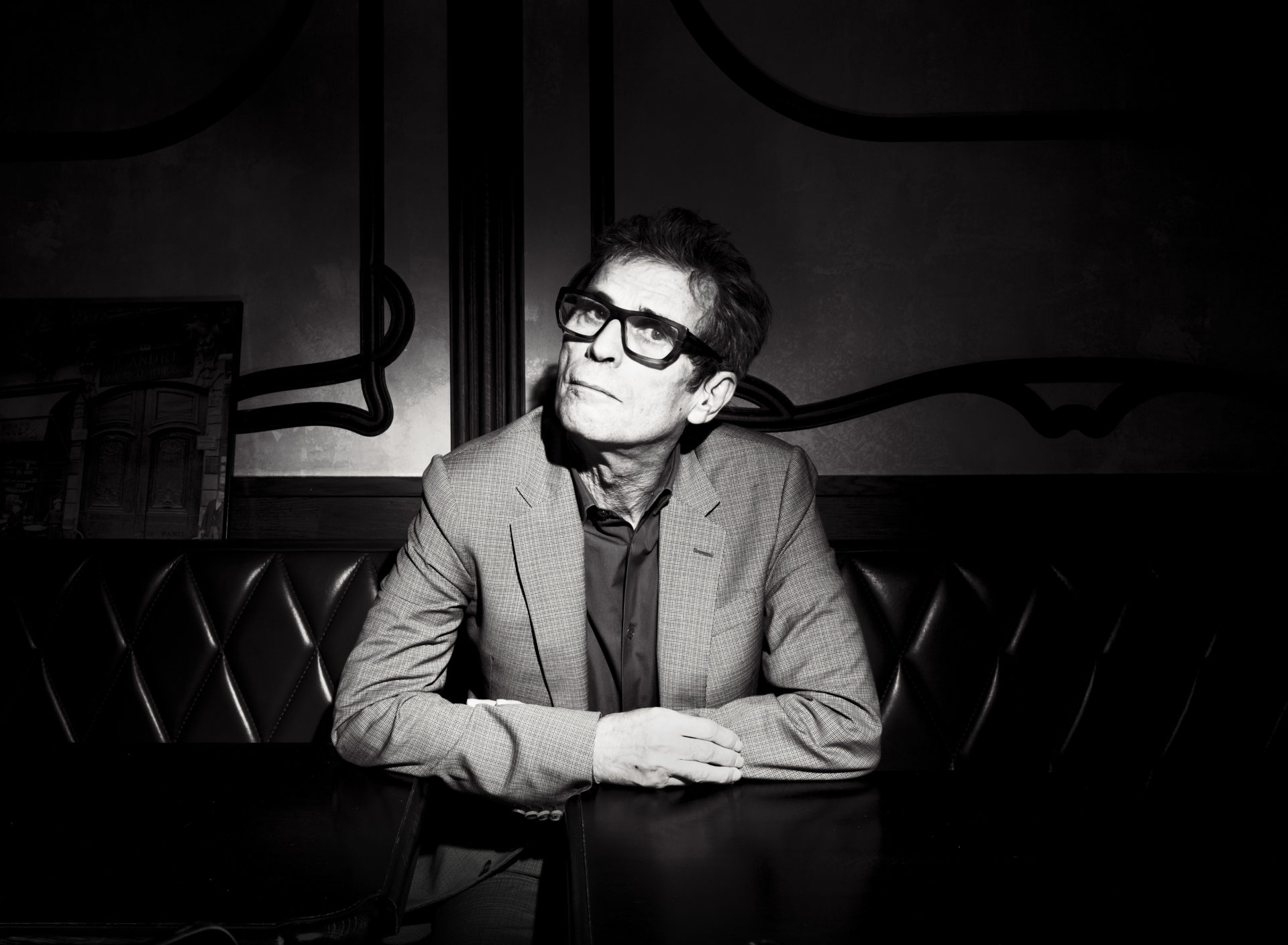
Frédéric Taddëi began his career as a journalist in 1990 by founding his own print magazine, «Maintenant», which served as his calling card. Photo: Nicolas Brodard for Le Regard Libre
The host of the late cult TV show «Ce soir ou jamais», who will be taking over the management of the magazine Marianne on March 1, is publishing a series of volumes each listing what celebrities did at a specific age. Autumn meeting in Paris.
(In collaboration with Nicolas Brodard)
He had the idea at the age of 56, and it came to fruition when he blew out his 63 candles. Frédéric Taddeï has dedicated a collection of books to age, published by Editions Grasset. Visit Birthday Books are catalogs of anecdotes about what famous people did - or didn't do - when they were your age. Fifteen volumes have already been published - 18, 33, 50... - and ten more are planned. Famous singers' first songs rub shoulders with the academic failures of famous mathematicians and politicians.
Frédéric Taddeï's new project reflects his eclecticism and unstinting curiosity. These are virtues he practiced on his «Ce soir (ou jamais!)» program on public television from 2006 to 2016, where personalities of all disciplines and sensibilities discussed current affairs, including new faces such as Natacha Polony (whom it was announced this week would succeed him as head of the weekly magazine "Ce soir (ou jamais!)"). Marianne on March 1) or Agnès Verdier-Molinié, or characters not seen elsewhere but who were the talk of the town at the time, such as Dieudonné or Soral, which led to some harsh criticism.
Read also | The program that encourages young people to read and think (interview with Pierre Valentin)
The most intellectual of hosts went on to present «Interdit d'interdire» on RT France, before leaving the Russian channel when war broke out. Then, «Les visiteurs du soir» on CNews lasted just one season. What's changed? Not Frédéric Taddeï, he insists, but the desire for debate in society, which has declined in favor of silo thinking. In a café in his Paris neighborhood, the dandy journalist, with no taboos and no press credentials, shares his vision of age, changing times... and debate, which he will be challenged to serve in his new role as head of CNews from March 1. Marianne - information we didn't have at the time of the October interview.
Le Regard LibreWhy did you decide to devote a series of books to the careers of great personalities through the prism of their age?
Frédéric Taddeï: Basically, age is the blind spot in history. We hadn't thought about it. The historians I've been talking to since the release of my Birthday Books are astounded that history has never been presented in this light. We know that Adolf Hitler came to power in 1932, but do we remember that he was 43 at the time? That's very young, especially in the first half of the twentieth century. Even though we know it, we never really think about it in those terms. John Kennedy also became President of the United States at the age of 43. He was the country's youngest president. Once you take the age angle, you discover a lot of amazing things... Mary Shelley wrote Frankenstein at the age of 18!
We can also see how some career paths can be built on very little. Claudia Cardinale's, for example.
That's right! After attending the Venice Film Festival, Claudia Cardinale received proposals from film producers. She didn't respond, because she didn't want to be an actress. However, her father kept all her letters, just in case... And one day, she decided to go into cinema because she was expecting a child and chose to keep it and provide for it.
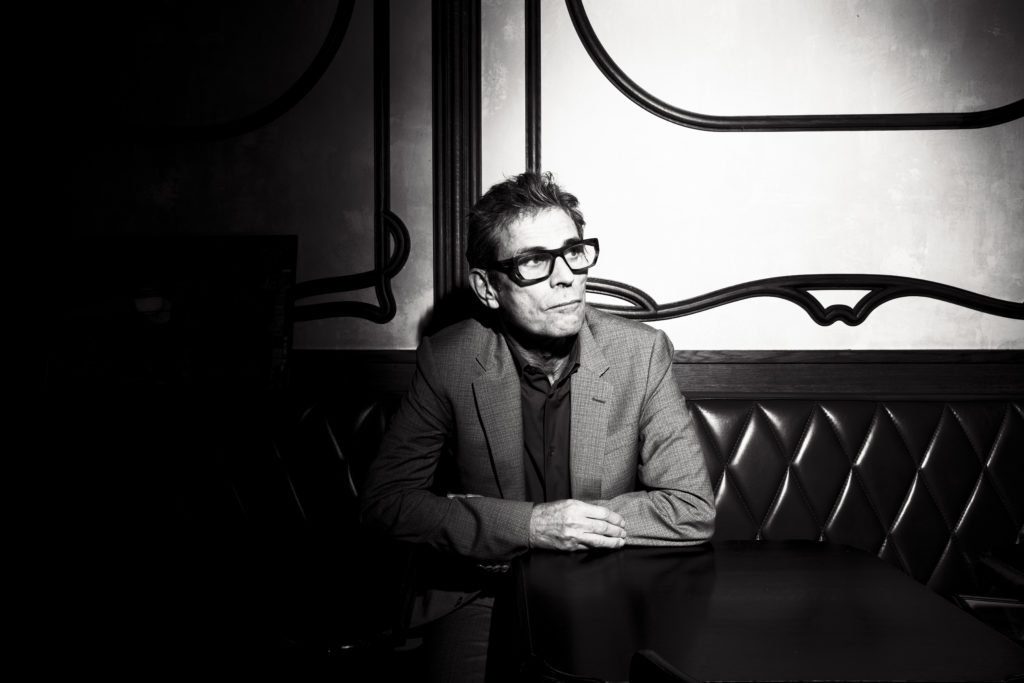 Photo: Nicolas Brodard for Le Regard Libre
Is there an age you find most interesting?
No. All ages are interesting. That's the main lesson I've learned from this process. There is no decisive year, only indecisive years. In a way, everything is replayed every year. And that goes for each and every one of us. Basically, these names are there for all of us. They get divorced like us, take the wrong path like us, get lucky or unlucky like us... They are allegories.
In 18 years old, we discover that Beatles and Rolling Stones are two bands founded by a young man of his age...
Yes. In fact, in music, you're a genius at a very young age. You're at the peak of your art between the ages of 22 and 24. This is as true for classical music as it is for jazz - or pop, of course, which is a more rudimentary genre.
You have designed each of your Birthday Books as an ideal birthday gift for someone of the age featured in the book. Journalist and essayist Eugénie Bastié, who appears in one or other of these books, asserted in an interview for the YouTube channel «Transmission» that the age at which reading is most influential is around the twenties. So, wouldn't it be better to read every Birthday Books young?
I agree that it's good to read them young. It prepares you for each of these ages! However, what I found interesting was to propose something totally new: to invite readers to immerse themselves in the books that were written at their age, to listen to the music that was composed at their age, ditto for the films... Most of the works that I talk about in these Birthday Books, I've read them, I've seen them... But not at the age of the artists who created them! It's quite different. Read The foreigner by Camus at 28, the age at which he wrote it, is more interesting than reading it at 50.
Some of the names are to be found in several of the books. Any personalities you particularly like?
You can imagine that Napoleon is exciting at every age, just like Madonna, Chaplin, Deneuve or Beyoncé... These characters accomplish significant things at every period of their lives. It's fascinating. There are others who do nothing for a long time, while we believe that all stars have always been what they are. I've also forgotten some names...
You're talking about personalities who were doing nothing at a given time. This is your case. You write in the volumes between the ages of 18 and 27: «Frédéric Taddeï, future creator of the Birthday Books, does nothing.» Was this period decisive for the future of these eclectic volumes?
Yes. Since I wasn't working or studying, I was interested in everything, and no one came to tell me that this was on the curriculum and not something else. So I read everything, went to museums, wandered around... I went to my own universities and realized that, in fact, everything communicated. Jazz, politics, cinema - it's all connected. That's one of the reasons why, later on in my shows, I moved from one subject to another, and was able to do so. I take an economist, a historian and a porn actress seriously in the same way. And I also take them lightly in the same way... In fact, when I was offered the chance to become a columnist at Canal +, I refused if it meant confining myself to one speciality. The Birthday Books are all part of this vision. They include the creator of PayPal, Napoleon's Polish mistress and the painter George Seurat.
What's the point of this kind of exposé, which was already present in «Ce soir ou jamais» as well as, earlier, in «Paris dernière», a program in which you explored the nocturnal capital and the fauna that lived there, all filmed with a subjective camera?
The aim is to understand the times. «Paris dernière» was a lighter and more arty than «Ce soir ou jamais», but at heart, they had the same objective.
In What is contemporary, Italian thinker Giorgio Agamben writes that the contemporary is «the one who receives in the face the beam of darkness that comes from his time». Others believe that the contemporary is simply someone who belongs to his or her own time, without necessarily realizing it. Where do you stand in this discussion, as someone who is trying to understand your own time - and the ages of life beyond historical epochs? After all, if the contemporary is lucid, isn't he necessarily a bit reactionary?
I didn't know about this debate. It's an interesting one. As someone who claims to understand a bit about my time, I don't consider myself a reactionary, but I do have reactionary tendencies, like everyone else. This is all the more true with age, as the world I live in looks less and less like the one I grew up in. That doesn't mean I think it was better before. Everything is interesting; every era is. I'm delighted to have lived through several. But you have to understand them if you don't want to endure them. Otherwise, we retreat into nostalgia. For my part, I feel I understand why things are the way they are today. There's no moral judgement here, I'm staying at the level of analysis and I'm trying to avoid any aesthetic judgement either.
What do you think of the concept of progressivism?
It's an ideology that has existed as such since the Enlightenment, and which consists of saying that things should get better and better. We must never forget that, for a very long time, people's standard of living did not change. A peasant under Henri IV lived in the same way as in the Middle Ages. Progressivism is clearly in decline today. As far as I'm concerned, there's a part of me that's progressive, but mostly towards myself. Things have to get better and better, otherwise I feel uncomfortable. That's why I never go back to the places where I used to live. If I did, I'd feel like I was falling back into my own decline. When I think back to places where I was happy, I prefer to keep those memories intact rather than confront them with current reality.
This content is reserved for our subscribers.

You'll also like

 French
  German
  English