



«A son image»: a funeral novel

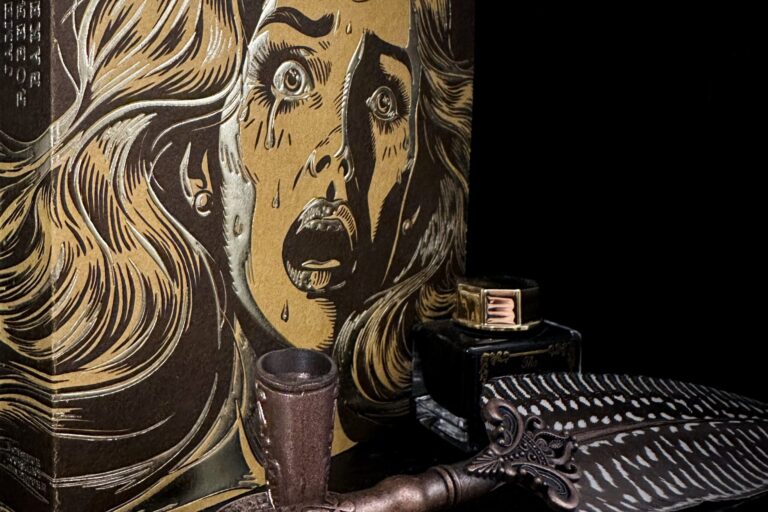
OLYMPUS DIGITAL CAMERA
Tuesday books - Loris S. Musumeci
«Of all the songs in the funeral Mass, the Sanctus is the only one whose words remain unchanged, because it is not about men, their birth and death, but only about the Lord, the God of Hosts. Heaven and earth are full of Your glory- the caress of his fingertips on her eyelids, the pulp of his forefinger. Simon watches the candle flame dance, always on the lookout for Antonia's smile, and closes his eyes. In the mass sung today, as it has been elaborated over the centuries in a tiny village in central Corsica, it's not just the words of the Mass that are important. Sanctus which are unchanging, but also its melody, so that when you listen to it with your eyes closed, it's impossible to know whether the service you're attending is that of the dead or that of the living.»
Corsica, 2003: Antonia is found at the bottom of a ravine. On the Ostriconi road, dazzled by the rays of a mild August sun, her car had let itself fall into the void. The family heard the news and were devastated. Especially his uncle and godfather, who, in addition to the sadness that overwhelms him, has to face the ordeal of celebrating the funeral. He is a priest, in spite of himself. It's too hard to recount the young woman's life. He wants to stick to simple, strict liturgy. Nevertheless, we learn that Antonia was a passionate but bitter photographer. All her life, she dreamed of covering the world's major events, such as wars. She did it, in Yugoslavia. To no avail. For the rest, her photos consisted in telling the story of local life; covering weddings with her lens.
Jérôme Ferrari doesn't take us very far, contrary to what we might think. He evokes the Yugoslav war, without making it his central theme. He recalls the Italo-Turkish war in Libya at the beginning of the last century, in the form of an anecdote. The writer, winner of the Goncourt Prize in 2012, handles his references with talent. Because he anchors his tale in the depths of Corsica, during its most politically heated years; in the depths of the tragic melodies of Mediterranean cultures; in the depths of the Catholic faith and its rites; in the depths of a young woman's dreams; in the depths of the land where she is buried.
In its image is not the most accessible of novels. It is nonetheless a story full of philosophical questions, historical reflections and gripping interest. What is our relationship to the image? What does photography say? Does it deal with reality? Is it obscene? Especially when it shows war, humiliated men, humble rubble, corpses without humility? Or when the subject is nothing but deception, as when Antonia goes to a FLNC (Corsican National Liberation Front) conference and recognizes all her childhood pals behind their vulgar hoods? Or when the subject seems far too serious to be expressed through an image? Is photography an idol, an insult to the One who created us in His image?
As for the style, even if it would have deserved more sobriety, with shorter, drier sentences, it must be admitted that its beauty is genuine. The same goes for the novel's structure: a little more simplicity wouldn't have hurt with the chapter titles. While the idea of naming them by the various successive stages of the funeral liturgy is excellent, the photo titles that accompany them in brackets are, in my opinion, too much. Nevertheless, Jérôme Ferrari manages to provide his chaptering with a genuine construction, without appearing scholastic or futile. Also, the compulsive nature of both the writing and the cutting of the chapters is in staggering contrast to the heaviness and slowness befitting a funeral.
Last but not least, we're treated to a very special atmosphere with In its image. While the novel makes only brief allusions to music, it is implied by a text that gives Corsica all the fascination it arouses and the despair it suggests. Like all islands, confined to their own narrow shores. You can hear the trembling, deep voices of Corsican songs. The religious songs pay a somewhat clumsy tribute to Antonia's memory. But not this novel, which paints a portrait of the photographer. in its own image, and that's enough.
Jérôme Ferrari
In its image
Editions Actes Sud
2018
219 pages
Write to the author: [email protected]
Photo credit: © Loris S. Musumeci for Le Regard Libre
You'll also like


 French
  German
  English
Leave a comment