



Annie Ernaux, «Le jeune homme» is bitter

Tuesday books - Quentin Perissinotto
Over the years, Annie Ernaux has established herself as one of the leading figures in contemporary literature and French feminism, eventually becoming one of the most beloved authors among the younger generation. Through more than twenty novels and autobiographical works, she has skillfully woven and unraveled the threads of intimacy, female sexuality, and romantic experience, always infused with sociological insight. So when Gallimard announced the release of a new book by Annie Ernaux, the literary world quickly went into a frenzy. That is, until it was revealed that this new work was a short piece of just a few pages—fewer than thirty. Universally praised by readers from the very first day of its release, Annie Ernaux’s text poses a challenge: can literature truly be contained within thirty pages?
«Souvent j’ai fait l’amour pour m’obliger à écrire. Je voulais trouver dans la fatigue, la déréliction qui suit, des raisons de ne plus rien attendre de la vie. J’espérais que la fin de l’attente la plus violente qui soit, celle de jouir, me fasse éprouver la certitude qu’il n’y avait pas de jouissance supérieure à celle de l’écriture d’un livre.»
Christened The young man, this short story recounts the passionate—and initially adulterous—relationship that Annie Ernaux had several years ago with a man nearly thirty years her junior. He was a student who had been writing to her for over a year; she was a free-spirited woman in her fifties searching for her next novel’s subject.
From the delicate to the hollow
L’histoire s’ouvre délicatement sur une très belle comparaison entre la jouissance et l’abandon à l’écriture. Annie Ernaux fait tout de suite de cette passion naissante un détonateur pour son écriture en affirmant que c’était «peut-être ce désir de déclencher l’écriture du livre – que j’hésitais à entreprendre à cause de son ampleur – qui m’avait poussée à emmener A. chez moi boire un verre après un dîner au restaurant». Après un début très subtil, où le désir littéraire se fond dans le désir charnel, après des premiers mots comme des feux d’artifice, présageant un bouquet textuel incandescent, tout s’effrite et l’intérêt retombe. De réflexions piquant la curiosité nous dérivons à une prose plus convenue, sonnant parfois creux.
Read also | Dominique de Buman, a Swiss national: I'll tell him those empty words
*Le jeune homme* is a sort of collection of thoughts that follow one another without necessarily connecting and that seem to trace the ebb and flow of the author’s desire. While the writing initially seems incisive and dynamic, the sequence of scenes—completely detached from one another—gradually disrupts the reading experience: Annie Ernaux, for example, does not hesitate to jump from an episode involving a Campari-fueled dinner party in Capri to images of American tanks during the war. This literary zigzag is, of course, a way of capturing and transcribing the flow of memories, but within a text of fewer than thirty pages, it unfortunately falls flat and results in a cacophonous jumble.
There’s another drawback: while some sentences are beautifully crafted, like aphorisms, others seem to have been placed on the page for no reason at all. And it’s not the dissonance that’s jarring this time, but rather their clichéd and banal tone. Again, a 200-page novel would have smoothed out the narrative, and these flat turns of phrase wouldn’t even have been noticed. However, the extreme brevity of such a text leaves no room for error, and everything therefore stands out.
«Out there, it was impossible to forget that we were living through this story under the gaze of society—something I saw as a challenge to change social norms.»
Beyond the stylistic aspect, which didn’t really win me over (though I should point out once again that the weaknesses I’ve noted stem more from the length of the text than from Annie Ernaux’s writing in general), I admit I struggle to understand the intense enthusiasm this story has sparked. It is, quite simply, the story of a writer who takes advantage of her fame to sleep with a student who admires her unreservedly. If the roles had been reversed and a male writer had recounted his affair with a young student half his age, critics and readers would certainly not have found it particularly interesting—or might even have viewed it as somewhat problematic. Similarly, this story is about a middle-aged woman with only one obsession: to be and remain desirable. It borders on cliché.
«If I don’t write them down, things haven’t been brought to a close; they’ve merely been lived through.»
Is it really necessary to publish this text?
There is one final question raised by the beautiful quote at the beginning of the book (and cited above): if putting this experience into words seems essential to Annie Ernaux, is it worth sharing with the public? This is the whole dilemma of the personal diary: what is of interest to us personally is not necessarily worth publishing… Especially since this is not a text written in the heat of the moment, but a relic from over twenty years ago that has been dusted off and pulled from the drawers!
Read also | Didier Burkhalter: A Failed Vision of a Mined earth
So, was publishing this text really necessary? Just because two or three elegant turns of phrase are scattered throughout the pages, certain perspectives are interesting, or thoughtful reflections pepper the text, that doesn’t mean it amounts to a polished, well-crafted whole—much less that it has any significant literary merit. Unfortunately, one gets the impression that this publication is more like a piece of sensationalism through which a legion of fans revels in discovering personal details about their idol.
To the initial question of whether literature can fit into thirty pages, the answer is that it can. Wish literature, however, certainly cannot.
Write to the author: [email protected]
Photo credit: © Quentin Perissinotto for Le Regard Libre
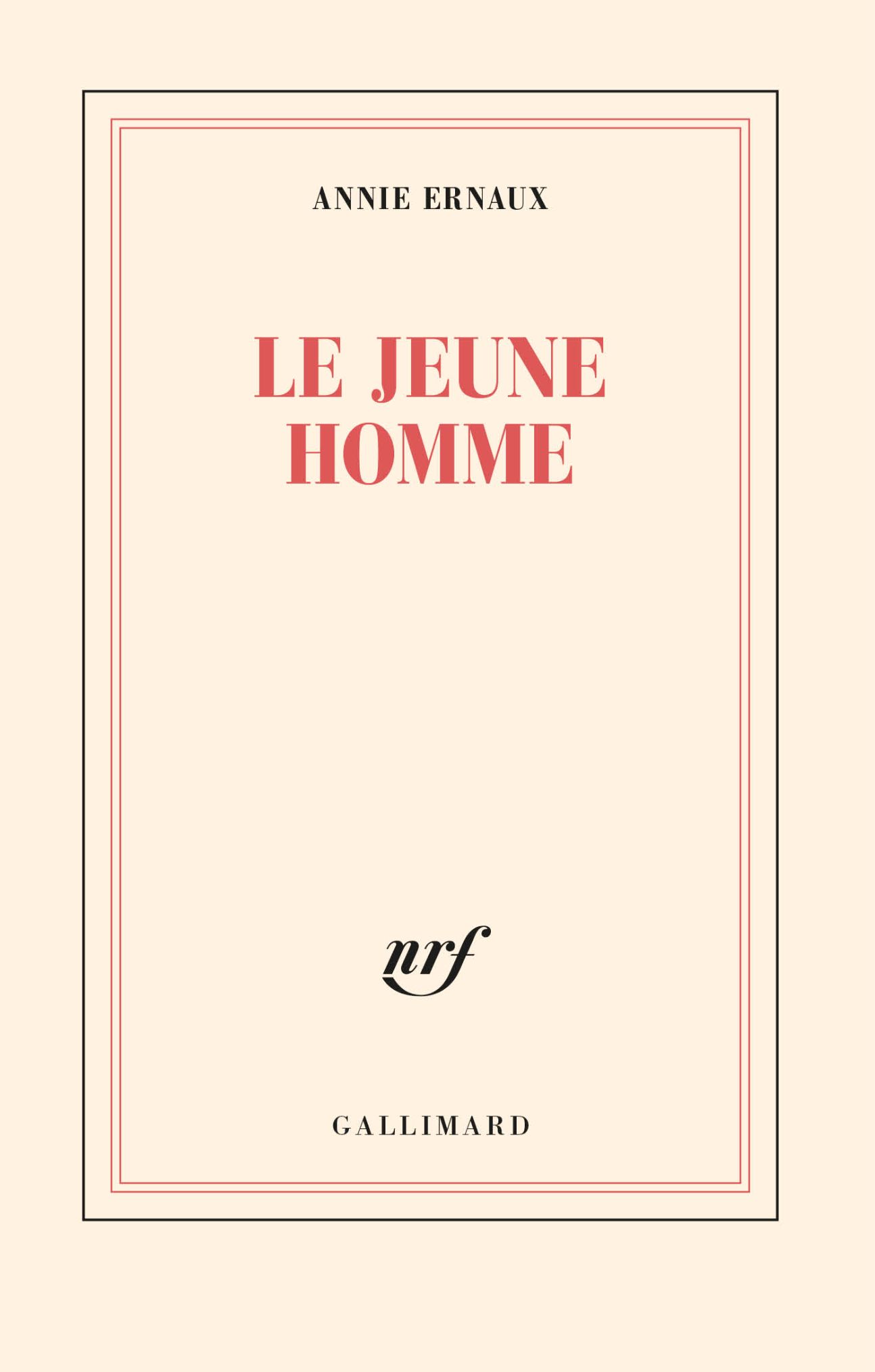
Annie Ernaux
The young man
Editions Gallimard
2022
48 pages

You'll also like





 French
  German
  English
Leave a comment