




From «Fonte brute» to «Jardins de Basra», in alienated memories
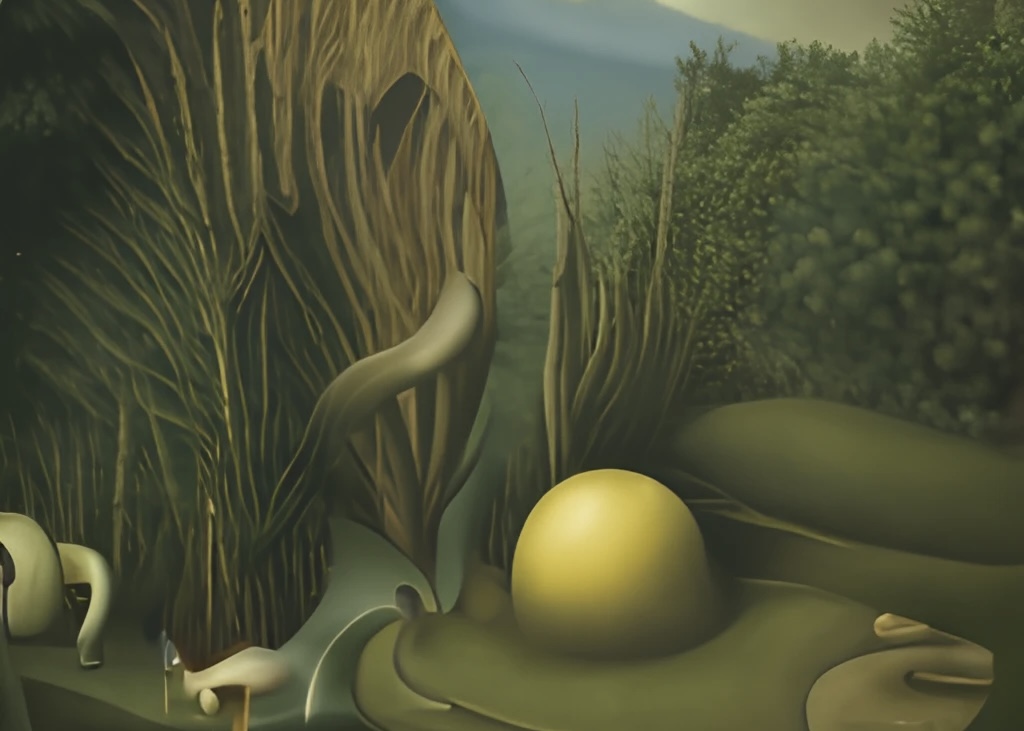
Illustration generated by artificial intelligence
With radically different constructions and horizons, two novels released this fall seize on memory to turn it into a hallucinatory expedition or a waking reverie. Departure for distended time.
With Cast iron, Sofronis Sofroniou takes us on a strange journey to the frontiers of memory and reality. From the very first page, the reader is projected onto the planet «Little Life» in the company of the narrator, a New York chess player and university professor specializing in German literature. A world where all deceased humans are reunited, and where they once again have twenty years and ten years to live.
On his arrival, the narrator is entrusted with a task of the utmost importance: directing the reconstruction of Robert Krauss's monumental novel, 4001, A book overflowing with wisdom, an ocean of intellectual revelations, which it would be hard to pin down to a specific literary genre, unless you look to philosophy or science«. And above all, a work rated 9 out of 10 on the difficulty scale. For »Petite Vie« is all about reconstructing earthly knowledge.
Road trip or bad trip?
The narrator immediately sets off in search of Robert Krauss, apparently hidden away from the capital. After a journey on a train that suddenly changes appearance according to the places it passes through, the protagonist disembarks in an unknown village. He tries to find his way, meets an old woman, then wakes up. He doesn't understand a thing! He's no longer in the same place, and days, even months, seem to separate him from his arrival at the station.
Now he's catapulted into a strange land, where he's led by force through landscapes that follow one another with no apparent logic: lush jungle adjoins medieval fortresses, staircases lead to a bottomless pit, alleyways are strewn with clothes, trailers serve madeleines made from living sponges... All the phenomena follow one another with increasing anguish. A very enigmatic and hostile country, populated by inhabitants all named Hans. And when the Hans drag him into an underground chamber to witness the opening of a skull and watch them grasp straws to sip the pulped brain, the narrator realizes that this ambient incoherence conceals a dangerous madness.
What a disconcerting reading experience this novel is! We wander along, not knowing where we're going, rereading paragraphs to be sure of the extravagance that's going on, listening to absurd speeches, losing track of irrational events, but continuing the journey with a curiosity tinged with mysticism, as if moved by an external force. I never force myself to go on with a book, especially if I can't see where the author wants to take me; that was exactly the case with Cast iron - Halfway through the story, I still didn't understand what I was reading - and yet I never thought of putting the book down, that's the crazy part! Without being a slap in the face, Sofronis Sofroniou succeeds in taking the reader into the corridors of consciousness, without losing him.
Cast iron is an adventure into the heart of mental images and the explosion of the senses, a phantasmagorical odyssey where narrator and reader share the same incredulity and seek the same answers, differently; a labyrinthine and psychedelic novel that disguises delirium and reality. A novel of infinite mise en abyme, of mirror games without reflections, of shadows that slip away. A hallucination that becomes collective.
The polyphony of centuries
We leave the fantasy behind and turn to history with The Gardens of Basra, by Egyptian novelist Mansoura Ez-Eldin. This novel is an illusory attempt to resurrect images and bring them to life. Hishâm, an antiquarian book dealer in Cairo, is haunted by a dream: he sees angels picking all the jasmine in Basra. Determined to decipher the meaning of this dream, he leafs through the pages of a manuscript from the 8th century.th century, The Great Book of Dream Interpretation, which catalogues this vision. He discovers that the author predicts this vision as the slow, fatal demise of all the city's intellectuals.
As his fantasies become increasingly haunting, Hishâm begins to navigate between Cairo, where he lives, and Basra at the end of the Umayyad era—a city where Islamic thought, still in its infancy, was taking shape within the circles of the great theologians. Mansoura Ez-Eldin weaves a narrative of historical back-and-forths, nested stories, and intertwined dreams, blurring the boundaries between reality and memory. Placed at the heart of this polyphony, the reader is pierced by murmurs and whispers, lively discussions, and the torments of romantic passion. Alternating between scenes and eras, The Gardens of Basra interweaves images, impressions and feelings to bring before our eyes the remnants of a fallen world. These Gardens are a novel in which the main character is the superimposition of two cities, one emerging transparently from the other.
Mansoura Ez-Eldin offers us a highly metaphorical text, between past and present, that plays on different levels of reading. A text where the lexicon blooms with poetry. A demanding text, sometimes bordering on the abstract and hermetic as scenes, voices and centuries follow one another.
Whether for Cast iron or The Gardens of Basra, Memory is not the seedbed for a personal story or an autobiographical narrative. Rather, it is the medium for pushing back the limits of the imagination, to the point of making it diffract.
Write to the author: [email protected]
You've just read an open-access review. Debates, analysis, cultural news: subscribe to support us and get access to all our content!
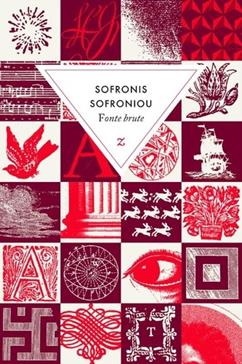
Sofronis Sofroniou
Cast iron
Translation by Nicolas Pailler
Editions Zulma
2023
349 pages

Mansoura Ez-Eldin
The Gardens of Basra
Translation by Philippe Vigreux
Actes Sud / Sinbad
2023
224 pages

You'll also like




 French
  German
  English
Leave a comment