





«Gabriel Tallent's »My Absolute Darling" is an exceptional novel.
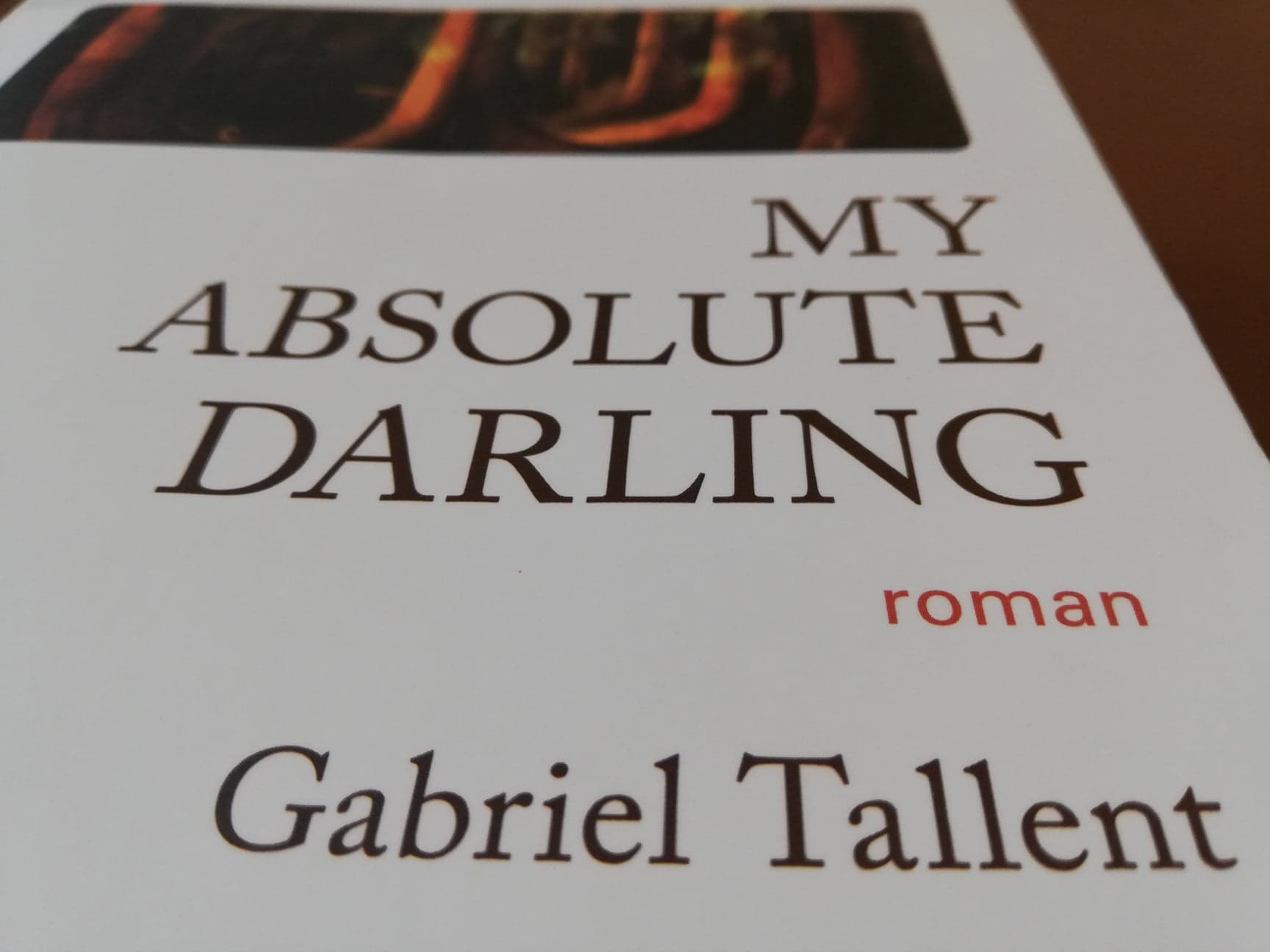
Tuesday books - Loris S. Musumeci
Real adventure! Indeed, we can say without a moment's hesitation that Gabriel Tallent's novel packs a punch. My Absolute Darling tells the story of Turtle Alveston. She is fourteen years old and lives alone with her father in North Carolina. She doesn't much like school, and has trouble socializing with anyone but her father and grandfather. In fact, Turtle is a bit of a wild child, according to her father. And he's proud of it. He's taught his little girl to live in the wild, to be physically tough to the limit, to be independent in any situation, to handle weapons, to hunt, to fish - in short, to live life the hard way.
Many people would dream of a life like that. The’american way of life, nostalgic for the open range, cowboys, and runaways. In short: total freedom! But then again, even though these walks in nature could form the basis of a novel, Gabriel Tallent gives his subject more depth. Because Turtle isn’t really that free. Her prison is her father. Possessive and jealous, he keeps her in his clutches.
She belongs to him, and him alone. She believes he loves her; she believes she loves him. She’s crazy about her father—especially when he caresses her, especially when he climbs on top of her, especially when… you get the picture. Despite the romantic feelings she has for her father, the violence he’s also capable of makes her realize that this relationship isn’t all good. It’s unhealthy. And she craves true freedom, a true adventure. A true desire. After running away, after meeting a young boy named Jacob.
An exceptional novel
My Absolute Darling has been the talk of the town. An absolute favorite of François Busnel, host of the prestigious TV show «La grande librairie»; a masterpiece, according to a certain Stephen King. Honestly, and rightly so! I loved it, too. And I read a lot—good books, good novels. Even the current literary offerings that some people disparage. This novel is special, though. First, because it combines many qualities that touch on both style and substance; second, because it simply grabs you by the gut and captivates you. Yes! Let’s say it without hesitation.
In terms of writing style, it is the interior monologue and the art of description that give the book’s pages their freshness and power. Turtle sometimes comes across as slow to think, but her thoughts come in a flurry. They contradict each other, hesitate, correct themselves, retract, fade away, resurface, then hesitate again, and grow angry, insult, shout, despair, love, hate, and desire. Suffice it to say that such a collection of shifting states of mind cannot appear clear to the reader, through the pen of a writer who knows how to penetrate a mind in turmoil and capture it brilliantly on paper.
«She thinks, »I love him, I love him so damn much, but—but let me get a little distance. Let him come after me. And we’ll see what he does, right? We’re playing a game, and I think he knows it well; I hate him for something—something he does—he goes too far and I hate him, but I’m unsure of my hatred; guilty, full of doubts and self-loathing, almost too much to actually hold it against him; That’s me—a damn slut; so I cross the line again to see if he’ll do something just as bad; it’s a way of seeing if I’m right to hate him; I want to know.”
Attention to detail
As for the descriptions, they are rich and vivid. Tallent has a keen eye for detail—whether in his depictions of the characters’ physical appearances or, above all, in his descriptions of the natural world in which Turtle lives. The delicacy of the pebbles, the wood, the water, and the fire contrasts with the violence of a hostile and dangerous environment. And you feel swept along with the characters. Here, you travel, you get out of breath from all the climbing and running about. You dream of pristine, untamed nature. It’s simply delightful and thrilling.
«She waits all evening. She rubs the inside of one foot against the arch of the other. Her skin is dry and weathered, and when she arches her foot, the sole is crisscrossed with ripples. The skin is grained like a knot in wood, and cracks dot the calluses like so many holes along the high-tide line. She succumbs to silence, and when she wakes, it is still dark, and he is still not there.»
Or:
«The sun is sinking below the horizon; the moon is rising in the southeast—a gibbous moon with a waxy hue, a day or two before the full moon—hanging almost directly opposite the sun in the sky. It’s cold. The wind dies down at sunset and then picks up again.»
Rien n’est jamais simple
Beyond the style, it’s the substance that captivates. The subjects are abundant and nuanced. So this isn’t a catch-all, but rather a weaving together of themes that show that nothing is ever as simple as we think—that nuances permeate the entirety of a story, right down to the smallest details. Turtle deals with nature, certainly, as well as incest, domination, manipulation, the tug-of-war between a love devoid of meaning and a hatred full of rage—and, of course, desire.
Turtle’s father, Martin, is, in fact, portrayed with great subtlety. His cultural references are vast: he knows everything about everything, reads philosophy and literature. He’s a skilled orator. Charismatic. Skilled. And when he declares his love for his daughter—for her beauty, her strength, and her courage—we’re tempted to believe him. In fact, we really do believe him. And so we understand that he can be a monster. Because his daughter belongs to him, just as his rifle belongs to him, just as his pickup truck belongs to him. With Martin, we experience the horror to which a love excessive. And expect the worst.
Not to mention the complexity of Turtle’s character herself. A woman yet a misogynist, intelligent yet a failure in school, rough yet delicate, withdrawn yet selfless, in love yet wounded. Affectionate yet raped. A journey through a hostile natural world, as I was saying—but also through a psyche that’s hostile to itself. And needless to say, you can’t help but fall for a personality like that. You grow attached to her. You want to follow her, you want to trust her—just as you’d love to scream in her face to snap out of it a little and stop languishing under the yoke of her father’s oppression. Turtle is an exceptional character. Still a little too much of a child; already too much of a woman. She’s crazy. She’s funny in spite of herself. She’s tragic, without a doubt. She lives within me. She has become my Absolute Darling.
Gabriel Tallent
My Absolute Darling
Traduit de l’anglais par Laura Derajinski
Gallmeister Publishing
2018
454 pages
Write to the author: [email protected]
Photo credit: © Loris S. Musumeci for Le Regard Libre
You'll also like




 French
  German
  English
Leave a comment