




«The sun was out»: a historical novel that lacks finesse
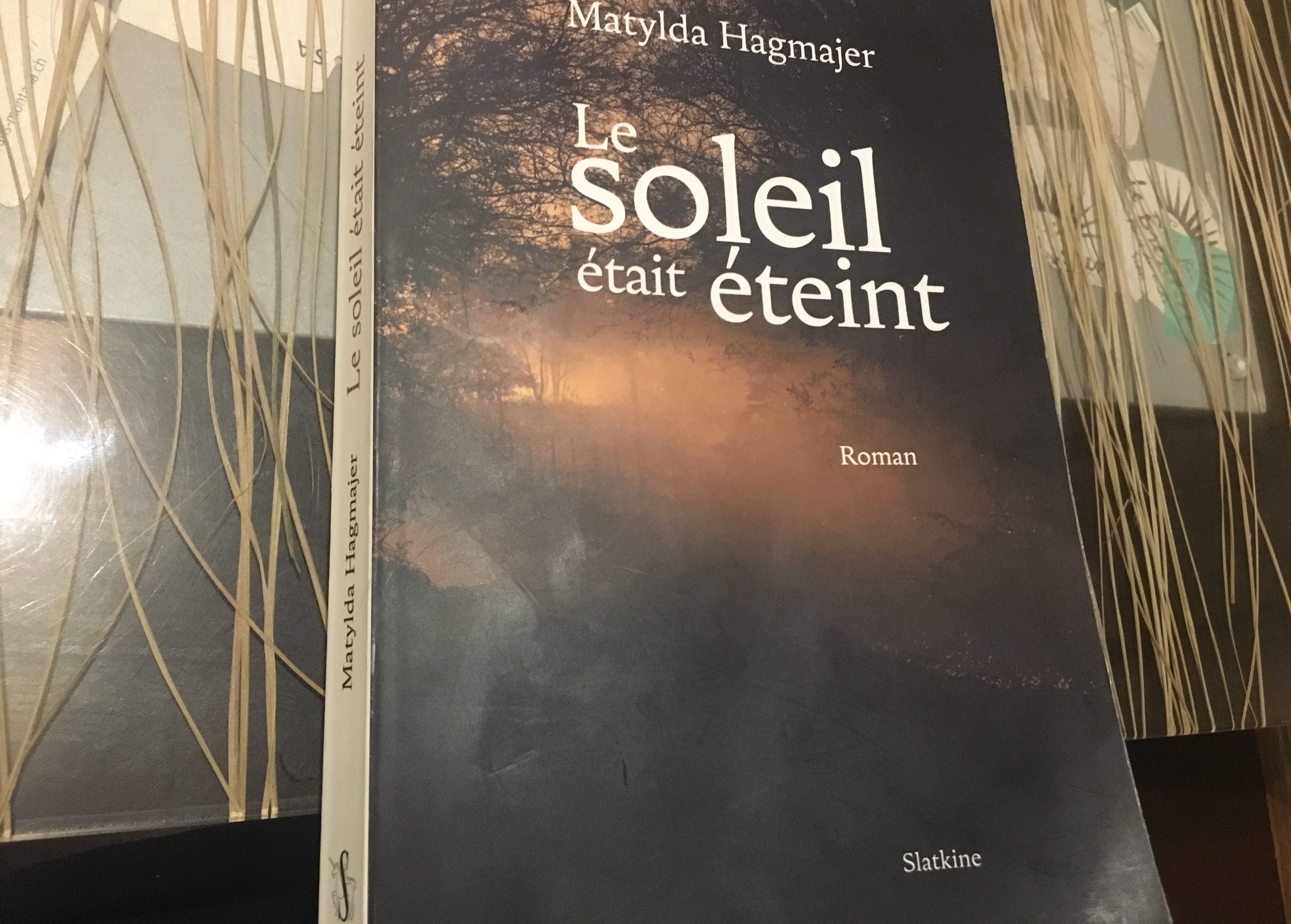
Tuesday's books - Lauriane Pipoz
Marguerite is a peasant woman from Savoy. She works for a pharmacist with whom she has a very good relationship. Seeing great potential in the young woman, he decides to recommend her to a wealthy family in Geneva. Marguerite and her family then set off for the city at a time when farming was a very difficult livelihood: it was the year 1815, the ’year without a summer,« when the climate was affected by the eruption of an Indonesian volcano.
The novel opens with a conversation between Marguerite and her mother. While dialogue is certainly very difficult to craft so that it doesn’t seem meaningless, this is something that, in my opinion, isn’t handled well in this novel. There is a lot of hesitation—represented by ellipses—and lines of dialogue that do little to flesh out the characters, which slows down the narrative. This can make the reader very tempted to skip a few passages to get to the point.
«Margue… Margot told me she was going to get a letter.".
- What kind of letter?
- A letter to Geneva.
- And when did your sister tell you about this?
- A few days ago...Just a few days ago.»
Unsound psychology
While the story is full of suspense—thanks in large part to the skillful episodic structure of the narrative—many elements create a lack of coherence. Notably, some of the characters lack credibility. The most telling example, in my view, is Charles, the thirteen-year-old boy Marguerite is caring for. He seems capable of rather mature reflections for his young age, which at times left me very skeptical:
«The hardness in her gaze revealed a side of Marguerite he didn’t know (…). «Is this where class differences lead us?» he wondered. «To the abolition of all humanity in favor of hatred?» There was no point in lecturing Marguerite; what was troubling the young woman defied all rational analysis. Her insides were churning—he could tell by her red cheeks.»
The psychology of the protagonists doesn't seem to be very well developed overall. We learn very quickly the the reasons that led them to take this or that action, which seems a bit too simplistic and formulaic. While the reader is often eager to learn the heroes’ motivations—again, thanks to the well-crafted plot—they end up feeling frustrated that these motivations are revealed too easily and, in many cases, too bluntly.
The characters’ thoughts, expressed in plain language, also give the impression of a lack of subtlety. Some of them even stretch across entire pages. Their sheer number overwhelms the narrative, and it is regrettable that the author was unable to convey the protagonists’ feelings in a more subtle way.
«Anne wanted to approach her, but she saw that the young woman was seething with rage. «She really does baffle me. But not for much longer.» As if she had read her mistress’s thoughts, Marguerite looked up at her with a sullen, almost mocking expression.»
But a very historical novel
Despite characters that lack depth, the novel remains interesting when viewed as a historical novel. The harshness of life in 1815, as depicted, really hits home.
«They spotted a group crouching by the side of the road, fidgeting. As they approached, a man stood up and came toward them menacingly, brandishing a bloodstained dagger. «Go on your way!» he shouted. He looked pale and gaunt, his sunken eyes bulging from their sockets.»
We also learn a great deal about the way of life of people in the countryside and in the cities thanks to vivid descriptions that are seamlessly woven into the narrative. The work of the peasants, who labored until they were exhausted, and the daily lives of the merchants, punctuated by interventions from the market police, are described in great detail and will pique the interest of readers who love history.
«She began unpacking her goods when a gruff woman pulling a cart full of pottery came up and aggressively demanded that she give up that spot sheltered from the rain. Régine tried to argue that her items were more fragile, but the vendor had no intention of backing down, and Régine feared she might attract the attention of the market police.»
We should also commend the inclusion of an afterword and explanatory notes on Geneva in 1816 at the end of the book. This addition helps round out the historical knowledge gained throughout the narrative and brings the book to a pleasant close, even if a notable lack of subtlety is regrettable.
Photo credits: © Lauriane Pipoz
Write to the author: [email protected]
Matylda Hagmajer
The sun was out
Editions Slatkine
2019
303 pages
You'll also like





 French
  German
  English
Leave a comment