




«L'ordre des choses could have been a Houellebecq
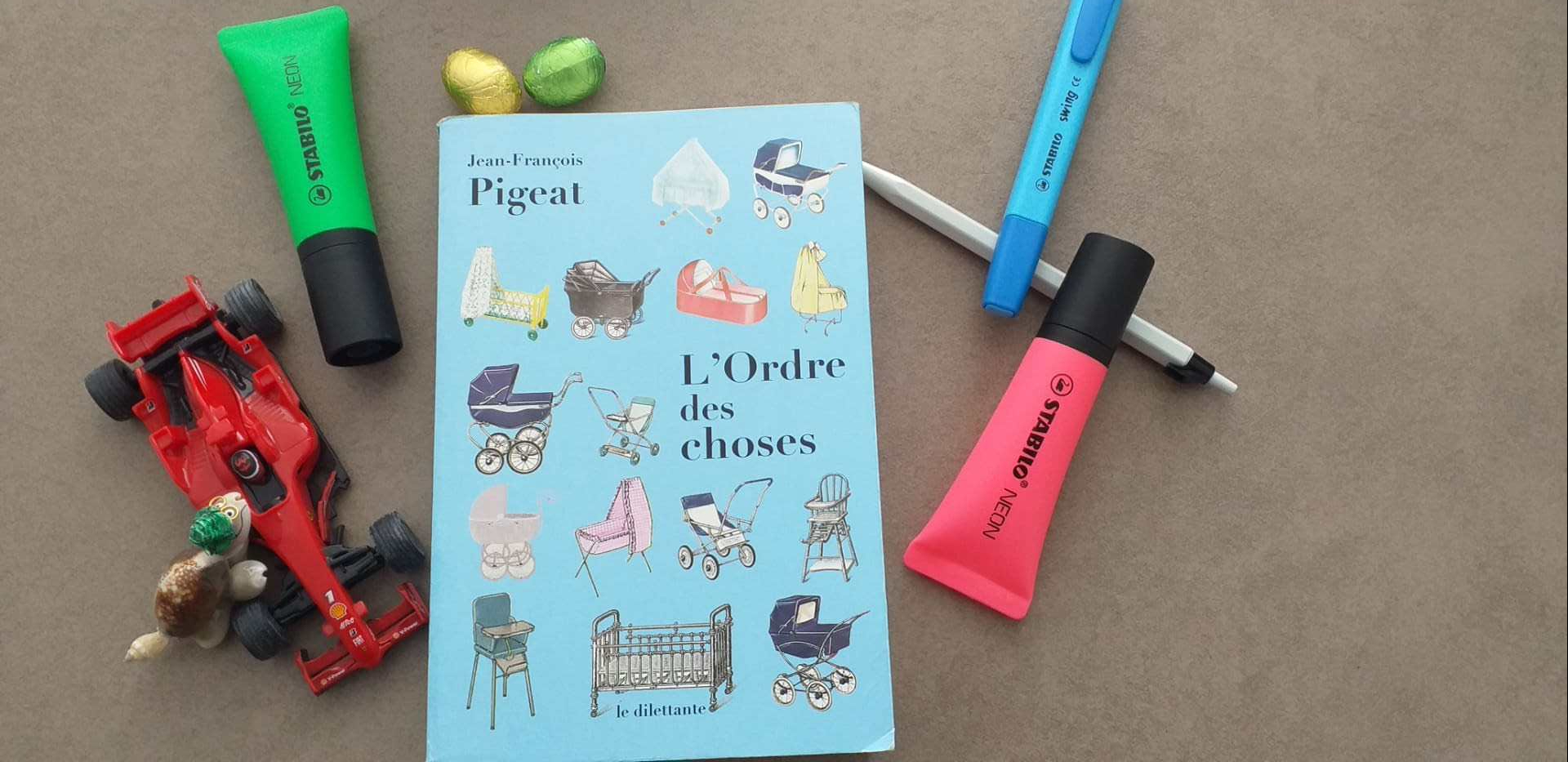
Tuesday's books - Ivan Garcia
Félix, a mediocre journalist and writer, has just moved in with his partner, Béatrice Bréguet, aka Bambi, in their brand-new Parisian apartment. Just when our protagonist thinks he's found the idyllic setting to relaunch his artistic activity, Bambi's desire to become a mother is born... Faced with such an unreasonable request, poor Félix will do everything he can to escape the «order of things».
Jean-François Pigeat's third novel, published by Editions Le Dilettante, The order of things sounds very topical. Firstly, because of its central theme of the anguish of fatherhood, the novel anchors its plot in an event that’a priori every (almost) mature man will experience one day: the decision to procreate. With this comes its share of setbacks and even potential crises. The reader follows the ups and downs of an (anti)hero with a touch of paranoia, in search of peace and isolation far from the human turmoil he wishes to escape.
«Mercedes was grinding (pregnancy: hormonal storm), from her fear of miscarriage. She was suffering from morriña. She wanted to return home. She longed for her family. She wanted the little ones to grow up there.
- Caramba!
- Yeah, buddy, that's the word.
- Childbirth is a plague, I thought.»
A humorous take on fatherhood
With a pen full of lightness and humor, the author plunges the reader into the life of Félix, this funny, endearing and unsuccessful character, who doesn't fail to confess: «I was the archetypal disappointing guy». After a brief literary success, our dear writer finds himself condemned to writing articles on leather goods or vegetation for a rather austere team that does nothing to help his daily life. Between his failed pseudo-romance with Nathalie, the newspaper intern who never misses an opportunity to try and get him back into the writing business, his boss, Xavière, who belittles him to no end, his partner who «persecutes» him with her desire to have a child, and the scarcity of his male friendships, Félix holds his own as best he can.
«I said well now that the work is almost finished at our place, that we each have our own room, I had hoped to be quiet and get back to it.
- Reject what?
- You know how it is.
- Félix, you always say that and never do it...»
Even if he wants to be alone, Félix is still well surrounded, notably by his companion Zébulon, his friend Sylvain, accompanied by his daughter Aurore, and his wife Mercedes, who - as you noted above - never misses an opportunity to shrivel up our hero's rocky projects with Hispanic accents. In fact, during his visits and frequent bucolic exiles, the protagonist is bound to bump into Sabine, Zebulon's beautiful neighbor married to a businessman, and indulge in the «order of things» with her, even though he loathes this expression...
Precisely, let's take a moment to explain another reason why this book is so delightfully contemporary: its humor. Scathing irony, situational comedy, parody, unbelievable situations - the list goes on and on of the ways in which the author ensures that readers enjoy their time with his characters. Added to this is - among other things - the writer's approach to narration, which, all in all, seems a little confusing since, as we can see below, the reader sometimes struggles to know whether it's the narrator's words, Felix's or even a mixture of the two made «visible» to the other characters.
«It's easy to understand why Mercedes found Bambi's extravagant desire to procreate so legitimate.
- Porqué «extravagant»?
She didn't see what was unreasonable about wanting a child at twenty-eight; yétais oun égoïste...»
A fine parody of Houellebecq
By mixing dialogue and narration in the body of the text, the author gives us the feeling that Mercedes and the other characters have access to Félix's thoughts, which adds many comic effects to the story. If Jean-François Pigeat hadn't deliberately chosen to make his novel comic, it could have been a Houellebecq. The theme of male sterility - which is increasingly in the news in our society - is also present, albeit hidden, and sheds light here and there, highlighting Zebulon's sexual problems and the sterility of Sabine's husband.
In a way, ironically, Félix - who didn't want a child - has had his seed «vampirized» by Sabine, who, quite happy to be pregnant, ends up abandoning him to return to her rich husband. Not unrelated to some of Michel Houellebecq's themes on sexual freedom in his novels such as Extending the scope of the fight or Elementary particles. While some get a taste of fatherhood, others are often left on the sidelines, infertile or forced to raise someone else's offspring.
But, to return to the subject at hand, Jean-François Pigeat's novel moves away from the Houellebecquian style, choosing to remain in the comic and ironic mode rather than sinking into melancholy and existential cynicism. The order of things could have given us a Houellebecq, but we don't blame him for not doing so. In fact, we're begging for more.
«This story of a child...
- Not immediately, she confirmed, but one day. It was the right thing to do...
- Oh stop with that expression! It's not an argument! We don't have to submit to the order of things!
- We weren't bound by some natural decree to spread our genes to the four winds in imitation of the sower in the Larousse dictionaries.»
Photo credits: © Ivan Garcia
Write to the author: [email protected]
Jean-François Pigeat
The order of things
Editions Le Dilettante
2019
256 pages

You'll also like




 French
  German
  English
Leave a comment