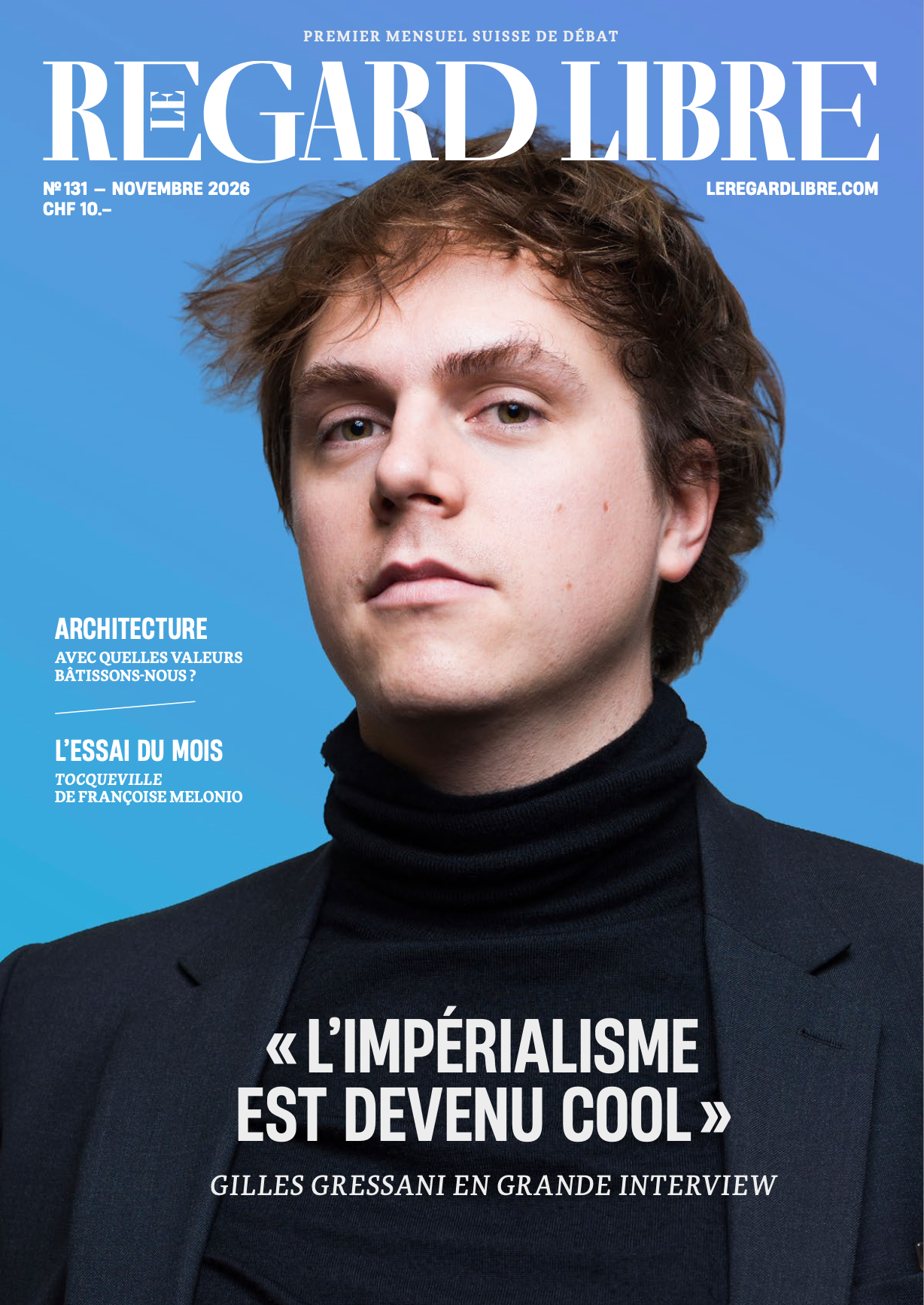




Roland Jaccard, provocateur among the piss-cold

Fully aware of the state of a world that is becoming less and less tolerant of mischievous spirits, yet increasingly accepting of evil ones, a few—very rare—mortals choose to provoke. And some of them, because they are artists, pursue this path to the very end. Roland Jaccard is one of them. One of his recent works, Tell me the truth about love, is one of the standout works in the French-speaking Swiss literary scene in recent months. But to appreciate such a work, one must be willing to accept the contradictions of the human condition—and thus understand what literature is. Review.
«We must be there for others and not just for ourselves»: this quote is taken from the book Tell me the truth about love, a collection of essays published last November, which sums up the author’s philosophy quite well. Roland Jaccard presents himself as a nihilist who sees no meaning even in the solitude that constitutes his inevitable fate. A psychoanalyst, publisher, and journalist-columnist formerly with the Swiss socialist daily Le Peuple in the French reactionary monthly Talker, taking a long detour through Le Monde, in those glory days, Roland Jaccard was a delightful character—precisely because he was so scandalous.
Read also | Jacques Pilet takes us back to Switzerland a century ago
Whiskey Palace
Those who follow the author on social media will learn nothing about the broad outlines of his contradictory thinking from this new volume published by L’Aire in the beautiful «Le Banquet» collection. One can nevertheless sense the everyday origins of his reflections. For thought is always rooted in something. Jaccard’s has the flavor of whiskeys sipped at the bar of a luxury hotel: «Criminals have a huge advantage over writers: they don’t write—they act.» They have the color of young girls« eyes—preferably Asian: »Love should be reserved for adolescence […]. That lightheartedness slips away so quickly.”

How has this man of the ultimate managed to survive so many years of contemporary madness? Roland Jaccard writes it himself: his father and grandfather committed suicide. What, then, keeps this man in a world he loathes? Tell me the truth about love may contain some clues to the answer. If the truth about love is tragic—there is only the love of youth—there is still friendship and admiration. The writer’s raw pessimism is not isolated: it is in constant dialogue with authors, singers, and filmmakers he has admired, whose names appear as the titles of his chapters. Among them is the American poet Richard Brautigan:
«Christmas,» he told me, “was a real problem for him: he spent it in porn theaters. That’s what made me feel close to him. He had no sense of music, but he bought records just for the girls on the covers. That made me feel even closer to him. He expected unconditional love and endless forgiveness from women. He hated feminists. How could I not have loved Richard Brautigan?”
The Totalitarianism of Happiness
An artist of integrity is like a concept album: you either listen to it in its entirety, or you don’t listen to it at all. Let’s be clear about that. Roland Jaccard, with his undeniable flaws—which he plays upon with a mischievous wit—is an author to welcome into your library and to listen to, even in his darkest Pyrrhonian musings. If only to remind us that optimism is not meant to be totalitarian. Between chosen freedom and imposed happiness, Roland Jaccard has chosen freedom.
Write to the author: [email protected]
Header image: Roland Jaccard © roland-jaccard.com
👉 Roland Jaccard's columns in Le Regard Libre

Roland Jaccard
Tell me the truth about love
Editions de l'Aire
2019
87 pages
-
 Youth passFrom: CHF2.50 / month
-
Digital subscription
From: CHF5.00 / month with a 30-day free trial and a CHF2.50 sign-up fee -
 Standard subscription
From: CHF10.00 / month with a 30-day free trial and a CHF2.50 sign-up fee

You'll also like




 French
 German
 English
Leave a comment