




The drama of the Order of the Solar Temple brought to life in a novel
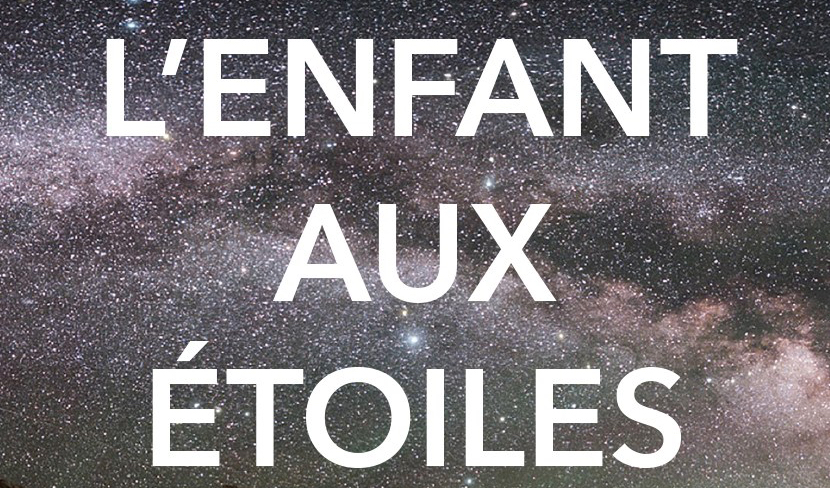
On October 4, 1994, in Salvan (VS) and Cheiry (FR), followers of the Order of the Solar Temple perished in the name of a coming apocalypse. Although the facts are well known, Julien Sansonnens has chosen to write the story in the form of a novel. At the heart of the story is «l'enfant aux étoiles», the daughter of guru Joseph Di Mambro. A poignant, painful and questioning work.
It's the story of a tragedy, of the fates of human beings whose fate leaves us wondering: «How could it have come to this? It's the story of a tragedy that has left an indelible mark on our small country. Above all, it's the story of a sect, the Order of the Solar Temple. Initially appearing as a cultural and esoteric foundation in Geneva, the organization changed its name several times before finally settling on this name abbreviated by three forever terrifying letters: OTS.
It's a fact that cults arouse people's curiosity. Unhealthy voyeurism or more than legitimate questioning? Probably a bit of both. Julien Sansonnens, a novelist from Neuchâtel, is well aware of this, and it is with both humility and legitimacy that he has published The star child published by Editions de l'Aire. A novel-investigation between reality and fiction. The author did a great deal of research before tackling such a delicate work. Facts are respected; fiction only appears when there seem to be gaps in the sequence of events. Mysteries.
A shocking book that raises questions
This is the great merit of The star childIt's a novel that asks questions. In short, there would have been no point in watching the events unfold again, as the Swiss were able to do with an extensive dossier of L'Illustré and subsequently with numerous reports, documentaries, stories and testimonials. With this book by Julien Sansonnens, we're dealing with literature, and literature that doesn't hesitate to put a number of disturbing questions on the table.
Among these lines of inquiry, one in particular may bewilder the reader at first glance. What if the decline of traditional Catholicism in Valais and Fribourg was one of the reasons why people might have been seduced by the authoritarian «mysticism» of an organization like the Order of the Solar Temple? After all, would the end of transcendence result in such blind beliefs in murderous, esoteric sects? The question raised by the former deputy of the Workers' and People's Party is a polemical one. It's daring to equate sects and religions.
«Doesn't the Church bear some responsibility for the massacres? Since Vatican II, it seems to have gone out of its way to expunge anything that might evoke mystery, the inexplicable, a certain tradition? Has it not, quite unwittingly and quite indirectly, pushed some of those who were to make up the mass of its faithful towards other movements, towards other cults, better able to answer the big questions that always end up resurfacing?»
Another sensitive question concerns the status of gurus. Are they scoundrels, nothing but scoundrels, or have the two heads of the OTS, Joseph di Mambro and Luc Jouret, been taken in by their own spiritual game? That they were swindlers, riggers, manipulators, liars and financial swindlers is beyond doubt. But by dint of their sophisticated precepts, their apocalyptic discourses inspired by ecology, the neo-templar tradition and ancient religions, and their pompous ceremonies whose emotional intensity is recognized by all their former followers, didn't they themselves end up believing in part of their deception?
Prose that tries
Is it necessary to talk about style when writing a review of such a serious book? Yes, of course. We can and must talk about language when it comes to literature. It would be like ignoring the image when talking about photography. So we have to admit that Julien Sansonnens is less convincing in form than in content. Germanic turns of phrase such as «Existait en elle une tendresse», the use of the personal pronoun «tu» instead of «je», or preciosities such as «tu n'l'as voulu envisager comme une simple arnaque» leave us rather dubious, not to say disappointed.
On a positive note, the author was not afraid to experiment with his writing while dealing with a subject that could not be more tragic and controversial. His account of the young girl who died at the age of twelve, a victim of her father's madness, and of her mother, touches the very depths of our hearts. It is also a fitting tribute to the victims and their loved ones.
Julien Sansonnens, The star child, Editions de l'Aire, 2018, 267 pages
Write to the author: jonas.follonier@leregardlibre.com
Photo credit: © Editions de l'Aire
In our November issue, we interview Julien Sansonnens about his novel. Order your copy of this issue now.

You'll also like



 French
  German
  English
Leave a comment