




«The last days of Marlon Brando»: the last days of a glorious piece of trash
Tuesday books - Loris S. Musumeci
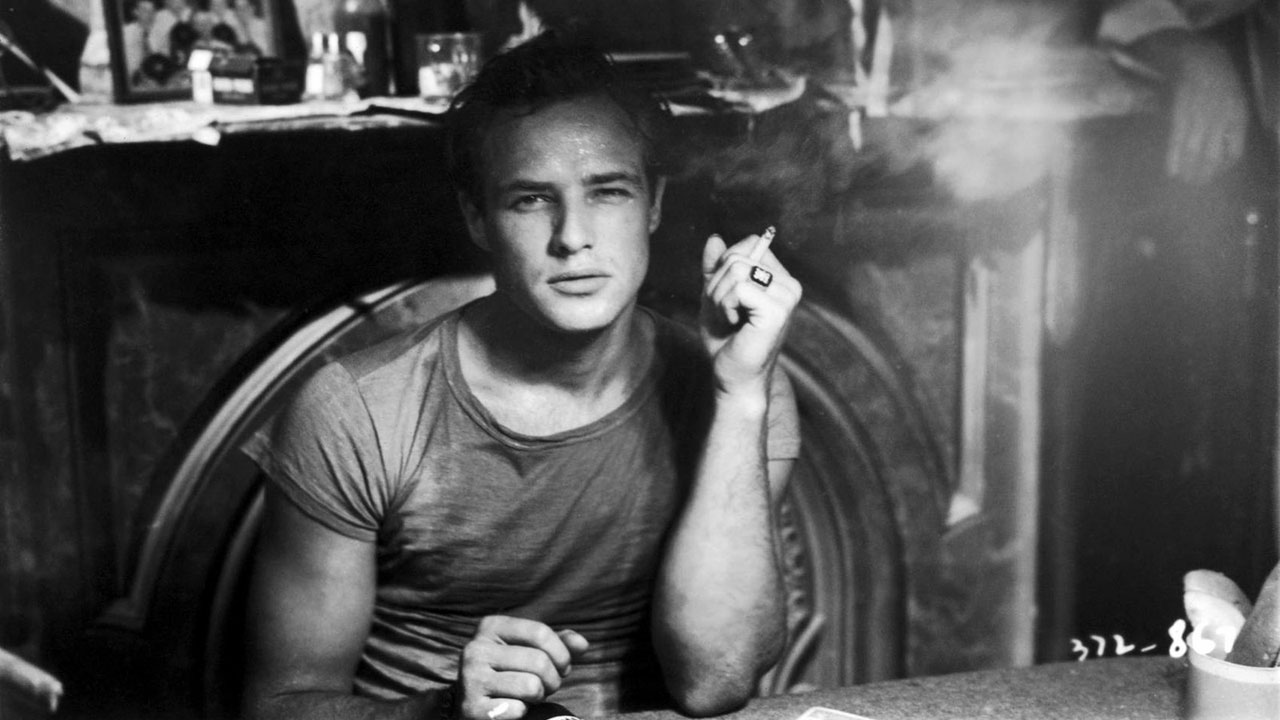
A streetcar named desire, Mutiny on the Bounty, The last tango in Paris and above all The Godfather and Apocalypse Now. These films, the last two lasting legends, created or at least confirmed a legend in their own right. A legend whose name is just as legendary, just as much a part of cinematic history: Marlon Brando. In The last days of Marlon Brando, the great reporter for World Samuel Blumenfeld tells a story that he composes into a novel. The story of how he met this Brando legend in an interview at his home, 12900 Mulholland Drive.
And here, the dream merges with desolation, a desolation that is nonetheless not lacking in fascination. Blumenfeld stands before Brando like a devotee before his all-powerful god. Despite the actor's ideal appearance in his heyday, the god has now fallen. But he's still a god. A legend. A sacred beast of cinema. Yet obese, yet utterly excessive, yet utterly mad.
In the end, the gold digger is faced with a piece of garbage. And there's no exaggeration in the choice of words. Brando has really become a piece of trash, as much for his too-round belly as for his head, which doesn't run very smoothly any more. Slumped on his bed, he watches television. But the TV has a very particular location: it's on the actor's enormous belly. And that's not all... because our dear Marlon is also a first-rate paranoid, equipped like the most unbalanced survivalist, who accumulates as many reserves in his garage as he does in his belly. A bulimic, he gorges himself day and night, on whole tubs of ice cream or fast-food dishes delivered to his home by flying over the gate of his fortress.
The character is tragic. He is comic. The author allows us to meet him as he embarks on his story. Marlon Brando is the glory of yesteryear caught up in the ridiculous. It's the ridiculousness that nonetheless moves us, and doesn't erase the trail blazed by what was, I repeat, a legendary career. It's the lightness of a guy who slept where he pleased, with whom he pleased, woman or man; the casualness of a genius who allowed himself the luxury of refusing the ultimate film star award: the Best Actor Oscar for his portrayal of Don Vito Corleone in The Godfather. At last, he's a father who has scattered children here and there, without succeeding in fertilizing his race. A suffering father who saw his favorite son become a murderer.
In this funny and moving book, Samuel Blumenfeld paints a portrait of his Marlon Brando, allowing us to make him our own. He transports us from film set to film set, reliving the sensations of the films that supported the actor's always calamitous and always essential presence. Once again, he declares his laziness towards cinema and its stars. The very ones «who were responsible for my upbringing», he writes in the opening pages, the very ones again against whom «I sought a certain masculinity, learning to dress, shave, say hello, talk to a woman, love her, situate myself in my work.» For Blumenfeld, witnessing Marlon Brando's last days was an ordeal of unease and contemplation. For the reader, it's much the same, thanks to the power of words, and the power of fiction to penetrate reality.
«I stopped being afraid of him at the precise moment these chimeras were revealed to me. Seen in all his fragility, it appeared to me that we were now discussing things on an equal footing. No longer was he on one side, firmly entrenched in his kingdom, and I on the other, coming in from nowhere, tiptoeing in. What he was looking for - a way out, an escape from his misery - matched what I'd come for - material for a portrait, an encounter with a white whale, the prospect of announcing to my editor-in-chief that I was the man who'd seen the bear, breaking into legend.»
Write to the author: [email protected]
Photo credit: © Universal Pictures

Samuel Blumenfeld
The last days of Marlon Brando
Editions Stock
2019
249 pages
You'll also like

 French
  German
  English
Leave a comment