



Leaving fragments of yourself behind
Tuesday books - Diana-Alice Ramsauer
Successfully blending a return to childhood in the Valais with the painful story of an Irish adventure: this is the challenge that Montheys-based Abigail Seran has met in her book. From here and elsewhere. The author succeeded in immersing me in the simple everyday life of a career-minded thirty-something who is re-searching the lost social codes of her past, while discovering the troubled story of her dying uncle. From here and elsewhere, as proof that we always leave a little piece of ourselves in the lands we tread.
Sion, Tuesday, June 22, 2021. Just as I’m about to start my second reading of Abigail Seran’s book to write this column, I receive a phone call: it’s the author herself. A complete surprise, since this woman from Valais is neither a friend nor even a close acquaintance—just someone who has my number and with whom I’ve exchanged messages in a professional capacity, perhaps four times since I first learned about her various initiatives. An unexpected and disconcerting call. A sign? A connection? I’d say it’s a coincidence that perhaps simply reveals how closely I’ve connected with the book and the main character’s emotions.
Léa (or Léanne, her birth name) must be in her early forties. She has turned her back on her home region and hometown—let’s assume it’s Valais, and specifically Monthey, the birthplace of Abigail Seran, even though the latter seems to take a perverse pleasure in never mentioning the town in the Chablais region. She has made a career for herself in high society—perhaps in the Zurich area, but the location doesn’t really matter. She has neither children nor a steady partner. She doesn’t seem to want either: she has other priorities. She is fulfilled and successful.
The Sociology of a Valley of Childhood
While she’s between jobs—positions in which she must never show any weakness, make decisions, and sometimes act decisively without hesitation—her mother, Marie-Solange, forces her to take a break: three weeks in the apartment where she grew up. «A sociological experiment? Or a trip down memory lane? I hadn’t even left yet, and I was already looking forward to being an adult again.» Her role during those 21 days will be to fill in for her mother, who has gone on a trip with «her» Armand, and to visit Uncle Luc every day at the nursing home.
At that moment, inevitably: coming face-to-face with memories—her own, but also those of her family—the fluttering heart of a teenager, and the rediscovery of a social life unique to a region where people live in a close-knit community.
What can we take away from all this? It’s true, the structure is simple and not particularly original. And the characters surrounding Léa are sometimes a bit predictable: the handsome doctor she fantasized about as a teenager; the warm-hearted Brazilian neighbor raising her son alone; the saleswoman at the corner shop who always manages to find exactly the little dress you need right when you need it; and, of course, the elderly uncle who’s losing his mind and is haunted by a memory that gnaws at him.
Those Who Leave and Those Who Stay
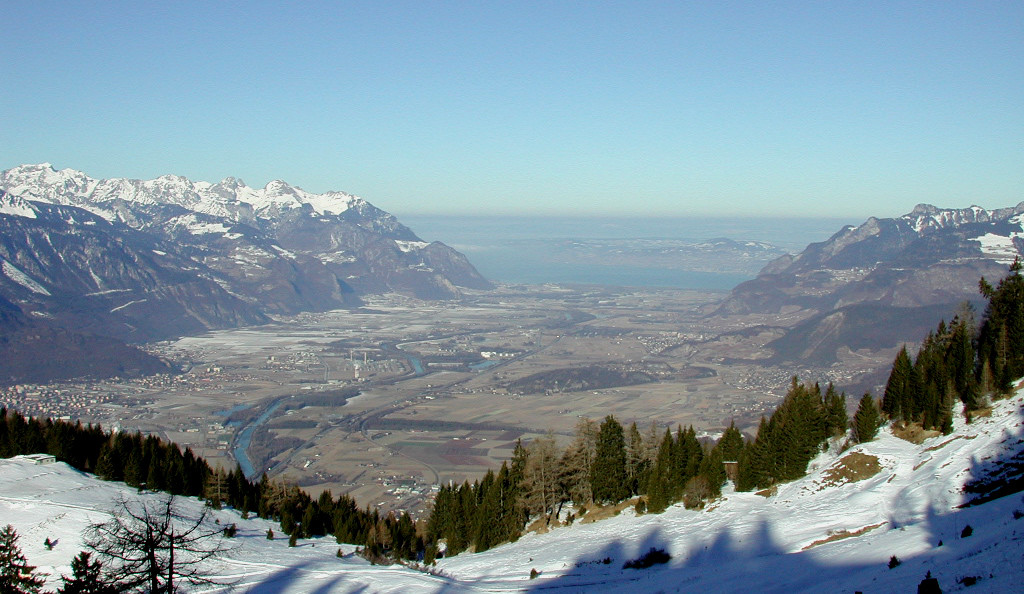
Still, that doesn’t detract from the book or the interest I had in reading it from cover to cover. The memories Léa delves into aren’t necessarily the ones you’d expect: this isn’t the resentment of a teenage girl who went through a rough childhood. The young woman rediscovers her city with a certain nostalgia. So, yes, she ran away from it. But now that she’s back in her old surroundings, she’s curious to see what’s changed. «From the hilltop at the edge of the forest, the town had spread out. It had certainly grown. To the north, the industrial zone—once isolated—was now surrounded by shops. Almost all of the small workers» houses had given way to large, modern buildings. Could it be that in twenty years, everything had changed so much?”
She also realizes that she no longer understands the unwritten rules of this place; she feels «out of step, as if she’s taken a step backward.» She runs into acquaintances and realizes that many of them lead very traditional lives; their conversations haven’t changed—«they’d never left the area, or if they had, it was only for school, and they’d come right back as soon as the chance arose.» A tug-of-war between past and present. While she doesn’t miss any of this—having left for a highly individualistic world—the rediscovery of the ’collective« intrigues her. It unsettles her, it jarrs her. It also comforts her.
«Nostalgia, really? And yet. If I were honest with myself, the warmth I felt, that sense of community coming together around me to hold my hand, had reminded me of the vows I made as a teenager. Back then, even though leaving had been the only way out, I’d left behind forever the carefree spirit of my childhood years. I briefly rediscovered it, even though I’d never had to be so grown-up. I can’t wait to return home. To leave behind this feeling of unease, this tug-of-war between the past and the present.»
The «Niv» Mystery»
At this stage of the analysis, there is one final missing piece: how the old uncle’s story fits into all these doubts in Monthey. When considering Léa’s return, we must take Luc’s memories into account. One of them centers on «Niv,» a name he repeats constantly during his ramblings. It quickly becomes clear that this refers to someone connected to his time in Ireland. It’s important to note that Uncle Luc lived for several years on the island, where he worked as a French teacher at a girls« school at Kylemore Abbey. The mystery surrounding this »Niv” persists throughout the story. To make sense of it all, Léa uncovers letters written by her uncle to his sister, Marie-Solange, as well as the books—some of which are autobiographical—that he wrote under the pseudonym Luke O’Brien.
For anyone interested in the region: the descriptions and the world surrounding Ireland are sure to be evocative. This group of readers would, in fact, be surprised by how little space I devote to this part of the book in this review. Yet, for me, Léa’s return to Monthey and the feelings that accompany it are far more exotic and touching than the depictions of Ireland—even though the role that country plays at the very end of the story is indeed central. It’s certainly a matter of personal taste.
Still, overall—taking into account both the here and the there—the book is simply a pleasure to read. Unlike what I usually read—and literary critics for the Regard Libre —and everything related to them—you won’t find any political messages or left-leaning demands in Abigail Seran’s book (at most, a few references to the IRA, the Irish Republican Army).
Since this is a light, easy read—neither entirely a «feel-good» book nor a real «brain-teaser»—I’d recommend it as a «great summer read.» This is a distinction to be held in high regard: describing simple, human emotions in an everyday setting without veering into the sentimental or the trite is, in and of itself, more than enough to place a work on the «literature» shelf.
Write to the author: diana-alice.ramsauer@leregardlibre.com
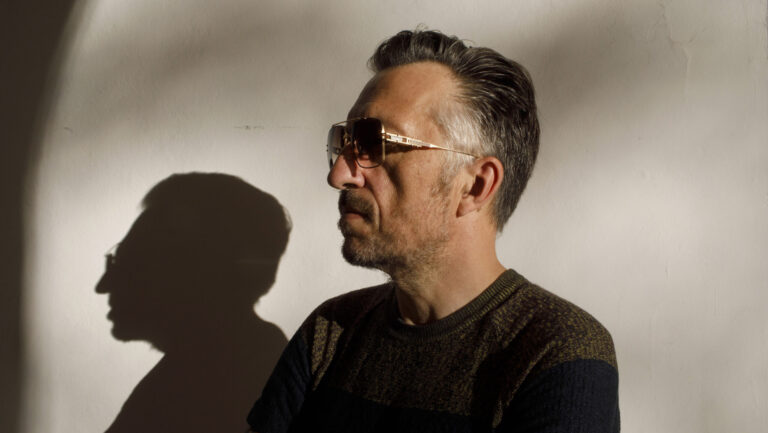
Photo Credit: © Claude Philipona

Abigail Seran
From Here and Elsewhere
BSN Press
2020
257 pages
You'll also like



 French
  German
  English
Leave a comment