



Memories for artistic mediums

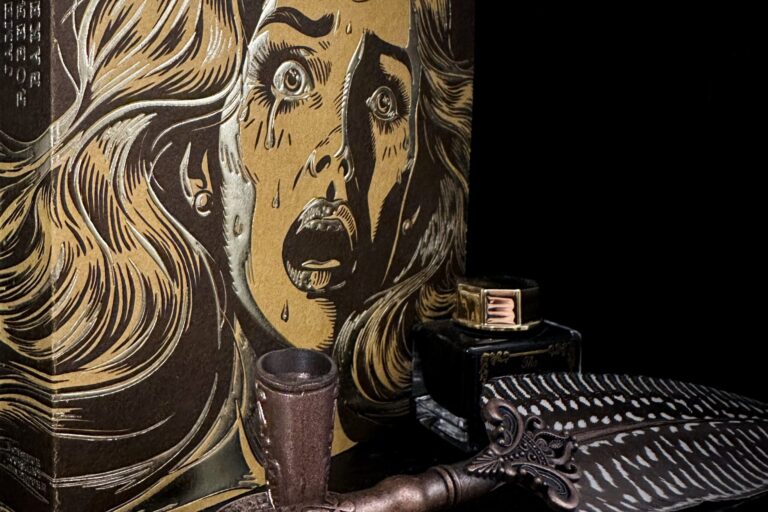
In «Oslo, from memory», a writer in love with films from the 1920s delves into his own mind, mixing investigation with relics of memory. Photo: Sofia Froso for Le Regard Libre
There's a delicious feeling that comes over you when you encounter a work that combines literature and cinema. This is what Oslo, from memory, Didier Blonde is no stranger to memorial journeys.
There's magic when a book is adapted for the screen, when you're surprised to recognize a quote from a beloved work, spoken by an actor. When books and libraries are sublimated by the 7th art and suddenly take on a central importance and beauty in the setting. Didier Blonde's latest novel unites cinema and literature in a single work. In Oslo, from memory, a writer and lover of 1920s films plunges into his mind and mixes investigation and relics of memory, between Oslo and Paris, through the prism of literature and cinema.
Memory introspection
If you think you're plunging straight into a world where dandruff intertwines with feathers, you're in for a bit of a disappointment. The first fifty pages juggle the author's introspection of his own memory - and, by butterfly effect, of himself - with his Norwegian reminiscences, and in particular of one woman, Inga: he remembers her only in snatches and blurred images. We know what the narrator wants (to find his memories, in their exactness, names, addresses, dates and, consequently, to find himself), but we don't really know what he's getting at, so we're left somewhat wanting. Nevertheless, the reader's lack of understanding piques his curiosity.
Little literature or, more generally, art comes out of Norway, because it's a terrain that the French-speaking world explores too timidly. As proof of this, when a Norwegian woman contacts the narrator with the idea of collaborating on a documentary about an emblematic Norwegian female figure - who, moreover, has lived in Paris for a long time - she is a complete stranger to him. Yet Cora Sandel is to the British what Jane Austen is to them: a creator whose books are widely read.
And the camera turns
The narrator's agreement to the film project leads him to let his guard down, revealing his weaknesses and sensitivity. The writer slips into the writer's skin, criss-crossing the streets of the capital under the watchful eye of the hand-held camera. In this way, the arts merge: literature and cinema become one. Cora Sandel's story is read through a cinematic prism, and the author plays with this interweaving of mediums. There are no rules. Are we in one or the other? It doesn't matter. A porosity is created, and the reader indulges in this charming mix. Nostalgia hovers over this collaboration, where thoughts and unfinished business take precedence over the initial project. This reveals what Truffaut called «the involuntary beauty that gives the impression of not being responsible for it».
Whatever the nature of a work, when it's finished, something leaves its mark on the human being and inevitably leaves a taste. Bitter, pleasant, unforgettable. We often want to imbibe it. This is the power of all art. Oslo, from memory, This is a process that can be felt far and wide.
After combing the signs of Oslo and Paris, after meeting women with Nordic names, the one we really meet is the narrator. And behind him, the writer and the power of his pen. A passage through his memory and personal introspections finally allows our personal memory to be activated. This novel is a bridge between past and present, between cinema and literature. Memories are everywhere. Memory preserves them, blurred or precise, photographic. And we ourselves face them. The novel, little by little, fades away, giving way to our own personal pantheon of memories.
Write to the author: [email protected]
You have just read a review published in our paper edition (Le Regard Libre N°110).

Didier Blonde
Oslo, from memory
Gallimard
April 2024
160 pages
You'll also like




 French
  German
  English
Leave a comment