



«Uvaspina: grabbing the devil by the horns
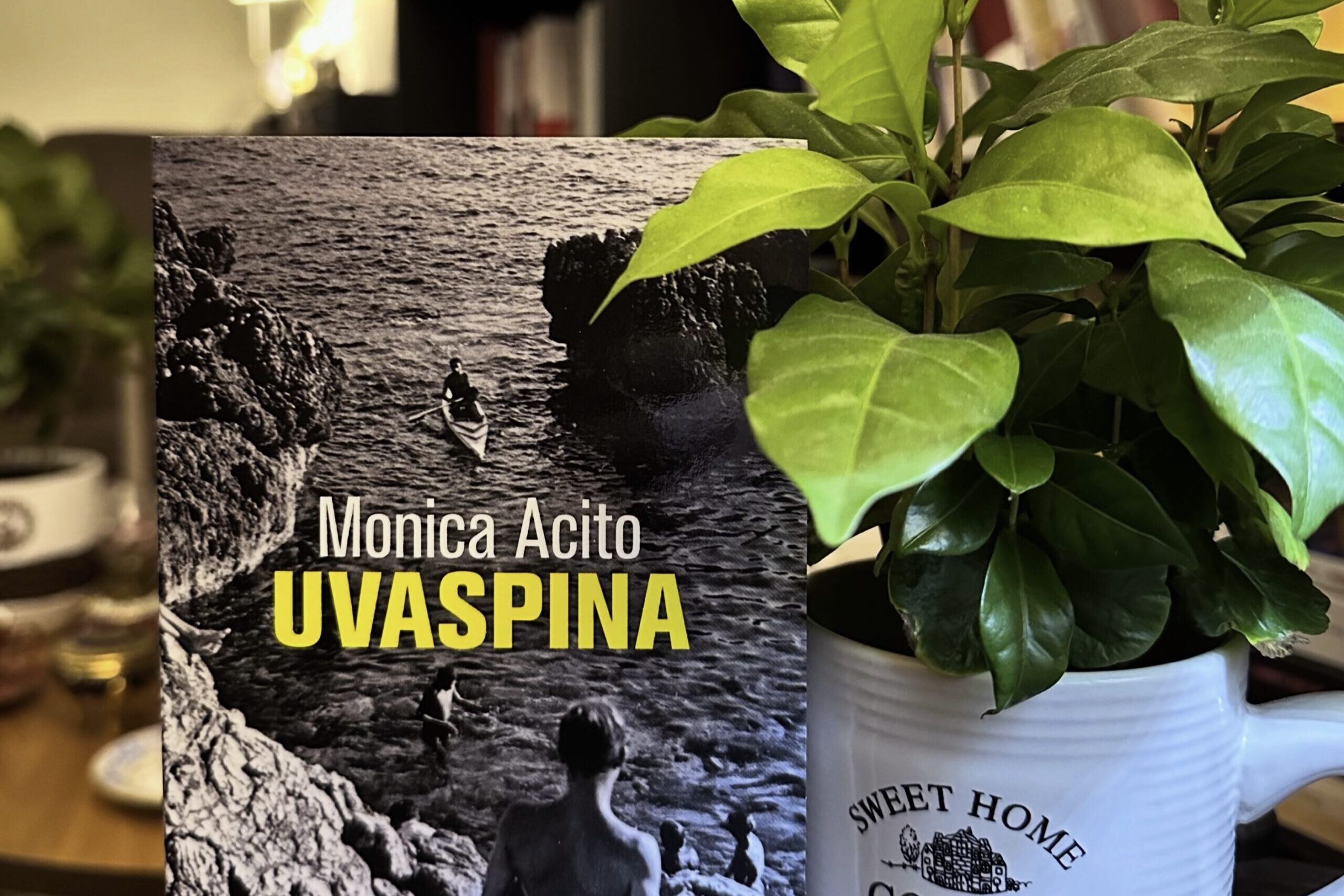
Italian author Monica Acito signs her first novel. Photo: Quentin Perissinotto for Le Regard Libre
With Uvaspina, Monica Acito grabs hold of literature with hands full of the sacred fire of blinded myths, to deliver a blistering novel in which Naples becomes the scene of carnal violence, carried by a harsh, vindictive language.
After months of lukewarm reading, what a relief it is to hold a book in your hands that tells you «this is literature»! Because good literature jumps out at you like a parcel bomb. Uvaspina is not a novel that transports you; it rolls off your back. From these pages pours a tenacious, almost mythological violence, a telluric storm that smashes beings against each other, until the last bonds are broken.
Folklore of fratricidal love
The story of’Uvaspina is as age-old as superstition, as fatal as legend. We follow the life of a boy in Neapolitan working-class neighborhoods, where tenderness circulates poorly and bodies often speak louder than words. Uvaspina tries to grow up in a family that the wrath of sad passions is breaking up, between the evil clutches of his furious sister Minuccia and the funeral comedy of his mother Graziella, known as La Dépareillée, a sort of still life with a boisterous gobble who can no longer bear the neglect of her husband, who has squandered his fortune and his name on sexual orgies.
On these sidewalks burning with misery, childhood is already an anxiety, adolescence a slow deflagration. It's in this sticky atmosphere, in the heart of these foul-smelling urban swamps, that Uvaspina searches for himself between the identities that clash. And he tries to muzzle betrayal in the fury of first love.
Read also | The last summer in town, the exhilaration of la dolce vita
The banner announces a new Elena Ferrante; it's nothing of the sort, except that the book is about Naples. Any other comparison is misleading: Monica Acito's Naples is a territory free of concessions, where the violence of the world rivals that of men. It's a supernatural, decadent Naples that seems to bend under the weight of its beliefs and demons. Here, we're more at the crossroads of Elsa Morante and Pier Paolo Pasolini, for the social violence, dented childhood and extreme emotional intensity that lie beneath the sacred mire.
«The time of a rustle, and the sky opened, torn by a lightning bolt in the shape of a hinge, that between childhood and adulthood.»
Without ever withering or festering, Monica Acito's language is virulent, snarling, raw, almost vulgar at times, but as soon as it's trampled underfoot, it flies skyward to pick up the stardust, in dazzling lyricism. It's a language with blood on its teeth and velvet in its throat. She is a tragic assassin. Naples, like its inhabitants, appears not in any ordinary light, but in hallucinatory dreams, on the fringes of vast madness bordered by the Styx. And it's precisely this blend of poetry feigned with vulgarity, of beauty disguised with disgust, that makes her writing so disturbing: she doesn't sublimate reality, she sucks the marrow out of it to project onto tombstones the shadows of éfrits dancing among the inferno.
As a novelist-demiurge, Monica Acito scrapes the cracked ground to raise the dust and carve out characters crushed by existences larger than themselves. Then she leaves them to beg for the heaps of soul that litter the street. Behind every line, we sense a supreme will that bullies men and delights in contemplating their excesses. But these men are neither heroes nor Titans: they are scoundrels who think they are untouchable gods.
A tale not of origins but of damnations: in Uvaspina a mythological omnipotence that crushes men under destiny. And leaves the reader to grapple with their vindictiveness and resentment.
«Antonio had the correct speech of a young man aware of his poverty who had sweated blood and water to learn how to tell stories in this way. His language was woven with both the tasty words of the gossips and the refined knowledge of certain young teachers who left their countryside at dawn to give classes: all the beauty of Antonio's stories was fixed in the depths of his eyes, two cups that captured the color of the sun and that of water in the night.»
Writing the irascible, erecting the ruins
And underneath this abrasive prose, Naples' dolent body unravels in long lamentations. At once baroque and gothic, raw and carnal, Naples crushes as much as it shelters. Behind its airs of burnished matronliness, it bursts with clamor, miasma and all-too-living shadows.
Gothic and baroque, the Parthenopean city? Yes, but with dirt under the fingernails. Monica Acito's gothic has abandoned its romanticism to become organic, while the baroque has swapped its ornament for obscene excess.
And in this sensory chaos, Monica Acito brings out an almost feverish intensity: Naples is not a setting, it's a raw, wild and visceral character. She's a putrefied old countess, a ruined palace being demolished by spitting.
Every month, Quentin Perissinotto sets out to put a literary work through a kaleidoscope, in order to collect the images it projects and reproduce their diffractions. Even if the flashes of genius turn out to be shards of glass. Write to the author: quentin.perissinotto@leregardlibre.com
You have just read an open-access column published in our print edition (Le Regard Libre N°125). Debates, analyses, cultural news: subscribe to support us and access all our content.
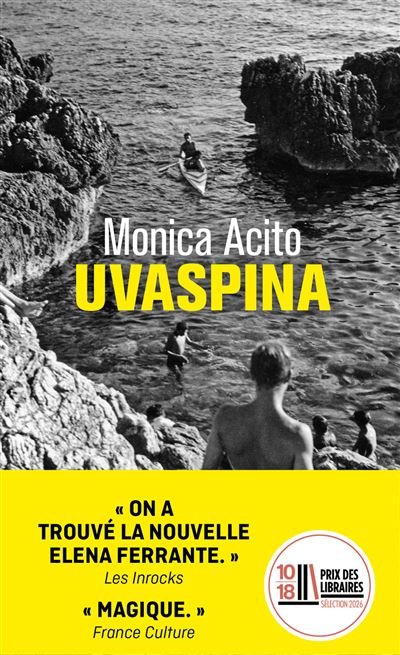
Monica Acito
Uvaspina
Translated from the Italian by Laura Brignon
Points
January 2026
456 pages

You'll also like




 French
  German
  English
Leave a comment