



The day my Robot loves me...

Le Regard Libre N° 48 - Thierry Fivaz
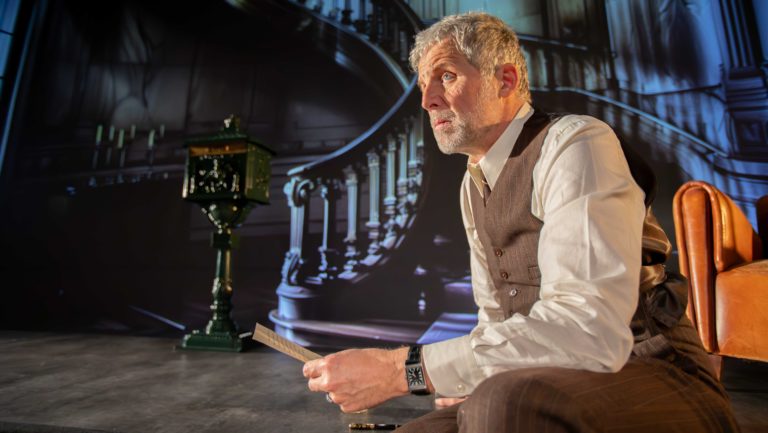
First presented in October 2018 at the Théâtre de Pully, The robot who loved me, A composite object - part surrealistic trial, part play - took over the Forces Motrices building in Geneva on January 17. It was an opportunity to ask ourselves about the challenges of artificial intelligence in our society.
«My name is Priscilla.
Next-generation robot,
a combination of embodied algorithms,
composite materials and printed circuit boards.
A product of human creativity.
Designed just like her.
Fully customizable.
I am becoming,
»whatever you want me to be."
For Léo, the decision was made quickly. What he wanted Priscilla (Magali Bonvin) to be was simply the «woman (robot)» of his life. It’s 2030, and science and technology are finally advanced enough to offer humanity the support it deserves: humanoid robots. As Léo and Priscilla spend time together, perfect love, the robot realizes that Léo isn’t keeping up anymore. She detects bugs. «Obsolete operating system, no upgrades, lack of speed…,» she’ll tell investigating judge Katia Elkaïm. Priscilla concludes that there’s a malfunction and therefore decides to shut him down.
At a Crossroads
This chilling fictional tale—a possible reality of tomorrow—is a veritable legal tangle. For can the human justice system convict a being made not of flesh and blood, but of printed circuits and composite materials, of intentional homicide? And, if so, how can one argue that a mere soulless tin can—a simulacrum of a human, a «disembodied Pinocchio»—would go so far as to say, Mth Can Capte (the victim’s attorney) have volition, desires, and intentions—in short, a consciousness? Article 111 of the Swiss Penal Code is clear: murder is the intentional killing of another person. However, finding the robot Priscilla guilty of Léo’s murder would amount to attributing intentions to her.
This case is therefore of crucial importance. And the verdict goes far beyond Priscilla’s individual case. In the year 2030, humanity finds itself at a turning point. And one might wonder whether elevating yesterday’s vassal—whether by design or by choice—would not be tantamount to sawing off the branch on which the human race sits. A well-known motif of the creature rebelling against its creator.
A Theater of Knowledge
Produced under the leadership of the Empowerment Foundation, a young organization based in Switzerland and founded by attorney Leila Delarive (Editor’s note: and which describes its mission as supporting and promoting all initiatives that contribute to the development of critical thinking and access to knowledge), this dramatized mock trial was intended to provoke thought—and we can safely say it succeeded, and with great panache at that. Two leading figures of the Geneva bar, namely Mr.th Marc Bonnant (lawyer for the robot Priscilla) and Mr.th Nicolas Capte (the victim’s attorney) as well as Katia Elkaïm (judge) and president of the civil division of the Lausanne District Court showcased their respective talents on a theater stage before an audience. Yet, as fictional as this trial was, it was also very real. The judicial tone with which the proceedings began contributed to this immersion in a possible world that is as frightening as it is fascinating.
A mock trial whose plot is partly scripted, but which—as Katia Elkaim explains in the pages of the 24heures – is partially improvised. The amateur actors behave as they would in a real trial. A trial that also gives the floor to specialists tasked with shedding light on the case, experts—who are also experts in the civilian sector—in AI and technology (Jérôme Kehrli), cybersecurity and cyberdefense (Prof. Solange Gehrnaouti), and psychiatry (Prof. Jacques Besson), who will answer questions from the judge and the attorneys. Thanks to them, we learn what artificial intelligence is, how it works, its functions, its relationship to emotions, and its potential vulnerabilities.
But what will be the outcome of this thorny issue? What verdict will be handed down? After hearing the arguments presented by Mr.th Bonnant and Mth Each argument is just as convincing as the next; it’s hard to predict what the verdict will be. A verdict you already know, since it is your own. For after imparting information and knowledge to us, this theater of knowledge confronts us with our responsibilities as those who know: the responsibility to decide, with full knowledge of the facts, what should or should not be.
Write to the author: [email protected]
-
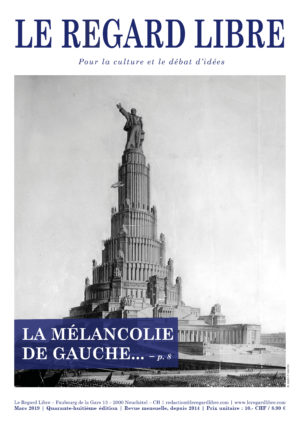 Le Regard Libre - N° 48CHF10.00
 -
 Standard subscription (Switzerland)CHF100.00 / year
 -
Support subscriptionCHF200.00 / year
You'll also like
 French
  German
  English
Leave a comment