




The defeat of the mind
The spirit, as an extension of being beyond the limits imposed by existence, but also as an exaltation of man's power over the finite - in short, the spirit with all its grandeur and ferocity - this spirit inevitably collides, with ever-renewed pleasure, with the cold surfaces of reality it seeks to master. The spirit is a proud guide; more than anything else, it is disgusted by the idea that man could be born of dust. In short, it refuses to be man, and makes itself in God's image. The spirit hovered over the waters, just as it still hovers over bodies. He tends only to live without them, confident of both his uniqueness and his individuality.
So it's hardly surprising that the mind should define itself in opposition to the animal, the body, the beast in short. Plato and his Ideas, Nietzsche and his anxious materialism, Valéry between spirit and war - all philosophy, for centuries, has been nothing but an attempt to reconcile, or separate, the two entities of being, spirit and beast. I haven't been able to find Marguerite Yourcenar's phrase that the tragedy of every European is to realize that he has a body. It's almost true. The European knows very well that he has a body; the tragedy is that he can't get out of it.
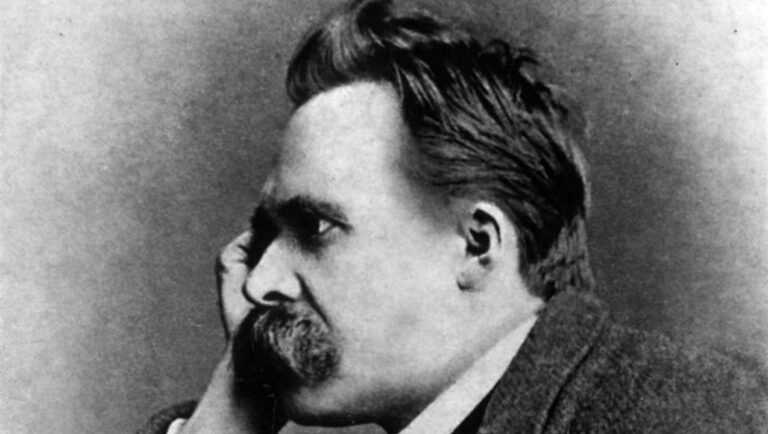
To see it as a sign of decadence, as the philosopher from Sils-Maria does, to pretend that it's a flight from decadent instincts, even to be blinded by his criticism of Christianity to the point of taking things in reverse, is to fail to see that the instincts of the spirit are infinitely more imperious than those of the body. While the Beast rolls in the mire, eats, drinks, fornicates and dies, the spirit enjoys the splendors of the cosmos, transcends, transcends. Hence the spirit's great fear, that of its own existence. The slightest limit, however remote, the slightest unattainable goal, would be enough to condemn it to finitude and thus deprive it of its immortality. So he always feels the need to clash with the Beast, if only to reassure himself of his own superiority, like the bullies in the schoolyard. And the Spirit always wins.
All revolutions simply reinforce this superb domination of thought over the world. For example, the sexual revolution of May '68, and with it the suppression of morality, tradition and religiosity, which may not be the purest expression of the human intellect, but are nonetheless a viler but more widespread form of it, runs out of steam of its own accord. The old morality reappears, even more terrible. Sexuality is scrutinized and scrutinized, and fidelity, once reserved for marriage, is spreading to teenage couples. Humanism is used to justify this. From the depths of its eternity, the spirit smiles and tires of itself. Every drive for power brings its own death. Failing to fill the universe, it would like, for once, to be vanquished.
Yet the Beast, when confronted with the Spirit, still seems a puny little thing, barely worthy of untying the sandals of the Idea. Fierce though it may be, the Beast is still in a cage, were it not for the fact that the shadow that makes us shudder is actually that of a little puppy. After all, what are the misfortunes of the body compared to those of the mind? What is a broken leg compared to the weight of existence and the unknown? The body is always the loser; to subdue a Samson, all you need is a Delilah. Worse still, the Beast cages himself. If it were to prove strong, it would only be to the misfortune of mankind. Brutality is what the brute does when he wakes up.
How, then, can we reconcile these two sides of the same coin, which always come together, but never really cross paths? The sense of tragedy seems to me the most appropriate answer: the defeat of the passions and the defeat of the spirit united in the same night. More generally, art combines the material (if only the medium, however vile yet indispensable) and the idea. In art, the finitude of the spirit, which is ever-changing like a flame, joins that of the body, which is mortal.
Art is therefore a luxury - in the sense that the mind is not indispensable, unfortunately, and that even the greatest minds allow themselves to be silly the rest of the day - but a luxury that no one can do without, since the life of a human being, without it, would have no more meaning than that of an earthworm. In the end, wouldn't the greatest defeat of the mind be that art is precisely not more indispensable, at least in its noble form - in other words, that we are too satisfied with earthworm art?
You'll also like
 French
  German
  English
Leave a comment