




A possible form of liberal-conservatism

Drawing by Nathanaël Schmid for Le Regard Libre
Consecrating a heritage whose core is individual liberty, liberal-conservatism can form a coherent synthesis rather than a fragile compromise. Here is an outline, drawing on Burke, Scruton and Kolnai as well as Smith, Tocqueville and Hayek.
Rather than a lukewarm or incoherent compromise between two doctrines, liberal-conservatism can be a solid articulation between two fundamental intuitions. This is the hypothesis I tried to defend last month in Lausanne, at the Ligue vaudoise. Here is the heart of my argument, enriched by the fruitful discussions that this event allowed - for which I thank the organizers.[1]
Liberalism
In its most rigorous sense, liberalism is a political ideology that postulates the value of individual freedom as the only properly political value. In this sense, the state is at best legitimate only insofar as it guarantees this freedom, by preventing individuals from constraining each other. This conception is in line with a logic of negative freedom - the absence of constraints - and is clearly distinct from contemporary visions that multiply «rights to» or assign politics a mission of global emancipation. Liberalism invites individuals to improve themselves - but not the state to do it for them.
It's also important to clarify what liberalism doesn't say. Liberalism does not predict an inevitable evolution of the world: the future is open - there is no «sense of history», or if there is, we cannot know it in advance. Liberalism also refrains from proposing a perfect society. For, even supposing such a society did exist, and that no one would need to be coerced to bring about this ideal configuration, the liberal wonders how we could know with any certainty what it would consist of. Liberalism is limited to a theory of the state, which allows its citizens to determine for themselves the shape of their lives, and thus of society. As defined here, liberalism is not progressive in the same way as conservatism.
Conservatism
Conservatism, on the other hand, aims to preserve the things we already have. experienced the value. Tradition is one of them. This is why conservatives are very attached to notions of transmission or continuity. This ideology recognizes a form of wisdom in what exists rather than in what could or should exist. Similarly, practices or objects that have stood the test of time have some presumption in their favor. Conservatism is therefore only valid all other things being equal. He breaks with the rationalist approach to politics, which is the art of defining a political line on the basis of discovered principles. a priori.
Thus, the burden of proof lies with the proponent of change, not the proponent of the status quo. However, the conservative does not advocate immobilism in the same way as the liberal. On the one hand, preserving a heritage means standing up against anything that might harm it. On the other hand, as Hungarian philosopher Aurel Kolnai argues, there's nothing wrong with creating something of value by copying what we already know.
What they both oppose
Since liberalism is not progressivism, nor conservatism immobilism, it is not absurd to envisage, if not their compatibility, at least the form that their conciliation or synthesis might take. To do this, we need to look at the similarities between these two schools of thought.
First, a common refusal of violent revolutionsfreedom and tradition are sure to fall victim.
Liberalism and conservatism also express the same distrust of politics as an instrument of social transformation. The state has no role in shaping individuals, families and businesses according to a single model. It merely provides a framework for their own development.
Thus, a clear distinction is drawn between the state and civil society – the latter being a complex web of institutions, practices and attachments that does not merge with public bodies and is rich in acquired experience, enabling it to function.
Hence our defense of decentralization: the closer the government is to local realities, the better it understands them.
Finally, the liberal and the conservative reject the confiscation of private property. The former in the name of protecting liberty, the latter in the name of protecting inheritance, «that which is common to the greatest number being the object of the least care», as Aristotle put it.
In short, liberals and conservatives are opposed to insurrectionism, totalitarianism, centralism and collectivism, which they associate with the third great modern political ideology: socialism. Nor do they identify with progressivism or immobilism.
Liberal-Conservatism
Having said that, there is also a positive way of defining a common program for these two ideologies. For there are not only things that both want to achieve, but also things that both want to achieve. prevent, but also of the elements they value. Our assumption will be that liberal-conservatism is nothing other than the defense of this common program - a program that is not only necessary, but also sufficient.
Read also | Liberalism is necessary, but is it sufficient?
There's a lot to say about this program, but it's broadly in line with that of British conservatism. In the writings of Edmund Burke and Roger Scruton, liberty is at the heart of a heritage to be defended - but a heritage that is not limited to liberty, since it also includes institutions, morals... It is a conservatism situated geographically - in the West - and temporally - after the Revolution.
This kind of conservatism - excluding those of the Ancien Régime - is compatible with a certain European tradition of liberalism. Not the rationalist liberalism of John Locke or Frédéric Bastiat, which justifies the value of freedom on the basis of abstract natural rights and the principle of non-harm. But the empiricist liberalism of Alexis de Tocqueville or Friedrich von Hayek, based on experience: freedom is defended because it has historically produced more enviable societies than when it was suppressed. Perhaps it has value in itself, as rationalist liberals assert, but what is certain is that freedom has better consequences than its negation.
The only step the empiricist liberal has to take in the direction of the conservative is to admit that the development of free societies has only been possible in a certain cultural soil. Not Islam or Hinduism, but the bourgeois virtues of responsibility, hard work, investment and tolerance, as the American economist Deirdre McCloskey argues. So it's not only the very freedom we're here to defend. For me, basic public education is therefore of paramount importance, as is immigration control.
Read also | How can liberalism and education be reconciled?
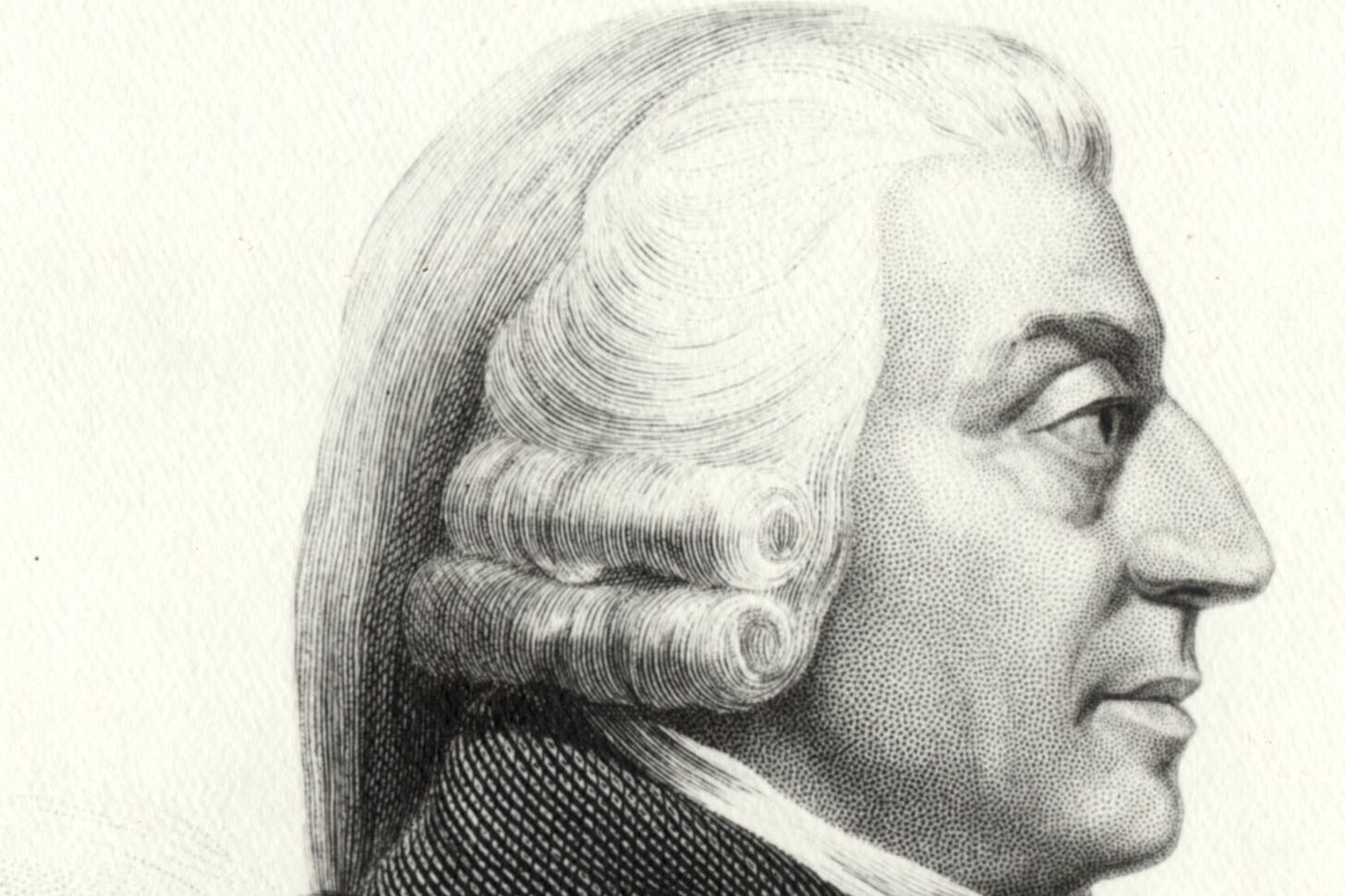
From this perspective, heritage and freedom become consubstantial. Tradition and progress, too: what is tradition, if not knowledge born of the test of time, of trial and error that no single individual could have accumulated? In short, a sum of progress emerging from collective intelligence - and not from the state. From the heights of the Scottish Enlightenment, Adam Smith's invisible hand shows us a possible form of liberal-conservatism, at the service of open societies.
Graduate in philosophy and journalist by profession, Jonas Follonier is the founder and editor-in-chief of the Regard Libre. Write to the author: [email protected].
You have just read an open-access Editorial, taken from our dossier «What alliances for liberals?», published in our paper edition (Le Regard Libre N°125). Debates, analyses, cultural news: subscribe to support us and access all our content.
[1]The reflections that follow also owe much to my regular exchanges with Olivier Massin, professor of philosophy at the University of Neuchâtel.

You'll also like





 French
  German
  English
Leave a comment