




Presidential election: France's three political poles and the useful vote

Presidential 2022
Unpublished article - Jonas Follonier
What lessons can we draw from the results of the first round of the French presidential election? First and foremost, the recomposition of French political life around three major blocs: Macron-Marine-Mélenchon. The mechanics of the «useful vote» may explain this. But it's not the only one. And an essential factor must not be overlooked when analyzing the situation: the anti-Macron front could be stronger in the second round than what remains of the "Republican front". As far as the longer-term future is concerned, the classic right may not be as dead as they say.
Emmanuel Macron at 27.9%, Marine Le Pen at 23.2%, and Jean-Luc Mélenchon at 22%, well ahead of Eric Zemmour at 7%, Valérie Pécresse at 4.8%, and Yannick Jadot at 4.6%. The results of the first round of the French presidential election highlight three major winners. This situation not only confirms a repeat of the 2017 head-to-head matchup for the second round but also signals a realignment of the country’s major political forces. The French political landscape is thus taking shape around a Mélenchon pole for the assertive left, appealing to anti-capitalists, environmentalists, and “woke” voters alike; around Macron for the social-liberal center in the broad sense, uniting progressives from the center-left and center-right; and around Marine Le Pen for the sovereigntists, nationalists, and, to a lesser extent, conservatives.
This top three didn’t come out of nowhere. On the one hand, there’s the phenomenon of tactical voting: the numerous and ubiquitous polls during the campaign may have pushed some voters to choose the candidate who had the best chance of defeating «the enemy.» For some, the “enemy” was Macron; for others, it was Marine. On the other hand, the candidates who drew the most votes are the ones who are most unifying and have the clearest platforms. On the second point, for example, this was not the case for Jadot, and even less so for Pécresse. Zemmour is a special case, as one could not accuse him of being confused (except perhaps on the issue of Russia). He was certainly not a unifying figure, in contrast to the image we’ll remember of Marine Le Pen in this campaign: a woman close to the people—including Muslims—who centered her message on purchasing power.
The "death" of the Republicans should be put into perspective
These results also reflect the significant failure of Valérie Pécresse of Les Républicains and Anne Hidalgo of the Socialist Party. «The two parties that have shaped the French political landscape for decades are dead and buried,», Natacha Polony said, editor-in-chief of Marianne. Will we go that far? While it’s undeniable that the traditional right and left no longer appeal to many people, we cannot equate these two failures. Not so much because Valérie Pécresse received twice as many votes as Anne Hidalgo, but for two other reasons. First, the death of Les Républicains was already predicted five years ago, and that prediction has not come to pass. The party still has extremely strong regional roots and the largest activist base in the country.
Second, the 20% voters who voted for François Fillon in 2017 (who had even been considered the favorite before the Penelope Gate scandal and the suit scandal) cannot and will not be able to find a home in the Mélenchon camp, the Macron camp, or the Le Pen camp. Zemmour, influenced by the very conservative and liberal Marion Maréchal—who has thrown her support behind him—captured a portion of their vote in the first round. But the more moderate liberal-conservatives are not ready to follow him in his most populist ideas moving forward, starting with the legislative elections. And given Macron’s courtship of the left ahead of the second round, not all of these voters will convert to the president’s shifting political synthesis either—even if they vote for him next Sunday.
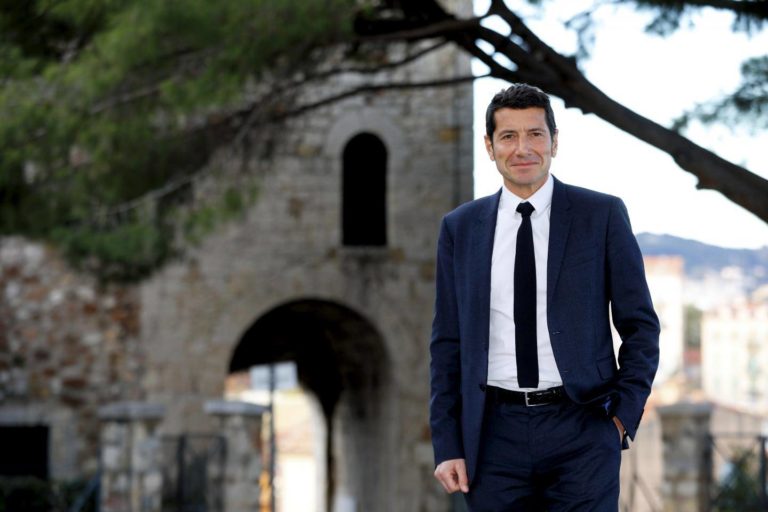
So, whatever those who would prefer otherwise may say, there remains an ideological gap between Macronism and Zemmourism. But for this gap to be politically meaningful, it will take strong leaders to embody it. And to restore substance to the ideas that continue to shape the so-called republican or Gaullist right: work, merit, freedom, responsibility, and respect for tradition. David Lisnard, the high-profile mayor of Cannes, drawing on a Tocquevillian philosophy, has already hinted at in a tweet that he might aim to reshape the right wing with his «Une nouvelle Energie» movement. Let’s consider this a plausible scenario. But that’s all just music of the future.
In the meantime, we’ll have to wait and see what the results are next Sunday. The Macron-Marine showdown isn’t exactly the same as it was in 2017. While five years ago there was still a «republican front» aimed at blocking the far right, it will be harder to spot this time around. Dissatisfaction with the incumbent president may form the true front in this election, uniting disillusioned voters from the left, the right, and elsewhere. Let’s not forget that a quarter of the French population did not vote on April 10. If we add to these abstainers—who might turn out this time to express their opposition to Macron—all of Marine Le Pen’s supporters and a significant portion of the voters who backed Jean-Luc Mélenchon and Eric Zemmour, Marine Le Pen has a real chance of being elected President of the Republic.
Write to the author: jonas.follonier@leregardlibre.com

You'll also like


 French
  German
  English
Leave a comment