



Presidential election: France's three political poles and the useful vote

Presidential 2022
Unpublished article - Jonas Follonier
What lessons can we draw from the results of the first round of the French presidential election? First and foremost, the recomposition of French political life around three major blocs: Macron-Marine-Mélenchon. The mechanics of the «useful vote» may explain this. But it's not the only one. And an essential factor must not be overlooked when analyzing the situation: the anti-Macron front could be stronger in the second round than what remains of the "Republican front". As far as the longer-term future is concerned, the classic right may not be as dead as they say.
Emmanuel Macron à 27,9%, Marine Le Pen à 23,2% et Jean-Luc Mélenchon à 22%, bien devant Eric Zemmour à 7%, Valérie Pécresse à 4,8% et Yannick Jadot à 4,6%. Les résultats du premier tour à l’élection présidentielle française font ressortir trois grands gagnants. Cette situation témoigne à la fois d’une confirmation du duel de 2017 pour le second tour, mais aussi d’une reconfiguration des grandes forces du pays. L’espace politique hexagonal se clarifie ainsi autour d’un pôle Mélenchon pour la gauche affirmée, séduisant aussi bien les anti-capitalistes, les écologistes ou les woke; autour de Macron pour le centre social-libéral au sens large, réunissant progressistes de centre gauche et de centre droit; et autour de Marine Le Pen pour les souverainistes, nationalistes et, dans une moindre mesure, conservateurs.
This top three didn’t come out of nowhere. On the one hand, there’s the phenomenon of tactical voting: the numerous and ubiquitous polls during the campaign may have pushed some voters to choose the candidate who had the best chance of defeating «the enemy.» For some, the “enemy” was Macron; for others, it was Marine. On the other hand, the candidates who drew the most votes are the ones who are most unifying and have the clearest platforms. On the second point, for example, this was not the case for Jadot, and even less so for Pécresse. Zemmour is a special case, as one could not accuse him of being confused (except perhaps on the issue of Russia). He was certainly not a unifying figure, in contrast to the image we’ll remember of Marine Le Pen in this campaign: a woman close to the people—including Muslims—who centered her message on purchasing power.
The "death" of the Republicans should be put into perspective
These results also reflect the significant failure of Valérie Pécresse of Les Républicains and Anne Hidalgo of the Socialist Party. «The two parties that have shaped the French political landscape for decades are dead and buried,», Natacha Polony said, editor-in-chief of Marianne. Will we go that far? While it’s undeniable that the traditional right and left no longer appeal to many people, we cannot equate these two failures. Not so much because Valérie Pécresse received twice as many votes as Anne Hidalgo, but for two other reasons. First, the death of Les Républicains was already predicted five years ago, and that prediction has not come to pass. The party still has extremely strong regional roots and the largest activist base in the country.
Second, the 20% voters who voted for François Fillon in 2017 (who had even been considered the favorite before the Penelope Gate scandal and the suit scandal) cannot and will not be able to find a home in the Mélenchon camp, the Macron camp, or the Le Pen camp. Zemmour, influenced by the very conservative and liberal Marion Maréchal—who has thrown her support behind him—captured a portion of their vote in the first round. But the more moderate liberal-conservatives are not ready to follow him in his most populist ideas moving forward, starting with the legislative elections. And given Macron’s courtship of the left ahead of the second round, not all of these voters will convert to the president’s shifting political synthesis either—even if they vote for him next Sunday.
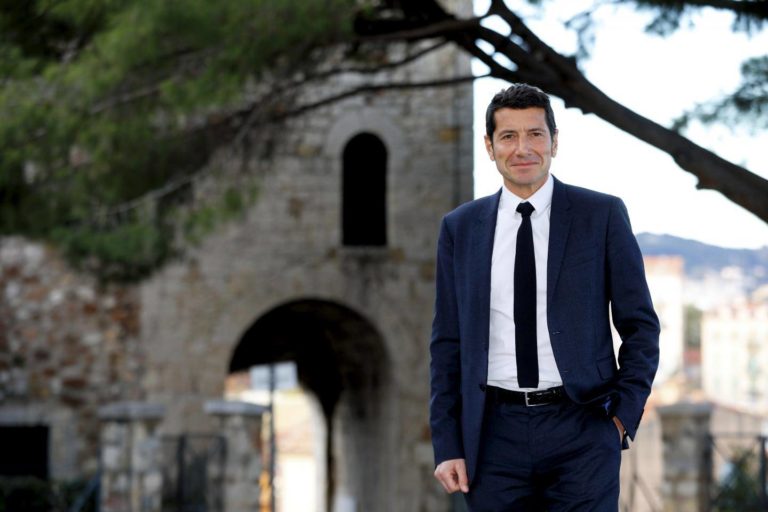
Ainsi, quoi que disent ceux que le contraire arrangerait, il reste un espace idéologique entre le macronisme et le zemmourisme. Mais pour que cet espace soit politique, il faudra des personnalités fortes pour l’incarner. Et pour redonner de la consistance aux idées qui continuent de façonner la droite dite républicaine ou gaulliste: le travail, le mérite, la liberté, la responsabilité, le respect de la tradition. David Lisnard, le très en vue maire de Cannes, dans le sillage d’une philosophie tocquevillienne, a d’ores et déjà hinted at in a tweet that he might aim to reshape the right wing with his «Une nouvelle Energie» movement. Let’s consider this a plausible scenario. But that’s all just music of the future.
En attendant, il s’agira d’observer ce qui sortira des urnes dimanche prochain. Le match Macron-Marine n’est pas exactement le même qu’en 2017. S’il y avait encore il y a cinq ans un «front républicain», consistant à faire barrage à l’extrême droite, on aura plus de la peine à l’observer cette fois-ci. Le mécontentement à l’égard du président sortant peut composer le véritable front de ce scrutin, unissant déçus de gauche, de droite et d’ailleurs. N’oublions pas qu’un quart des Français n’est pas allé voter le 10 avril. En ajoutant à ces abstentionnistes, qui pourraient cette fois se rendre aux urnes pour exprimer une opposition à Macron, la totalité des soutiens de Marine Le Pen et une part significative des électeurs de Jean-Luc Mélenchon ainsi que d’Eric Zemmour, Marine Le Pen a de réelles chances d’être élue présidente de la République.
Write to the author: [email protected]

You'll also like


 French
  German
  English
Leave a comment