





The paradox of coal and the energy transition
Le Regard Libre N° 48 - Clément Guntern
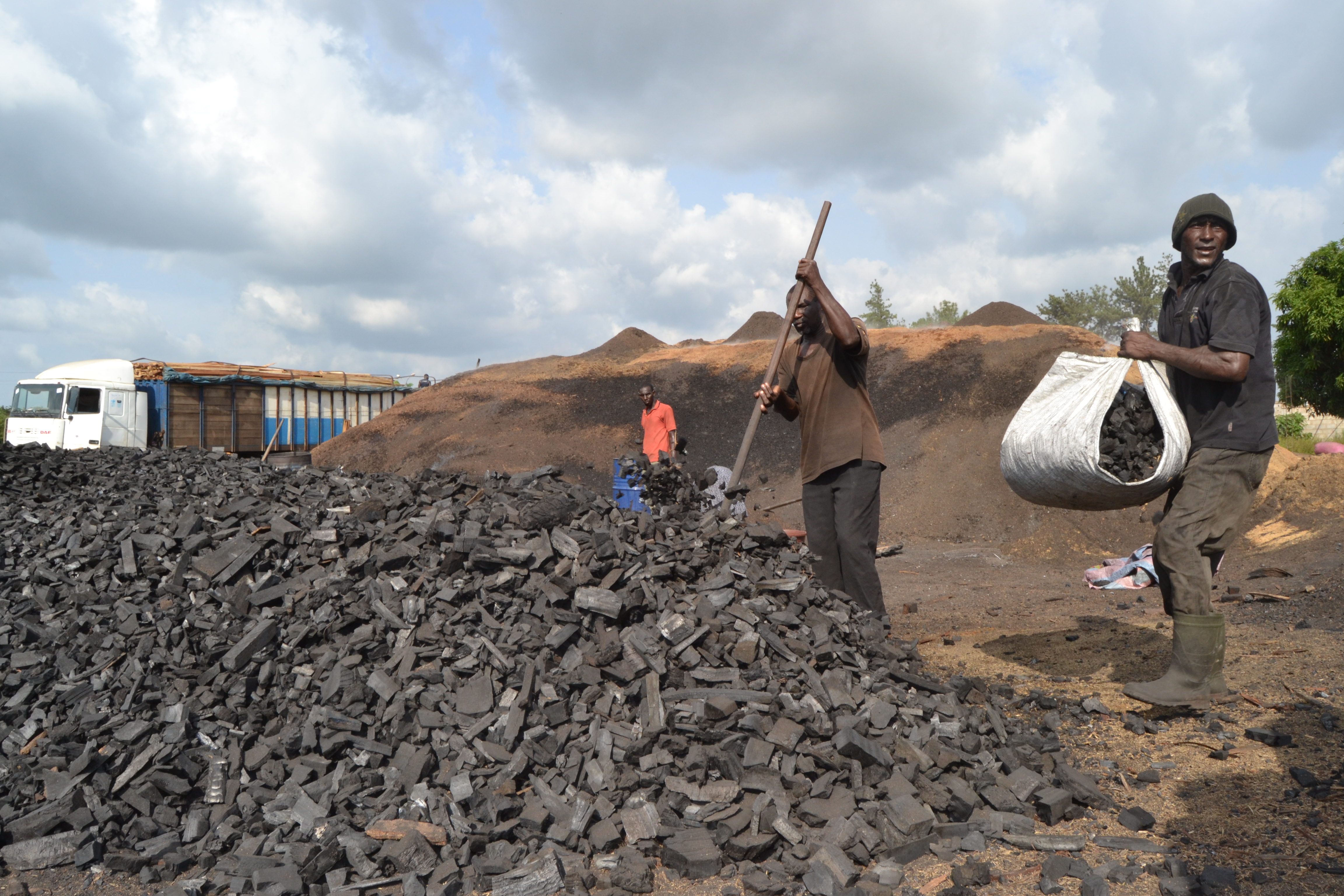
After the student climate protests at the start of the year and the emergence of the young Swedish icon Greta Thunberg, impatience in the fight against climate change is growing. At the same time, the world has never suffered so much from its addiction to coal.
Indeed, the efforts required to ensure that global temperatures do not rise by more than two degrees are as enormous as the urgency of the threat. Our exasperation is all the more understandable when we look at the evolution of coal consumption worldwide. On the one hand, attempts are being made to promote renewable energies, while on the other, coal-fired power plants continue to be used or built. This fossil fuel seems, wrongly, to be from another age to a European observer, yet it's all the rage, particularly in certain Asian countries. Coal is the symbol of what not to do in the fight against global warming; it accounts for 45% of the world's carbon emissions, and its consumption - 7,500 million tonnes in 2017 - is on the rise again.
The advantages of coal
It is the countries of South-East Asia that are currently affected by the increase in coal consumption. These are the countries that are building the most power plants. For its part, China is trying to assume the role of environmental defender by attempting to «restore the blue sky». In fact, some 500,000 deaths a year are attributable to coal-fired power generation in China. Air pollution in Asian metropolises is similar to that of London in the 19th century.th century. This, combined with the rise of a middle class increasingly demanding good living conditions, prompted the authorities to slow coal consumption. This led some to believe that the country was going to abandon coal. However, this is not the case, as growth continues, albeit at a slower pace, and China still accounts for half of the world's annual consumption.
Another factor in coal's enduring appeal, apart from its cost, is its ease of use. It's a proven technology. And with good reason: it was designed for power generation and used in many countries to fuel economic growth. This development model, based on the production of carbon to create wealth, has worked very well, but has also led to significant environmental degradation. It would be easy to weigh the evil Asian polluters against the virtuous Westerners.
In Europe, however, the situation on the coal front is mixed. While half the countries in Europe will be moving away from this highly polluting form of energy, a quarter are still debating whether to do so, while the remaining quarter are diehards like Poland, who refuse to discuss the issue at all. The German example is edifying. The Federal Republic of Germany alone accounts for a third of Europe's coal-fired power capacity, and this tradition has continued since reunification. At the same time, Berlin has embarked on a nuclear phase-out, which creates a paradox between the desire for renewable energy and the perpetuation of the coal industry. In Switzerland, too, the electorate has accepted the nuclear phase-out; during the campaign, there were fears that the nuclear share would be taken over by fossil fuels.
An overlay, not a transition
At the end of January, a German commission issued a long-awaited report on the phase-out of coal. The commission has programmed a transition to zero coal by 2035 or 2038. But is it really so paradoxical that a highly polluting energy source should have to coexist for a time with renewable energies? In reality, no. We simply have the wrong idea about the history of technology, and of energy in particular. In fact, coal didn't play a central role in the industrial revolution until the late 19th century.th century in Europe.
In this case, the revolution wasn't a revolution at all, since it was mainly based on renewable energies such as hydropower, and it was only gradually that coal took its place as an essential element. The history of energy is more like a superposition of resources over a long transition. Wood, hydraulic power and coal coexisted for a long time before the latter supplanted them. These are not well-defined phases, which explains the difficulty of initiating our energy transition and the survival of coal in many countries around the world.
What's more, examples of coal basin conversion have rarely been crowned with success. Despite efforts to reclaim former industrial sites, these regions in all European countries have some of the worst socio-economic data in their respective countries. In Germany, for example, unemployment is twice as high in these coalfields as in the rest of the country. The difficulty is all the greater when the choice of energy is coupled with geopolitical reasons. This was the case with the gradual switch to oil. Coal was cheaper than oil at the time, and remains so today, but as the mining sector in Europe and the United States has become highly unionized and the bearer of numerous demands, oil has enabled managers to bypass this social factor.
The impossible equation
In modern history, there are very few examples of rapid reductions in CO2 comparable in scale to what we need to achieve to reach the two-degree maximum warming target. We can cite Germany after the Second World War, as well as North Korea and Cuba after the collapse of the USSR, which no longer sold them low-cost oil. These are three examples of drastic but undesirable cuts. It was not a reduction but an amputation of CO2. And that's what we need to master before 2050. Provided, of course, that new inventions don't come along and play an unexpected, life-saving role.
The energy transition is a project on an unprecedented scale, and its implementation has never been more urgent. It is to be hoped that renewable energies will be able to replace fossil fuels en masse. But the problem is simple: we have never been able to make such a drop without losing wealth. If we don't want to go backwards, as some are suggesting, we'll have to invest an unprecedented amount of energy to get the world off fossil fuels. Particularly coal.
Write to the author: [email protected]
-
 Le Regard Libre - N° 48CHF10.00
 -
 Standard subscription (Switzerland)CHF100.00 / year
 -
Support subscriptionCHF200.00 / year
You'll also like
 French
  German
  English
Leave a comment