




The state and its excesses
Les lundis de l’actualité – Jérémie Bongiovanni
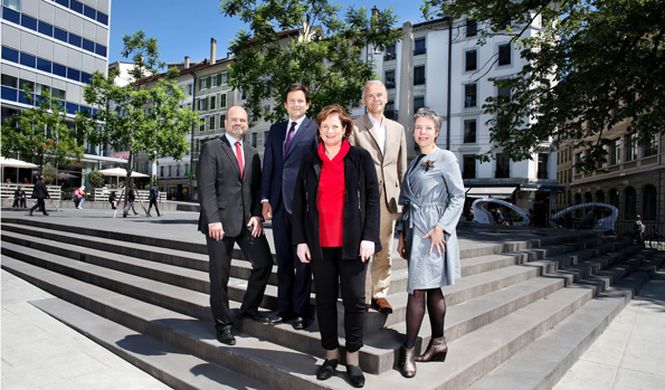
At a time when the city of Geneva is in turmoil because of the expenses incurred by the members of its executive, the army is taking part in the party with its own excesses. The state has failed in its management of taxpayers' money, and we have been reminded of its inevitable vulnerability to human vice. What can be done about these abuses? Here are some answers.
Au début du mois de novembre, la Cour des comptes publiait un rapport d’audit accablant pour le conseil administratif – l’organe exécutif – de la Ville de Genève. En plus de leurs salaires annuels, les élus se voient rembourser leurs frais effectifs. En 2017, ces derniers ont oscillé entre 11’000.- CHF et 42’000.- CHF. Notamment constitués de frais d’alcool, de taxis ou de téléphone, avec des dépenses téléphoniques de 17’000.- CHF en une année pour certains. Nos chers militaires, eux, les officiers pour être précis, se seraient adonnés à des soirées bien arrosées financées par l’argent public et des femmes d’officiers auraient profité de vols en hélicoptère sans raison valable. Tout va bien.
L’Etat est déchu
In view of these deviances, we must first look at the cause, the origin of these abuses. The State does not seem to measure up to the divine superiority in terms of judgment and morality that some would like to attribute to it. It is made up of men, and therefore ultimately of flesh. The state, too, is fallen. The chosen cannot, in their human condition, escape their temptations, exacerbated by the prism of power. They respond to inner stimuli.
What's more, like every individual in an economic or social system, the elected representatives who run the state react to external incentives. We therefore need to take an interest in the environment in which we immerse these poor beings. The citizen can contribute to this through the various mechanisms that can be envisaged to force the State to apply the discipline and rigor that each of us must apply to our own reality.
What to do?
Firstly, in connection with the affair that rocked the canton of Geneva, a Court of Auditors seems to be essential for a more precise dissection of civil servants' expenses. As we vote in a week's time to monitor possible insurance fraud and thus taxpayers' money, the same objective applies to demanding transparency in state activities. In concrete terms, the cantons of Geneva and Vaud currently have Courts of Audit; in the canton of Neuchâtel, an initiative calling for the creation of a Court of Auditors was tabled a year ago and now seems to be gaining ground.
The debt brake represents a second mechanism enabling citizens to ensure that the State manages its money in a reasonable and sustainable way. It is designed to balance the state's finances, as expenditure must not exceed revenue over a cyclical period.
Enfin, un référendum financier à disposition des citoyens pour que ceux-ci puissent refuser un crédit d’engagement prévoyant de nouvelles dépenses ponctuelles décidées par l’Etat existent au niveau cantonal. Cet instrument s’est avéré concluant et a eu des répercussions positives sur les finances. Pourquoi ne pas introduire un tel mécanisme au niveau fédéral?
L’Etat, un danger en soi
The importance of managing public funds must concern every citizen. At every level, communal, cantonal and federal. State structures depend on men and women like you and me, vulnerable to vice. External incentives influence their behavior, and the signals their environment sends them awaken their inner passions.
More fundamentally, entrusting them with money that doesn't belong to them certainly sends out a dubious signal. We need to provide them with a framework to prevent the kind of excesses we've seen recently. Margaret Thatcher will conclude: «Let's never forget this fundamental truth: the state has no other source of money than the money people earn themselves. If the state wants to spend more, it can only do so by borrowing your savings or taxing you more. There's nothing good about someone else paying; that someone else will be you. There's no such thing as public money, only taxpayers» money".
Write to the author: [email protected]
You'll also like

 French
  German
  English
1 comment
[Barazzone. After the collective realization that Switzerland is not spared from political outbursts, it's a return to «normality», which falls at [...] Barazzone.
Leave a comment