Delving into the zany daily life of a hooligan
ARTICLE LONG FORMAT, Eugène Praz | One of the invigorating features of contemporary literature is that its novels bring together places, eras, generations, peoples and social classes - if that term is still valid - in a pleasing variety of forms and plots. The latter, sometimes very fanciful, are often deliciously comic; think, for example, of the novels, aimed above all at a female audience, by the meritoriously popular Isabel Wolff. This variety could be seen as a way of comforting each individual in his or her place or «path». Everyone? Perhaps not. On the contrary, it would seem that while the field of unexpected human interaction has certainly expanded in literature, its internal influence, through the depth of its characters and the quality of its descriptions, has diminished. As a result, its appeal to the public has lost some of its force. A brief review of some serious shortcomings, without any personal attacks - we're past that.
An original story, to say the least.
Vice and dangerous liaisons
Une réflexion sur l'amour et l'absence.
The motorcycle and what it can do
A tribute to railway station literature
A monumental novel on the theme of eternal return.
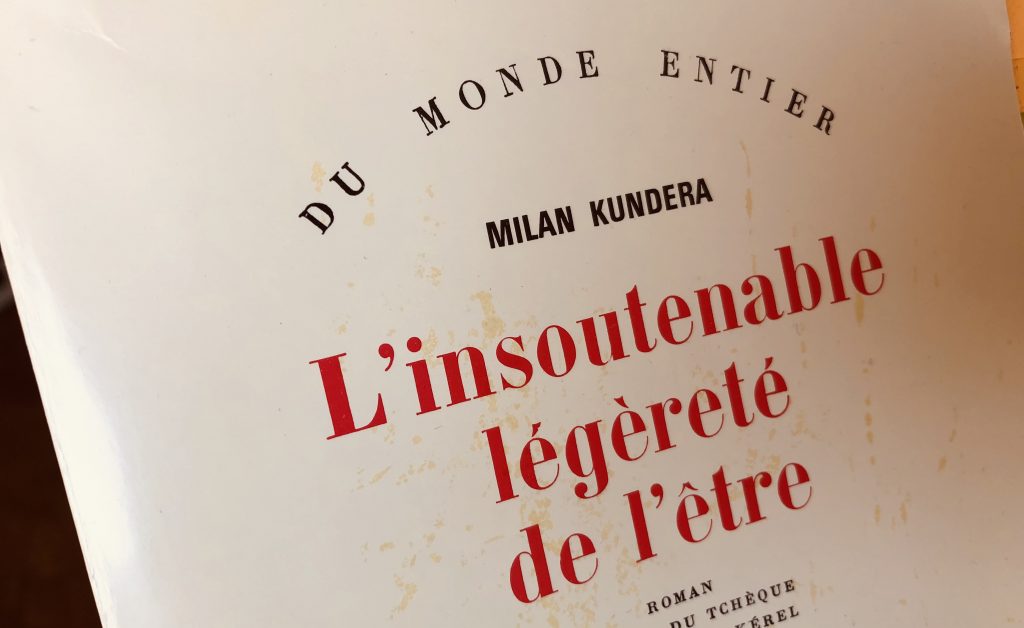
According to sociologist Michel Maffesoli, who spoke on the March 9 edition of «Face à l'info», we find ourselves at the crossroads of two eras: a time of quantity may be returning to a time of quality. If so, perhaps the 21st century will be that of the novel, which alone is capable of expressing unquantifiable truths. In many respects, and perhaps surprisingly, «99 francs», Frédéric Beigbeder's novel denouncing the tyranny of advertising and inaugurating the trilogy featuring Octave Parango, can be read according to this very conception of the novel - that of Milan Kundera.










 French
  German
 English