




«Nos Fleurs du Mal», a contemporary pastiche of Baudelaire's work
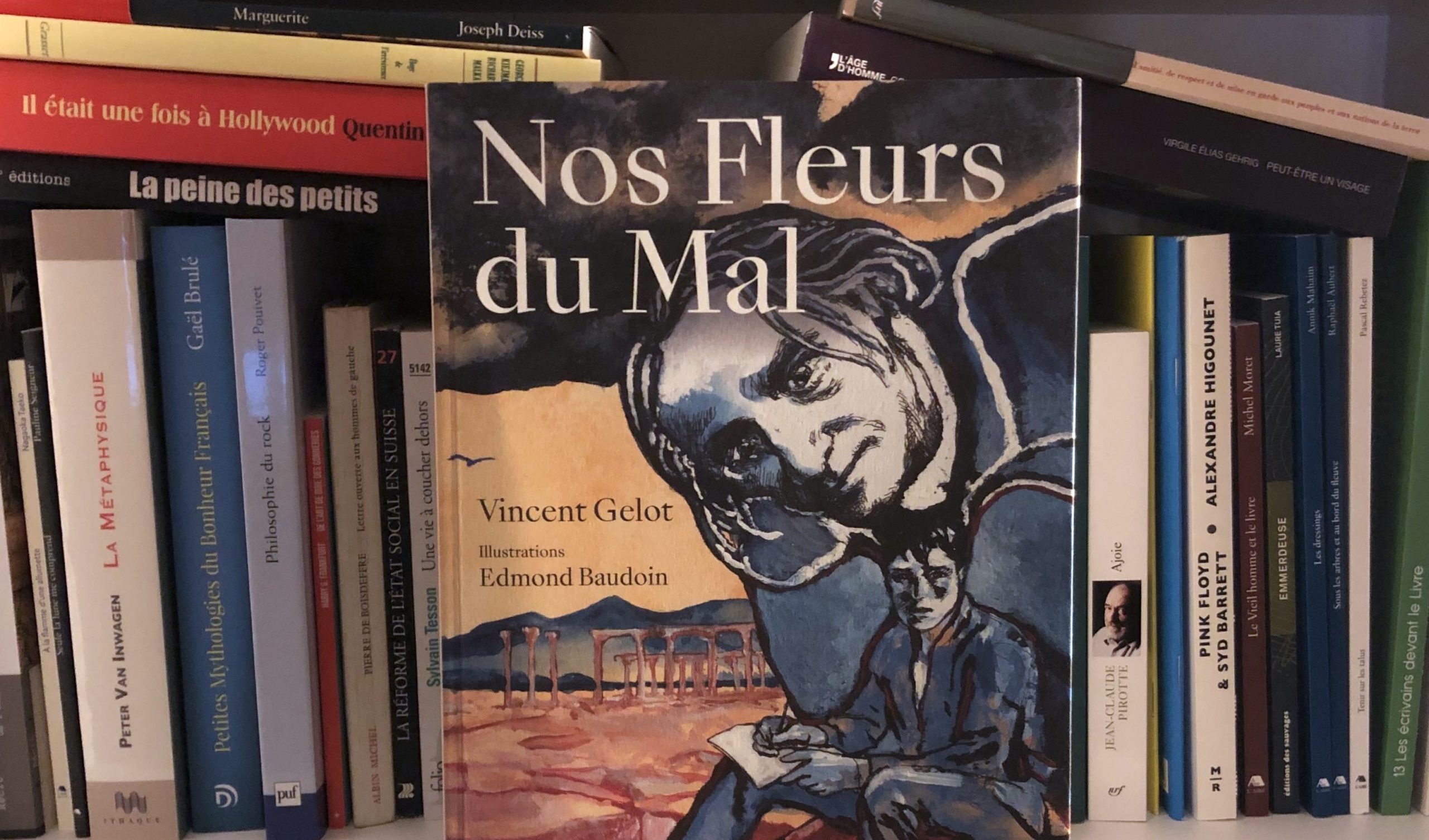
This year, French-speaking readers around the world celebrate the bicentenary of Charles Baudelaire's death. His flagship collection Les Fleurs du Mal, first published in 1857, was the subject of an extraordinary poetic adaptation, published at the end of last year. Our Flowers of Evil, Vincent Gelot's pastiche leaves no one indifferent. But a little puzzling.
In the mid-19th centuryth century, a poet initiated through his writing what he himself called «correspondences». Vertical when they link the visible and the invisible, being and essence, spleen and ideal, horizontal when they consist of synesthesias, i.e. coincidences of perception between the different senses, Baudelaire's correspondences marked the conceptual - and practical! - of modern poetry. In Baudelaire's case, the tradition of both the poet's feelings and the objective mastery of poetic forms are still relevant today: feelings of solitude in the midst of an urban crowd, the love-hate of progress, the complexity of beauty, the victory of melancholy over pleasures of all kinds...
The work of a watchmaker
A few years ago, Vincent Gelot, project manager for the NGO L'Œuvre d'Orient in Syria and Lebanon, developed a passion for Les Fleurs du Mal and decided to imagine them as Baudelaire might have written them today. A titanic undertaking ensued: three years, as we learn in the introduction. «As I wrote, my vision of the pastiche became ever clearer: to draw on Baudelaire’s poetry to express the «ordinary ills of modernity» that afflict the world and the 21st-century reader.”th century: our Fleurs du Mal», writes the author.
On arrival, the reader is obliged to note: the versification of each poem in the collection (meters, rhymes, etc.) is respected to perfection. Only the content of the verses has changed - which is already quite a lot. «Parfums exotiques» becomes «Solitude érotique», «L'invitation au voyage» is rendered as «L'incitation à la haine», and so on.
Read also | Baudelaire's journalistic spleen
Here is a contemporary poet who, like his model Baudelaire, also resists the temptation of sentimentality. One senses that these souls would be even more romantic if they didn't have this attachment to formal rigor, inherited from Parnasse, the poetic movement contemporary with the author of the Fleurs du Mal. The resulting synthesis can be compared to a miraculous island amidst the tumultuous oceans of poetry. And this is one of the features that makes Baudelaire's corpus so rich and fascinating. Take a look at «L'Albatros», the classic of the Fleurs du Mal, and its Our Flowers of Evil, The Stranger«:
| Often, to amuse themselves, the crewmen Take albatrosses, vast birds of the sea, Who follow, indolent travelling companions, The ship gliding over bitter chasms. They've barely put them down on the boards, That these kings of the azure, clumsy and ashamed, Piteously let their big white wings Like oars dragging beside them. This winged traveller, how clumsy and cowardly he is! He used to be so handsome, but now he's comical and ugly! One teases his beak with a mouth-burner, The other mimes, limping, the flying cripple! The Poet is like the prince of the clouds Haunting the storm and laughing at the archer; Exiled to the ground amidst the booing, His giant wings prevent him from walking. | Often, to escape, enslaved peoples Take long canoes, frail rafts of the seas, Let them drift, towards a distant shipwreck, Smugglers profiting from their bitter fates. As soon as they've tied their red vests around their hips These dark, weary, silent beings, Painfully leave the white foam waves Like memories fading behind them. How fragile and lonely this dark passenger is! He used to be so strong, but now he's a corpse! One, on the swell, holds his son in a shroud, The other prays, weeping, to all the gods of Africa! The poet is like one of those damned souls Sailing on the sea without being able to moor: Exiled from his sky, on raging waters, A few shards of azure keep it from sinking. |
There's no denying that we're dealing here with high poetry, which has no object other than itself. There aren't many other pearls like this in Vincent Gelot's astonishing collection. There are, however, other successes. Les époux« is just right, »La bite« is funny, and »Le dernier voyage«, dedicated to the French poet, is virtuoso. Sylvain Tesson. Edmond Baudoin's illustrations, as varied as they are unique, are a perfect match for the author's imagination, in keeping with the Baudelairean universe.
The killer question
But now comes the killer question: does the result of this work do much for today's reader? It all depends. Those who are not a priori tempted to read the Fleurs du Mal may be convinced of their importance, relevance and elegance by Vincent Gelot's update. But they still need to be able to enter into this poetry, even if it is more attractive - the problem remains. For souls already won over by Baudelaire and by poetry in general, Our Flowers of Evil necessarily seem a little artificial, or at any rate hybrid, straddling two eras, two languages, two tones. If Our Flowers of Evil are presented as a mixture of pastiche and parody, they are received above all as a brilliant exercise in style, but a little out of time. Which, to all appearances, isn't really what they're aiming for.
Timeless Baudelaire is already a hybrid in his own way, notably in that he finds beauty in evil (hence the title of his collection), gold in mud. So, to propose yet another gap - between this hybridization and the actuality of the twenty-first century - would be a mistake.th century - isn't it tantamount to denying the permanence of a masterpiece, which stands on its own? Doesn't wanting to update Baudelaire imply that he's no longer relevant? If he were, what's the point of updating him? Of course, society must always be able to count on talented people to provide newcomers to the world of literature with keys to understanding, entry points to masterpieces and reasons to rise. But do we need, in this case, authors of remake? I'm not sure. Nevertheless, it remains a fine tribute to Baudelaire.
Write to the author: [email protected]
You've just read an open-access brief. Debates, analysis, cultural news: subscribe to support us and get access to all our content!
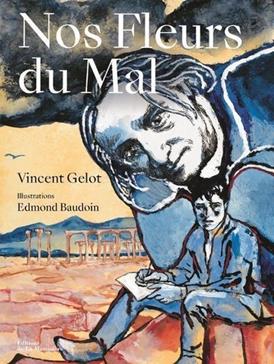
Vincent Gelot (author)
Edmond Badouin (Illustrator)
Our Flowers of Evil
Editions de la Martinière
2021
208 pages
Cover illustration: © Jonas Follonier for Le Regard Libre

You'll also like




 French
  German
  English
Leave a comment