




Linguist Danièle Manesse: «Grammatical gender is not sex».»

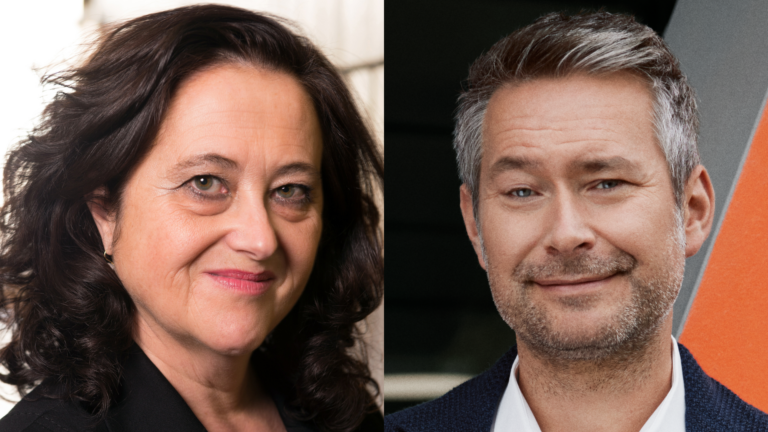
Danièle Manesse © DR
Danièle Manesse, professor emeritus of language sciences at the University of Paris-3 Sorbonne nouvelle, fights inclusive writing with all her might. She responds here, argument by argument, to the proponents of this militant typography. And as a convinced feminist, she gives us her thoughts on what has become of much of her camp and the academic world.
Le Regard Libre: Advocates of inclusive writing argue that the French language is unequal for men and women. As a linguist, do you validate this idea?
Danièle Manesse: These people are wrong. What's at the heart of this matter is a lack of understanding of what the masculine is. I mean: the grammatical masculine. The fundamental question is: is the masculine of language the same as the masculine of the world, the sex of humans? The answer is no. The masculine has taken on the functions of two Latin genders: masculine and neuter. It simply happens that, in general, humans are referred to by terms that correspond to their sex. A few words escape this - we say «a» sentry for a man, for example - but in the vast majority of cases, grammatical gender and sex coincide. This is not the case with other entities in the world: the fact that we say «achair» (not «a» chair) or «a astre» (not«a astre») is arbitrary. Secondly, there is usually a masculine and a feminine word for nouns that designate both men and women: «un livreur, une livreuse», «un Français, une Française», etc. But there are also epicene words, which do not change between the masculine and feminine genders: «un artiste, une artiste». In short, grammar and gender are not the same thing.
In addition to determiners and nouns, there are adjectives. Here, too, we come across this form of neuter, which has the same form as the masculine: «Pierre and Anne are beautiful». Isn't this a godsend for those who see machismo everywhere, including in language?
Whether we like it or not, language is economic: we don't say «men are beautiful, women are beautiful». We say: «Men and women are beautiful». What makes this economy possible is what we call the «unmarked gender». In French, the masculine is the unmarked gender, just as the present tense is an unmarked tense. I can tell you: «I'm going to Switzerland in three months», or «Yesterday, I left my house». This tense is so neutral that in Russian, the verb «to be» is not said in the present tense.
Unfortunately, few French speakers are aware of this. Shouldn't schools be doing more to teach this subject, rather than just memorizing grammar rules?
I agree with you. The counterpart of the economic dimension of language is its ambiguity. All the more so in French, with its innumerable monosyllables. To the ear, there's no difference between «C'est lui qui l'a amené» and «C'est lui qu'il a amené». Now, if I'm talking about a woman, then I'll make it clear: «He's the one who brought her, Catherine.» Language provides solutions so that we can understand each other. Let's take another example. «The parents came with their mute daughter and son». When spoken, it's impossible to tell the difference between «mute» and «dumb». So, if I only want to talk about the son, I'll say: «The parents came with their daughter and son, who is mute». At least, that's how we proceed as speakers. No matter how hard we try to constrain language, it will always go where it wants to go. Changes in language are first made orally.
Beyond this grammatical reality, there's history, invoked by pro-inclusive writers. According to the French-speaking proponent Pascal Gygax, the French language underwent a process of masculinization in the 17th century.th century. True or false?
Wrong. It's always the same people who are quoted, starting with Abbé Bouhours, in 1675, who writes: «When the two genders meet, the nobler must prevail.» Of course people back then were macho and played with words, but the word «noble» has grammatical relevance. As for proximity agreement, which consists of writing «Les hommes et les femmes sont contentes» (men and women are happy) by agreeing the adjective with the noun closest to it, it was never generalized for long, not even in Latin, and floated around until the end of the 19th century.th century at least. Bernard Colombat and André Chervel have written illuminatingly on the subject. In fact, at the heart of all this talk of inclusive writing is a great deal of ignorance. Whatever the advocates of the median point may say, grammarians don't decide on language: they observe it and debate among themselves on the rule that should be retained. What changes language is usage. In ten years' time, we'll see what happens to inclusive writing.
Still, it's true that there's been some back-and-forth on the issue of women's visibility in the French language, isn't it?
Yes, and this was done in the oral language. It's absolutely true that the feminization of the language was held back in the 19th century.th century. The first reason was that women were forbidden to do certain jobs. So this was reflected in the lexicon, the vocabulary. Society has evolved. We need words to express things. So we create the words we need. The lexicon is related to the world, gender is not. Grammar is about concepts. Now, with inclusive writing, grammar is no longer welcome, in short. We've gone from grammatical gender to gendered gender: so everyone's claiming their rights.
I imagine you must be called a reactionary.
That's what intellectual trickery is all about. I myself am neither sexist nor conservative; I have always been a feminist activist. I simply have rational arguments to put to Pascal Gygax. Simone de Beauvoir and George Sand called for the feminization of words, but neither spoke of inclusive writing! On the other hand, there are fundamental struggles where not enough people are mobilized: rape, young Mila... There are so many places to place your feminism.
Read also | Inclusive writing and our disease of the century
Now let's imagine that inclusive writing is a good idea in theory. But is it practicable?
Inclusive writing is not inclusive, for the simple reason that it overcomplicates writing, and in particular the relationship between the written and the spoken word. It's even more of an ordeal for dyslexics. Those who practice inclusive writing give it up after three lines. They can't take it anymore. The only thing that sometimes holds out until the end of their text is the midpoint. In my opinion, this point does not obey the oral-to-written conversion. Bear in mind that there are 17% silent letters in French: so it's hard enough to learn to read French. The dot, on the other hand, has a fundamental function in reading. Every time we come across a dot, we reorganize the meaning of a text. It's a well-known fact that when you read poetry without punctuation, you keep going back to get it right.
Why do you think inclusive writing is «catching on», at least in certain intellectual and activist circles?
Apart from the lack of culture, the reason must lie in political strategy. By conflating inclusive writing with feminization, we create a certain political opinion in favor of inclusive writing.
Besides, we're talking about writing, but there's also language.
That's right. There's language, represented by a script, but there's also language, which is the use of language. I campaign for a healthy use of language, not just on this specific issue of inclusive writing. We should watch ourselves with words like «whore»: in our families, we all say to our children «Stop it!». Using language means speaking respectfully to women, including women who are against inclusive writing. Right now, we're dividing people. It's on the basis of confusion that we create imaginary quarrels. And I'm amazed at the ignorance of people - especially politicians - who make decisions in favor of inclusive writing.
Read also | Tribune: «Et si on s’attaquait enfin à l’illettrisme en Suisse?»
Why are you so involved in the fight against inclusive writing?
Above all, I'm an observer of language. But if I fight so hard for it, it's because language belongs to everyone! There aren't many things we all, absolutely all, have in common: life, air and, to a large extent, water. That said, why am I fighting inclusive writing specifically? Because it's a harbinger of tyranny. Touching the common good is part of tyranny, yet it claims to defend the population - or certain groups in society.
You're an academic. And it's precisely in the academic world that inclusive writing is theorized and put into practice. What does this say about the university?
Your question is essential. I'm part of the «Vigilance Universités», We have received testimonies from young teachers who want to publish articles, but are unable to do so because they are not written in inclusive script. We've received testimonials from young teachers who want to publish articles, but have been unable to do so because they weren't written in inclusive script. Some students don't even dare oppose this trend. Institutions are starting to police us, because they're scared themselves. These institutions aren't representative, and many people don't want to get involved any more, because they've become so bureaucratized.
Isn't this a more general phenomenon?
Yes, you're right. There's a disengagement of serious, non-ideological people everywhere. The same diagnosis applies to the disappearance of political parties and trade unions. These days, a student who starts shouting can destroy a course. Violence is something we don't know how to defend ourselves against. Violence exists, it's there. It creates fear. And then, let's face it, conformity. We're right in the middle of it.
Write to the author: [email protected]
Photo credit: © DR
You have just read an interview published in our paper edition (Le Regard Libre N° 81
-
 Digital subscriptionCHF50.00 / year
 -
Standard subscription (Switzerland)CHF100.00 / year
-
Standard subscription (EU)CHF125.00 / year
-
Standard subscription (outside EU)CHF175.00 / year

You'll also like



 French
  German
  English
1 comment
Many thanks for this analysis, which I fully endorse. Like you, I'm an "old" feminist, I call my point of view a "historic channel" feminist by analogy with the Corsican separatist movements! I'm also dyslexic, which means that inclusive writing excludes dyslexics!
For those who are interested, I'd like to mention the Canadian viewpoint of the Antidote spelling correction software, which proposes a series of solutions for describing people correctly without midpoints.
Here's one of the latest gems I've come across in a student work draft:
"The same questions are asked about one or more students currently at the school."
the many is particularly tasty!
And thank you for your support for Mila and your refusal to pronounce the word P.
Leave a comment