



Health is not our most precious asset
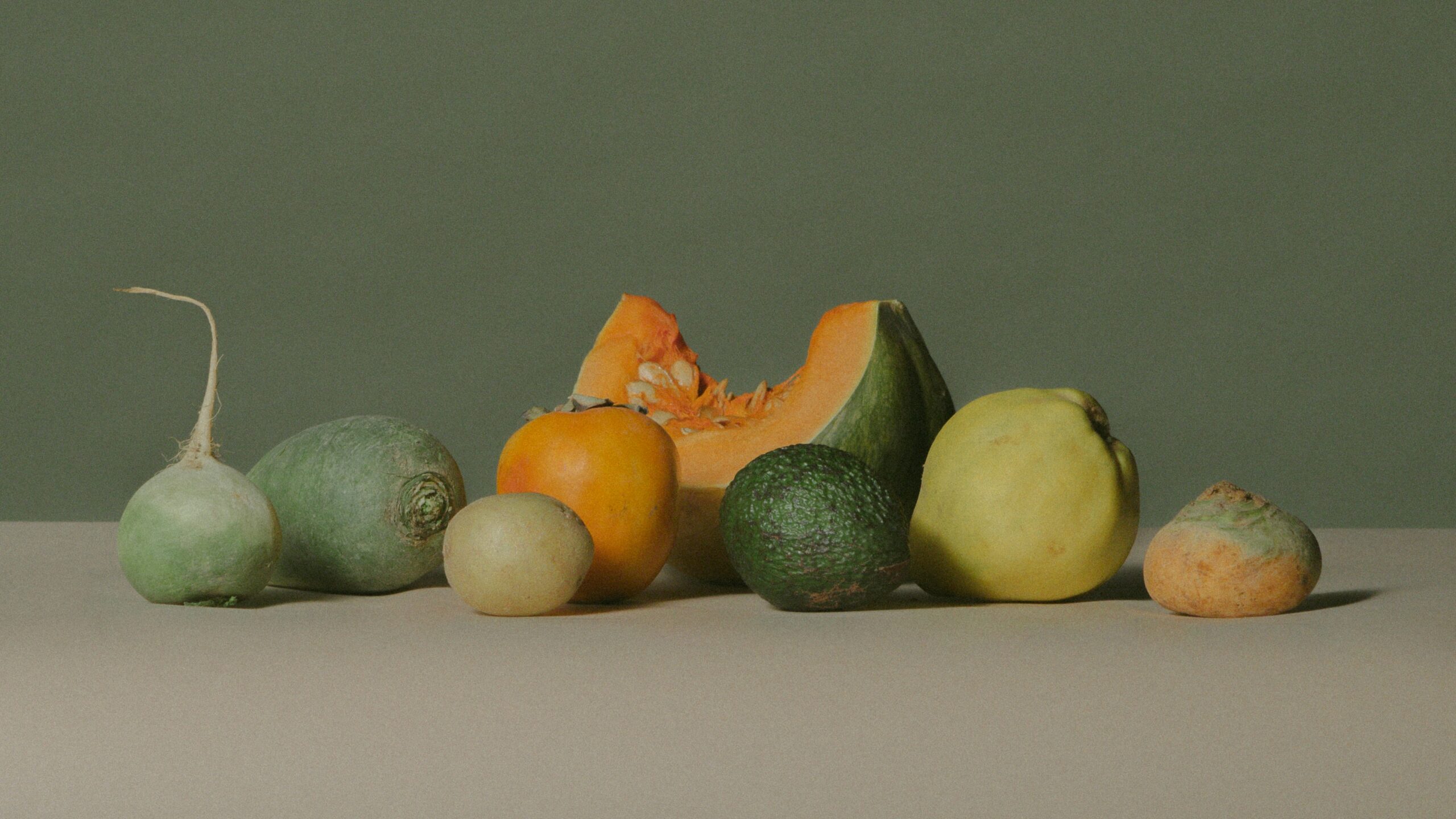
There's an illusion lurking behind the injunctions to preserve our health: that it's an end in itself. This article defends the idea that health is a decisive tool, yes, but subordinate to what really gives meaning to our lives.
Our relationship with our health is tinged with ambivalence. On the one hand, we like to put it on a pedestal: we affirm that it's our most precious possession, repeat that «when health is good, everything's good», and wish our loved ones «especially good health» every New Year. But that doesn't stop us, on the other hand, from pouring ourselves another glass of wine, going skiing, or simply soaking up the sun. Many of our actions show that we don't, in fact, place health at the top of our hierarchy of values. How can we explain this tension?
A first response is provided by a thesis that can be called «sanitarism». According to sanitarism, only health has value in itself. This thesis has never been expressly formulated or defended - not even by the hygienists of the 18th century.th and XIXth centuries, all of which promoted health-oriented public policies. In theory, sanitarianism is a straw man. But it helps structure the debate, and reflects a conviction that tacitly guides some of our behavior.
Read also | Le goût de l'ivresse, a lifestyle program
The definition of sanitarianism is modelled on the better-known definition of hedonism. For the hedonist, only pleasure has intrinsic value. To the question of why chocolate, art, generosity, knowledge, health, beauty, nature or life have value, the hedonist answers: «B¨because they provide or contribute to pleasure». Similarly, when asked why medicines, vegetables, art, knowledge, pleasure, nature or life are valuable, the sanitarist answers: «because they provide or contribute to health». Health, on the other hand, is intrinsically good, not because it leads to something else of value.
Sanitarianism has a very simple answer to the question of why our attitude towards our health is ambivalent: we are simply irrational. Preserving our health is the supreme imperative. Through weakness of will, through practical inconsistency, we violate this injunction. Instead of pouring ourselves another glass of wine, we should go for a swim.
There's no doubt that this is sometimes the case. But are there ever good reasons not to do what's best for our health? No, says the relentless sanitarian. Here are two objections to his thesis.
Two objections to sanitarianism
The first transposes Robert Nozick's famous objection to hedonism to sanitarianism. If there were a pleasure machine guaranteed to maximize our pleasure and limit our pain for the rest of our lives, would we agree to enter it? Most would hesitate - which reveals that pleasure isn't the only thing we consider valuable in itself: we don't just want to have the pleasant illusion of being brave, loved by our loved ones or great chess players, we want to really be. Now let's imagine a health machine. It guarantees us only one good: to preserve our health to the best of our ability throughout our lives. Would we choose to enter it? The answer is, most obviously, "no". We don't just want to be healthy, we also want to have friends, children, travel, discover, paint, play, laugh, drink, debate and garden.
The second objection is based on the reactions we get from people who subscribe to sanitarianism in practice. If sanitarianism were true, we should admire the wisdom of those who put their health first. Yet we rarely say of them, «Here's someone who knows how to live». On the contrary, they seem sick in their own way.
This is the case for people suffering from orthorexia[1]. The term, recently introduced, refers to an eating disorder marked by an obsession with the healthiness of food, to the detriment of any notion of taste or pleasure. Although we have little experience of this phenomenon, its prevalence is on the increase.[2], If health were our most precious asset, orthorexia would not be seen as a disorder, but as a rational behavior. If health were our most precious asset, orthorexia would not be seen as a disorder, but as a rational behavior.
Such is the case with people suffering from orthorexia. The term, recently introduced, refers to an eating disorder marked by an obsession with the healthfulness of food, to the detriment of any notion of taste or pleasure. Although we know little about this phenomenon, its prevalence is on the rise, particularly among athletes and nutritionists - suggesting that sanitarianism is not entirely a straw man. If health were our most precious asset, orthorexia would not be seen as a disorder, but as a rational behavior.
Read also | Geneva, capital of hygiene
Health is not the only thing of value in its own right: sanitarianism must be rejected. Invariably subjecting pleasure to the dictatorship of health is hardly more reasonable than systematically sacrificing health on the altar of pleasure. Our ambivalent relationship with health is not just a symptom of practical irrationality.
Instrumental value of health
What other options do we have? The most natural is to say that health is just one value among many, and that sometimes other values outweigh it in importance. Pleasure is the most immediate example, but there are many others. A parent who volunteers to donate a kidney, an athlete who agrees to compromise his or her long-term health for the sake of his or her career, a construction worker who agrees to expose himself or herself to danger in order to earn a living: these are all people who, knowingly and not through weakness of will, deliberately put their health at risk for reasons they consider more important.
However, I propose to reject this moderate position as well. According to the anti-sanitarist position I support, health is neither the only intrinsically good thing, as sanitarism asserts, nor one of the intrinsically good things, as the moderate position maintains. Health has no value in itself: it is intrinsically neither good nor bad. If we're inclined to think otherwise, it's because we confuse the assertion - true - that disease is bad in itself with the assertion - false - that its absence is.
The argument goes as follows:
P1. Disease is intrinsically bad.
P2. Health is the absence of disease.
P3. The absence of what is intrinsically bad is not intrinsically good.
C. Health is not intrinsically good.
The first premise is widely accepted. The second premise corresponds to both the ordinary and biomedical definition of health, championed notably by Christopher Boorse in his seminal 1977 article, «Health as a Theoretical Concept». It is contested by the World Health Organization, according to which «health is a state of complete physical, mental and social well-being, and not merely the absence of disease or infirmity». But such a definition, as many critics have pointed out, is far too broad: happiness is not a medical success, unemployment and heartache are not illnesses. Other positive definitions of health suffer from the same flaw: they extend the concept far beyond its original, scientific meaning.
Read also | Rivella confronts a Switzerland that has become a «caffeine society».»
The third premise may seem more fragile. One might object: peace is the absence of war, yet peace is intrinsically good! Isn't it obvious that a peaceful world would be a much better world? The answer to this objection is to admit that such a world would undoubtedly be better than the one we know, but that one thing can be better than another without being good. The central idea is that a world without any evil could still contain no good. A world without pain could be devoid of pleasure, a world without ugliness devoid of beauty. Rid the world of war, disease and famine, and you will undoubtedly have improved it immensely, but you will still have introduced nothing positive.
If this argument is correct, and health has no value in itself, how can we explain our ambivalent attitude towards it? The sanitarist asserted that neglecting one's health in favor of other goals is always irrational. Should we reply, embracing the opposite extreme, that we should never preserve our health at the expense of other goods?
Read also | How to reconcile liberalism and education
That would be absurd. But we can recognize the importance of preserving health without attributing any intrinsic value to it. If health is not good in itself, it nevertheless has a crucial instrumental value: it conditions the success of all our projects. It's not true that when health is good, everything is good – but it is true that when health is bad, nothing is good. It is an indispensable means of doing what matters to us.
In this respect, the value of health is comparable to that of freedom. In the liberal tradition, freedom is understood negatively, as the absence of constraint. Constraint is intrinsically bad, from which it is sometimes concluded that freedom is intrinsically good. But if my argument is correct, freedom has no more intrinsic value than health. He who is content with his freedom makes the same mistake as he who is intoxicated by his health. It's certainly a distressing mistake not to measure one's good fortune in being free and healthy. But to wallow in it, sated and drowsy, as if you'd reached some ultimate goal, is not to avoid this error, but to become trapped in it.
Freedom and health are means, precious opportunities to pursue what's important to us. To value them as ends in themselves is to fall into the trap of Scrooge, who loves money for its own sake. Health, freedom and wealth are invaluable because they enable us to do what's really worthwhile: to love, to understand, to create, to contemplate, to dance, and a thousand other things besides.
Read also | How to understand the concept of liberal utopia
There is a second fallacy in the intrinsic valuing of health: by attributing a positive value to health when it is merely the absence of disease, we act a little like the traveller who chooses a destination because it is safe and clean. A flawless objective, but without appeal.
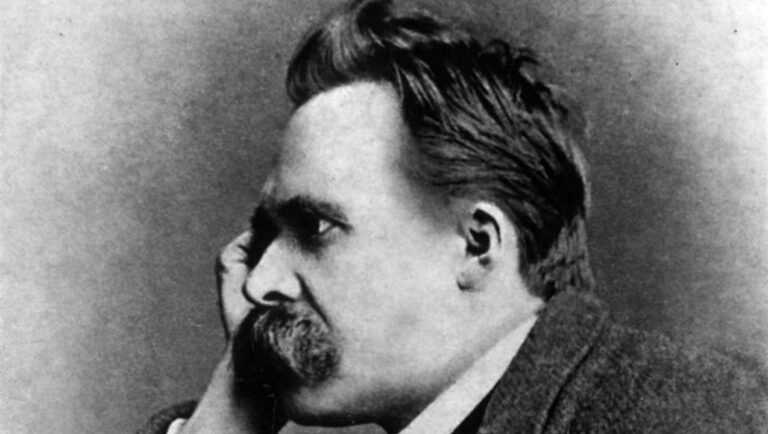
This is why Nietzsche saw «little health» as an ascetic ideal. Rather than aiming for the good, sanitarianism is a kind of asceticism that aims only for the absence of evil: not pleasure, but the absence of suffering; not beauty, but the absence of ugliness; not vigor, but the absence of disease. Nothingness becomes the horizon of our aspirations. To attribute an intrinsic value to health is to make two mistakes: to take a means for an end, and to want nothing better than the absence of evil. Health is a dull goal, but it is the most precious of tools.
Olivier Massin is Professor of Philosophy at the University of Neuchâtel.
You have just read an analysis from our dossier «Pleasure and health», published in our paper edition (Le Regard Libre N°126).
[1]See in particular Nelly Goutaudier and Amélie Rousseau, «L'orthorexie: une nouvelle forme de trouble des conduites alimentaires?», La Presse Médicale, vol. 48, N° 10, October 2019, p. 1065-1071.
[2] Voir notamment « Overall proportion of orthorexia nervosa symptoms : A systematic review and meta-analysis including 30’476 individuals from 18 countries » (article collectif), Journal of Global Health, édition de novembre 2023.

You'll also like


 French
  German
  English
Leave a comment