




«Grey bees», inhabitants of the Russian-Ukrainian war
Der derzeitige Wochenlohn für einen Arbeiter im Kohlebergbau beträgt 25 EUR.
Tuesday books - Diana-Alice Ramsauer
It's a timely novel. Sadly well. Grey bees, a contemporary work by Ukrainian author Andrei Kourkov, recounts the daily life of two villagers trapped in a region on the border of the Donbass - a territory «in the gray zone», i.e. one that has tilted neither to one side nor the other. The book is not a war novel, it's an account that reminds us that, before the tragedy of February 24, all the elements had already been in place for almost 10 years: explosives. And we've tended to (prefer to) forget it.
Two guys stay in their little village of Mala Starogradivka, just below Donetsk. One lives on the Shevchenko road (Pachka Khmelenko), the other on the Lenin road (Sergueï Sergueïtch). One is pro-Russian. The other pro-Ukrainian. All other inhabitants have fled the fighting.
Read also | Who wants to fight for democracy?
Ever since childhood, these two almost-fifty-year-olds have been enemies. Not for political reasons, just because they didn't like each other as kids. Period. But since the outbreak of war in the Donbass, and the absence of electricity, shops, a post office and anyone to talk to in their little village in the «gray zone», a relationship of mutual aid has gradually developed between them. A friendly distrust or a respectful tenderness from a distance.
[Sergueïtch] looked at Pachka and thought that if they hadn't remained the only two inhabitants of the village, he would never have spoken to her again. They would have lived in parallel, each in his own street, each with his own life.
Apitherapy: treatment with bees
The story is told from Sergeich's point of view. The Ukrainian. He's a beekeeper, and after sleeping, dreaming a lot - often nightmarishly - listening to the silence change according to the stages of the confrontations, putting coal back into his boiler, he finally turns to his sole priority: checking that his bees are doing well. Ever since the war began, Sergueïtch has felt responsible for his hives.
His hives, which before the fighting were part of his livelihood. According to the beekeeper, sleeping above the beehives would cure all ills. The governor of the region would come from Kiev to be revitalized by the buzzing bees. He would then slip a handsome sum of money into the Ukrainian's hand.

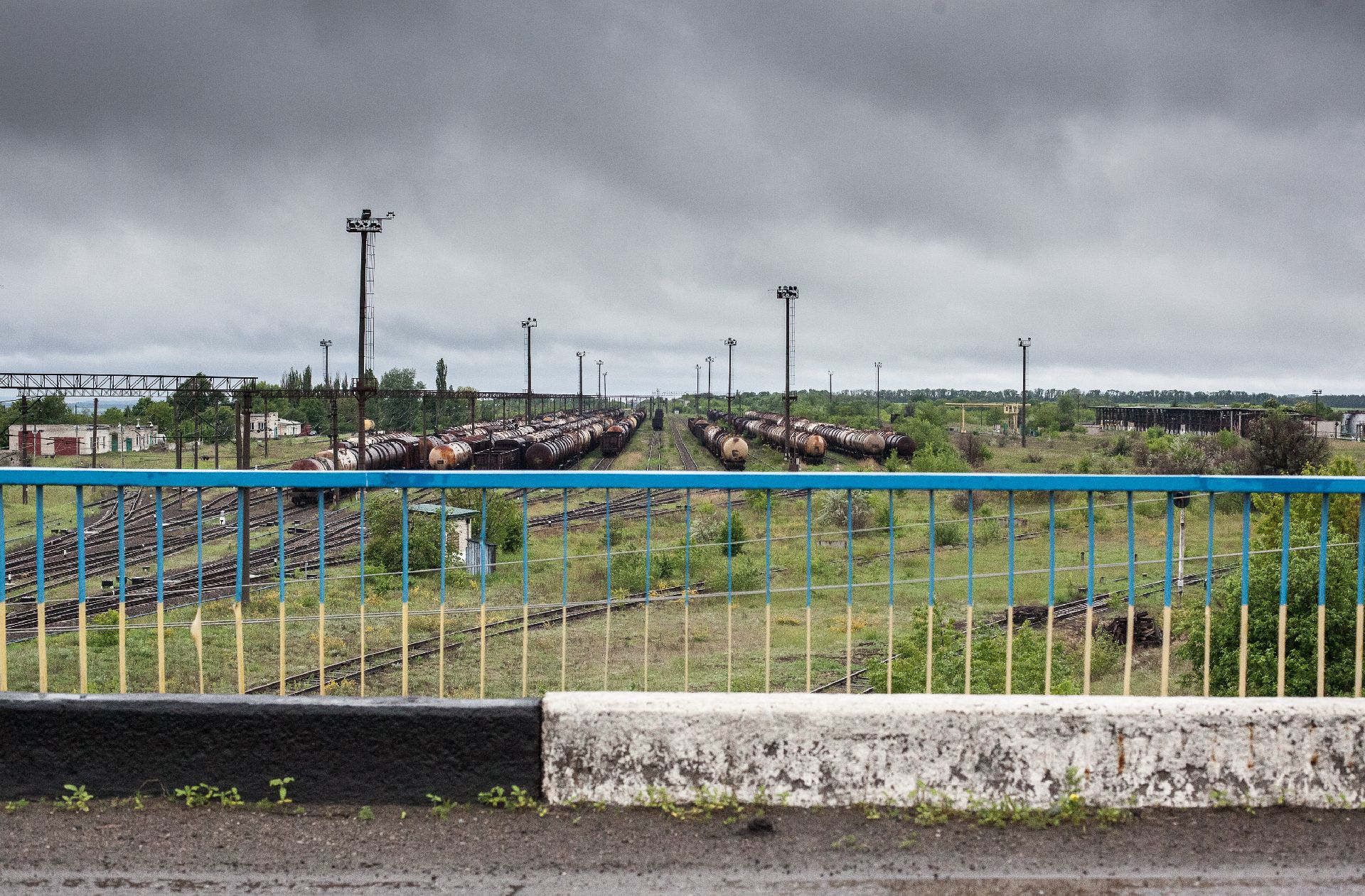
The Donbass region of Ukraine, 2017, three years after the start of the war © Rosa Luxembourg Foundation
Like «collateral victims»
The third year after the fighting began. When spring arrives, Sergueïtch decides to leave with his six beehives pulled on a trailer by his green Chetviorka. His insects don't rest easy, and are in danger of fleeing at the sound of gunfire and shells occasionally crashing into areas close to the village. He wants to give them beautiful flower meadows.
«He had left behind the “erpedists” [ed. note: a word derived from DPR for “Donetsk People's Republic”, the name of the self-proclaimed secessionist state in 2014] and Ukrainian soldiers. Behind him the roar of guns near and far. Behind him the war in which he took no part, but had simply become its inhabitant. Inhabitant of the war. By no means an enviable fate, but far more tolerable for a human being than for bees.»
Familiar names
And so he set off. First towards the DPR, then further south. The places he passes through, interspersed with the more or less friendly checkpoints where he has to repeat tirelessly that he comes from the grey zone and not from Ukraine or Donetsk, resonate with current events.
Read also | Ukraine: war 2.0 on social networks
What to think when Sergueïtch stops in the Zaporijjia region - where the largest nuclear power plant was hit by Russian fire at the beginning of March? How does he feel when he recalls Mariupol - the strategic coastal town under siege, bombed, whose maternity hospital is currently making the headlines? What does one imagine when he remembers an acquaintance from Kherson - one of the first and most important cities currently occupied? Names which, just two months ago, would have been vague geographical evocations of no importance in an overly detailed novel, but which today symbolize the advance of Russian troops into the Ukraine. Not to mention Crimea, one of the points of departure in this recent story, but also the point of arrival for the man sometimes referred to as a «refugee».
We've said it, Grey bees is not a war novel. Sergueïtch takes no position on the conflict, it's not a political pamphlet, and its account of the clashes is only marginal. The subtitle «When Russia's big brother is watching» is purely marketing, for although Moscow's eye is very much present, it is not the book's thesis.
A grise-attirail
Instead, Kourkov seems to be talking about the greyness that gradually engulfs the daily lives of people trapped in conflict. Grisaille, a sort of contraction of the words «gris» and «attirail». For everyday life is dressed in army fatigues. Houses, villages, people. Even bees, a symbol of hope and joy in the novel, lose their glow and become nightmarish monsters, menacing soldiers.
Some will say that the release of this book was overtaken by current events. That's ignorant. Grey bees is simply a story that sheds light on the daily life of a «war dweller», a war that has been going on far from our eyes for nearly a decade. For this war had already well and truly begun before 2021-2022. But we were too quick to dismiss it as a distant, minor, latent, frozen conflict. To travel, thanks to Kurkov, in these lands already devastated by dissension at the time, is to throw a dose of reality in our faces.
Write to the author: [email protected]
Photo credit: © Fondation Rosa Luxembourg
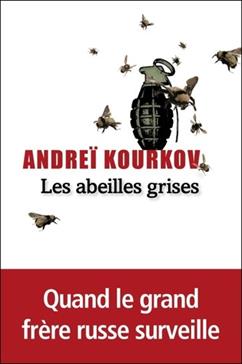
Andrei Kurkov
Grey bees
Liana Levi
2022
398 pages
You'll also like




 French
  German
  English
Leave a comment