



Laure Calamy is heartbreaking in «A plein temps» (Full-time)»
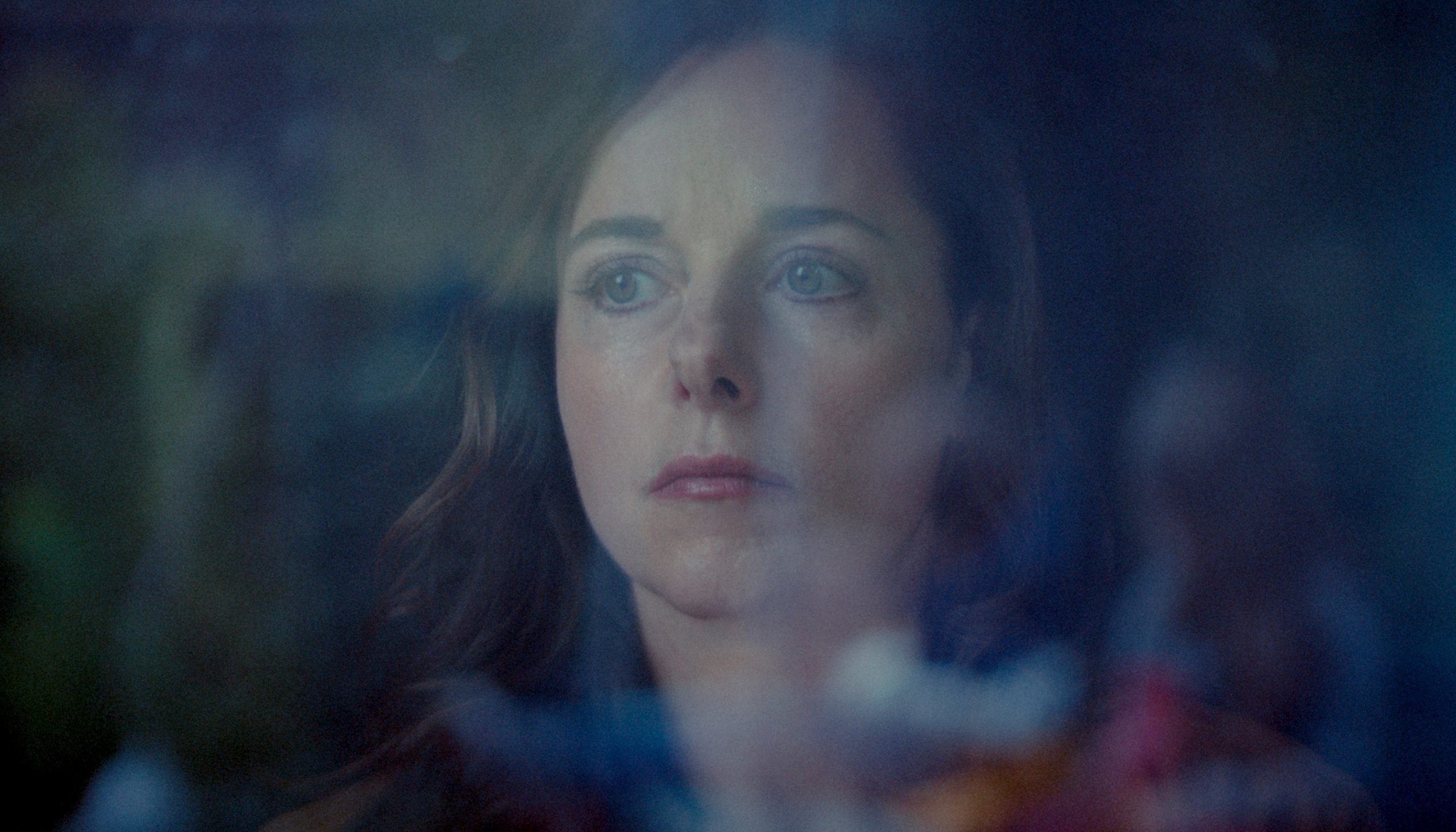
Laure Calamy in «A plein temps» © Haut et Court
Cinema Wednesdays - Jonas Follonier
Laure Calamy plays a mother who spends her days rushing from waking up the kids to long commutes, her job in Paris, and waiting for child support payments from her ex-husband… Things get even more complicated when a transit strike breaks out and she has to get to a job interview. The result, in terms of her acting, is stunning. Review.
Julie (Laure Calamy) has a master’s degree in economics, but works as the head housekeeper at a luxury Parisian hotel. She lives on the outskirts of the city because it was an «ideal place to raise children» and «halfway between her job and her ex-husband’s,» except that her ex-husband has left and the children have grown up a bit since then. The 8- and 9-year-old little monsters are in a rather sullen and rather constant mood. And yet Julie has to take care of them. With love, but also with speed, she gets up at the crack of dawn to get them out of bed (the alarm clock, a motif borrowed from a short film by the same director released in 2004, It was just a dream), feed them breakfast, and take them to the neighbor’s house, where she looks after them during the day. It’s still dark when Julie gives them a kiss before rushing off to catch the train.
The transportation strike: the last straw
The train, which emits its final beeps just as Julie catches it by the skin of her teeth, out of breath after her first sprint of the day. The train, through whose window we see Julie, her vacant and already weary gaze fixed on the dreary landscapes separating her from Paris. The train, which will be the film’s powerful symbol, since this is a film about Julie’s endless race against time, against her hellish daily grind, against life—a better life. Sweaty, Julie arrives at her workplace, where she’s expected to smell good—a luxury hotel where she has to clean up after the rich. Her boss is strict, but that’s just how it is. The day flies by amid the stress. It’s nighttime when she finally picks up her kids in the evening.
Read also | Ten percent, Season 4: A Coming-Out Story
Right from the start of the film, despite this everyday life into which we’re invited—somewhat reluctantly—we know that Julie’s life might be about to change: she’s landed a job interview. We follow the anti-heroine’s series of schemes to get someone to stand in for her during her first interview. Then, in the hope of slipping away from the luxury hotel unnoticed during her second interview. But above all, the unexpected has struck: the transit strike. An unspeakable ordeal for the woman living on the outskirts, who has to juggle replacement buses, carpooling, and taxis… Before the taxis go on strike too. And before traffic jams make carpooling pointless. These absurd and grotesque obstacles all conspire to make the worst-case scenario a real possibility.
A film carried by its lead actress
The race against time that the feature film becomes effectively conveys Julie’s tension to the audience. But one detail stands out—and not just a little: the music. Admittedly, we understand the choice of this austere and oppressive electronic music. But these artificial, over-the-top sounds quickly make the whole thing feel overdone. Fortunately, the lead actress excels at making the viewer forget not only that she’s an actress, but also that the viewer himself is someone other than the character with whom he identifies. Those absurd SNCF announcements, those unanswered calls to her ex-husband, that jerky rhythm, those gifts to buy for the little one—they hit you right in the face.
How can we not think of all those mothers—so many of our own—for whom the percentage of work will never mean anything, since they have given everything, starting with their love, despite sometimes facing the worst of adversities? Despite the minor drawback regarding the music, Eric Gravel has created a remarkable film. Even more than that: a necessary film. The harsh reality of the working class in contemporary France, the divide between the center and the periphery, and the impossible time constraints of the present called for such a work—one that is realistic, even naturalistic, and dedicated to celebrating courage and justice.
Write to the author: [email protected]


You'll also like

 French
 German
 English
Leave a comment